South Korea's Homegrown Satellite Navigation System Holds Last Integrated Design Review Before Manufacturing; First Launch Still Set for September 2029
SEOUL
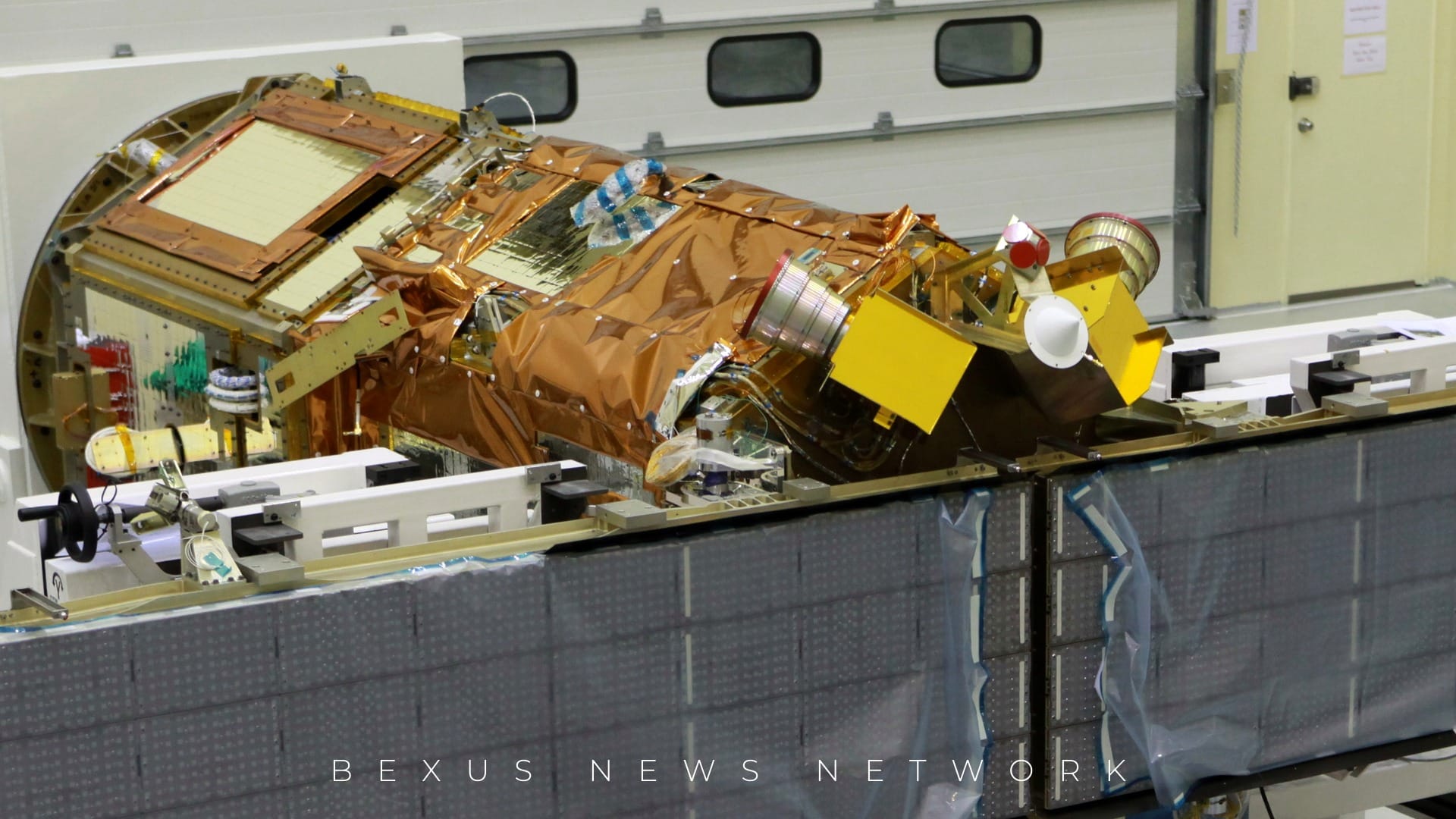
Development of the Korean Positioning System, or KPS, South Korea's homegrown satellite navigation system, is on the schedule reset in May 2025. The Korea AeroSpace Administration reviewed the design of the first satellite's payload on Sept. 28 and then the whole first satellite, payload and body together, on Oct. 20. From Nov. 24 to 27, it will hold an integrated critical design review of the entire KPS system at the Korea Aerospace Research Institute. Construction and assembly of the first satellite can begin only after that meeting ends, and the launch date remains September 2029.
The sequence matches what the agency announced on Sept. 28, when it said it planned to hold "a detailed design review of KPS satellite No. 1 in October and, in November, an integrated detailed design review of the KPS system, ground and user systems, in succession." The budget has also not changed from the 3.7234 trillion won the government approved in November 2021. It can be confirmed that the design phase is finishing on the dates promised, but launch dates for the second and later satellites have not been set.
A Four-Day Integrated Design Review
The agency's administrator, Oh Tae-seok, is hosting the meeting, with the Ministry of Land, Infrastructure and Transport (Minister Hong Ji-seon), the Ministry of Oceans and Fisheries (Minister Hwang Jong-woo) and the Korea Coast Guard (Commissioner Ha Man-sik) taking part. The venue is the Korea Aerospace Research Institute. The details come from a joint release the agency made public at noon on Nov. 23.
KPS is a South Korean navigation system that will send precise position, navigation and timing information to the Korean Peninsula and surrounding areas. The project aims to give South Korea its own system, like the American GPS, that calculates position from satellite signals. A satellite (space), ground control facilities (ground) and users' receivers (the user system) must work together as one set before a service exists, so the design of all three must be checked together. This meeting is meant to confirm comprehensively that the three parts are designed to connect as a single system and deliver the required functions and performance.
More specifically, the review will check whether the design properly covers how satellites transmit navigation signals and how the ground manages those signals and users employ them. It will also look at whether the connections among satellite, ground and user systems, and their main functions and performance, are adequate. The user system, meaning the design on the side of the people who receive and use satellite signals, is also within the scope of this review.
The Last Gate Before Manufacturing: the CDR
The detailed design review is known in English as a critical design review, or CDR. The agency describes it as "the last design review stage before the flight model is built." The flight model is the actual satellite that goes into space. Unlike a test model, a satellite cannot be repaired once launched, so the procedure is meant to catch problems on paper before parts are cut and assembled.
The agency said that when this review ends, it will begin the procedures needed to build and assemble the first satellite and set up a ground system for verification. Earlier reviews stayed at the level of individual components or the satellite itself, it said; this one moves on to confirming the maturity of the design of the whole system.
The participating ministries will oversee different services, so each has different expectations. Minister Hong of the land ministry said: "From aircraft operations to autonomous driving and drones, transportation safety begins with accurate location information." Minister Hwang of the oceans ministry said the ministry would work with related agencies to develop high-precision satellite navigation services for autonomous ships and smart ports, and Commissioner Ha of the Coast Guard said KPS-based satellite search-and-rescue would play "an important role in protecting people's lives at sea."
Payload in September, Body in October, Integration in November
This year's design reviews took place in three stages, each widening in scope. Each meeting's dates follow those in the agency's release issued just before the meeting.
| Review | Dates | Scope |
|---|---|---|
| Payload detailed design review | Sept. 28-30 (three days) | Payload of satellite No. 1 |
| Satellite No. 1 system detailed design review | Oct. 20-22 (three days) | Satellite No. 1 as a whole, payload and body combined |
| Integrated detailed design review | Nov. 24-27 (four days) | Satellite, ground and user systems as a whole |
The payload is the core equipment aboard the satellite that generates navigation signals. A navigation signal is a radio wave by which a satellite continuously broadcasts the message "I am here now, and this is the time," and a user's receiver calculates its own position from differences in the arrival times of signals from several satellites. The satellite body supplies the power and holds the orientation so that the payload can do its job. The agency said the September meeting would finalize the payload design and that, if it passed, full-scale manufacturing of the first satellite's payload would begin. The agency called the meeting "a gateway to completing the design of key components and moving to manufacturing." Kim Jin-hee, the agency's head of satellites, said at the time: "We will complete this year's remaining detailed design reviews without a hitch so that KPS development proceeds as planned." The October and November meetings then followed in the same order. At the October meeting, reviewers focused on the interfaces, the conditions for connecting payload and body. The task went beyond checking that each piece of equipment works on its own, to confirming that they operate together once combined into one satellite.
Laying the three meetings side by side, the agency on Sept. 28 set the goal of "completing detailed design of the payload, satellite, and system, ground and user systems within this year," on Oct. 22 said the "integrated detailed design review in November is scheduled to be completed," and on Nov. 23 fixed the dates of that meeting. The promised order and months did not slip once.
From December 2027 to September 2029
The assessment that the schedule is unchanged comes with a premise. The baseline now is not the original schedule but the one revised in May 2025.
On May 15, 2025, the agency held the fifth working committee on space development promotion, chaired by Yoon Young-bin, then the agency's administrator. The committee, chaired by the agency's administrator, deliberates on plans for space development projects. It approved a change that extended development of the first satellite by 20 months. Until then, the first satellite's launch had been set for December 2027; after the change it became September 2029. Initial operations and technology verification then run through August 2030.
The reason for the extension was the navigation payload. From September to December 2024, the agency examined progress, technological maturity and risk factors with a panel of outside experts. The December 2027 launch schedule was examined in more detail by a separate review committee from December 2024 to April 2025. The conclusion was that the "greatest technical difficulty" was the design of the navigation payload system. The navigation payload is the equipment that has a satellite generate and transmit navigation and correction signals, and it determines navigation performance. Because it is equipment being developed in South Korea for the first time, the agency judged that designing its specifications, developing it and verifying it would take more time.
The payload, singled out as the hardest part, finished its preliminary design review in February 2025 and held its detailed design review in September 2026, about 19 months later. The design of the most demanding equipment within the revised schedule has now reached the stage just before manufacturing.
On the same day, the agency also adjusted the project's organization. It said it would move to fold the KPS Development Project Office, set up as an independent unit inside the Korea Aerospace Research Institute when the project began, into a department reporting directly to the institute's president. The aim was to put more administrative and financial resources into the project at the institute level and to deploy staff more efficiently. It said it would form a review committee of experts from research institutions with experience in large-system development to give advice when needed, and revise the membership and direction of the satellite navigation subcommittee.
Budget and Constellation Size
The KPS plan was included in the third basic plan for space development promotion in February 2018, and the project began in 2022 after the National Space Committee approved detailed plans in November 2021. The government said at the time that once KPS was built, it could protect the stability of national infrastructure, including financial, power, communications and transportation networks, even in an emergency, and that its centimeter-level precision service would underpin new industries such as self-driving cars and urban air mobility. The KPS Development Project Office that would run the project was to be placed inside the Korea Aerospace Research Institute. The project began before the Lee Jae-myung administration took office, and the current government continues it as part of National Agenda Task No. 28.
The budget is the same now as in 2021. On Nov. 15, 2021, the 21st National Space Committee, chaired by Prime Minister Kim Boo-kyum, approved a plan for the KPS development project to run 14 years, from 2022 to 2035, at a total cost of 3.7234 trillion won. In project outlines attached to its May 2025 material and its October and November 2026 material, the agency listed the same period and the same amount as "a total of 3,723.45 billion won (preliminary feasibility study basis)." Dividing by 14 years gives an average annual outlay of about 266 billion won.
The project's structure is shared among several ministries. The agency oversees KPS policy, international cooperation and management of the project office, while participating ministries such as the land, oceans and Coast Guard bodies jointly conduct research and development on the parts common to the satellite, ground and user systems and share the common costs. Each ministry has a different field in which to use it: the land ministry plans to use KPS for aviation, autonomous driving and drones, the oceans ministry for autonomous ships and smart ports, and the Coast Guard for search and rescue.
There are eight satellites in all. In its Sept. 30, 2025, material, the agency said that five of the eight would go into inclined geosynchronous orbit (IGSO, an orbit that matches the Earth's rotation period and traces a figure eight above and below the equator) and three into geostationary orbit. The first satellite is one of the inclined geosynchronous satellites and will be South Korea's first navigation satellite. A launch contract for it was signed with SpaceX on Sept. 23, 2025.
The specifications of the first satellite that the agency released on Nov. 23 are as follows.
| Item | Specification |
|---|---|
| Mission life | 13.25 years |
| Launch mass | 3.7-ton class |
| Deployed size (width x depth x height, meters) | 3.4 x 15.4 x 3.8 |
| Launch date | September 2029 |
Adding the mission life to the launch date puts the end of service around the end of 2042. If the goal of putting all eight satellites up by 2035 is met, the first satellite could remain in service for nearly seven years after the system is complete.
Comparison With Earlier Systems
In an attachment to its Oct. 22 material, the agency published a table of overseas cases. It summarizes the development histories of six systems as of April 2026 and is useful for gauging where KPS stands.
| System | Development began (year) | First satellite launched (year) | Development completed (originally planned, year) | Operating satellites |
|---|---|---|---|---|
| GPS (United States) | 1973 | 1978 | 1995 | 31 |
| GLONASS (Russia) | 1976 | 1982 | 2011 (1995) | 27 |
| Galileo (European Union) | 2002 | 2005 | 2026 planned (2013) | 30 |
| BDS (China) | 1994 | 2000 | 2020 | 35 |
| NavIC (India) | 2006 | 2013 | 2018 (2012) | 4 |
| QZSS (Japan) | 2002 | 2010 | 2026 planned (2013) | 5 |
KPS started in 2022, is to launch its first satellite in 2029 and is to finish in 2035, so it will take seven years from start to first launch and 13 years to completion. The time to first launch equals India's NavIC, at seven years, and is shorter than Japan's QZSS, at eight. The time to completion is similar to NavIC's 12 years.
Measured by the time from first launch to completion, KPS's plan is tight. KPS allows six years from its first launch in 2029 to completion in 2035. In the same table that span is 17 years for GPS (1978 to 1995), 29 for GLONASS (1982 to 2011), 21 for Galileo (2005 to 2026, planned), 20 for China's BDS (2000 to 2020) and 16 for QZSS (2010 to 2026, planned), and only NavIC, at five years (2013 to 2018), is shorter than six. It should be noted that, unlike worldwide systems such as GPS, KPS is a regional system serving the area around the Korean Peninsula, which puts it closer to NavIC and QZSS.
Earlier systems rarely finished as planned. Of the four for which the table lists original plans, Russia's GLONASS finished 16 years late, Europe's Galileo and Japan's QZSS 13 years each and India's NavIC six. In the same table in the agency's May 2025 material, Galileo's completion was 2025; this time it changed to 2026, planned. Compared with the repeated slippage of earlier systems' completion dates, South Korea's 20-month delay of the first launch is hard to call unusual. Meanwhile, KPS has not changed its goal of completion by 2035, set in 2021. Whether the goal can be kept depends on the schedule for the second and later satellites.
Seven Satellites Remain, With No Follow-On Schedule
After the November integrated review, 34 months remain before the first launch in September 2029, from the end of November 2026, or about two years and 10 months. Satellite construction and assembly, space environment testing and launch preparation must all be finished in that time. The payload design took 19 months to go from preliminary to detailed design.
If the first satellite launches in September 2029, about six years remain until 2035, and seven more satellites must go up in that time. In its May 2025 material, the agency said it would keep the goal of completing deployment of all eight satellites by 2035 but would discuss the specific development plan for follow-on satellites again, taking into account the results of the system preliminary design review (third quarter of 2025).
Since then, the agency has issued KPS material four times, on Sept. 30, 2025, and Sept. 28, Oct. 22 and Nov. 23, 2026, and none gave launch dates for the second and later satellites. On Nov. 23, it said only that it "plans to manage the follow-on development schedule" based on the results of the integrated design review. Because the detailed design is to be finished by year's end, the follow-on schedule is expected to come after that.
That the schedule for the second and later satellites is unset does not by itself mean a delay. But it is worth noting that only one of the eight satellites has a confirmed date. What remains to be seen is how the supplementary items raised in the integrated review are managed and when the plan for the follow-on satellites appears.
Explanations From the Agency and Ministries
The agency described the meeting as "a stage that goes beyond checking design at the level of individual components and satellites to confirm the maturity of the design of the entire system." Oh said: "Following the payload in September and the first satellite system in October this year, we are proceeding in stages through the major development procedures, up to this integrated detailed design review." Oh added: "We will work closely with related ministries and research institutions to push ahead with follow-on development steadily and according to plan."
The agency intends to manage supplementary items by field toward the goals of launching the first satellite in 2029 and completing KPS in 2035, and to firm up preparations for satellite system manufacturing and for building and testing the ground and user systems. It will also continue to check the development status of the ministries and research institutions. The project falls under the government's National Agenda Task No. 28, "Fostering NEXT strategic technologies to lead the world."
When KPS is complete, South Korea will become the seventh country in the world with its own satellite navigation system, after the United States, Russia, the European Union, China, India and Japan. The agency said it expects the system to be used for the stability of industries and national infrastructure such as finance, communications and transportation.