U.S. Department of the Treasury Releases Chart Showing Crude Oil Exports via Strait of Hormuz, Gulf of Oman, and Red Sea Reached January–February Average of About 17 Million to 18 Million Barrels per Day
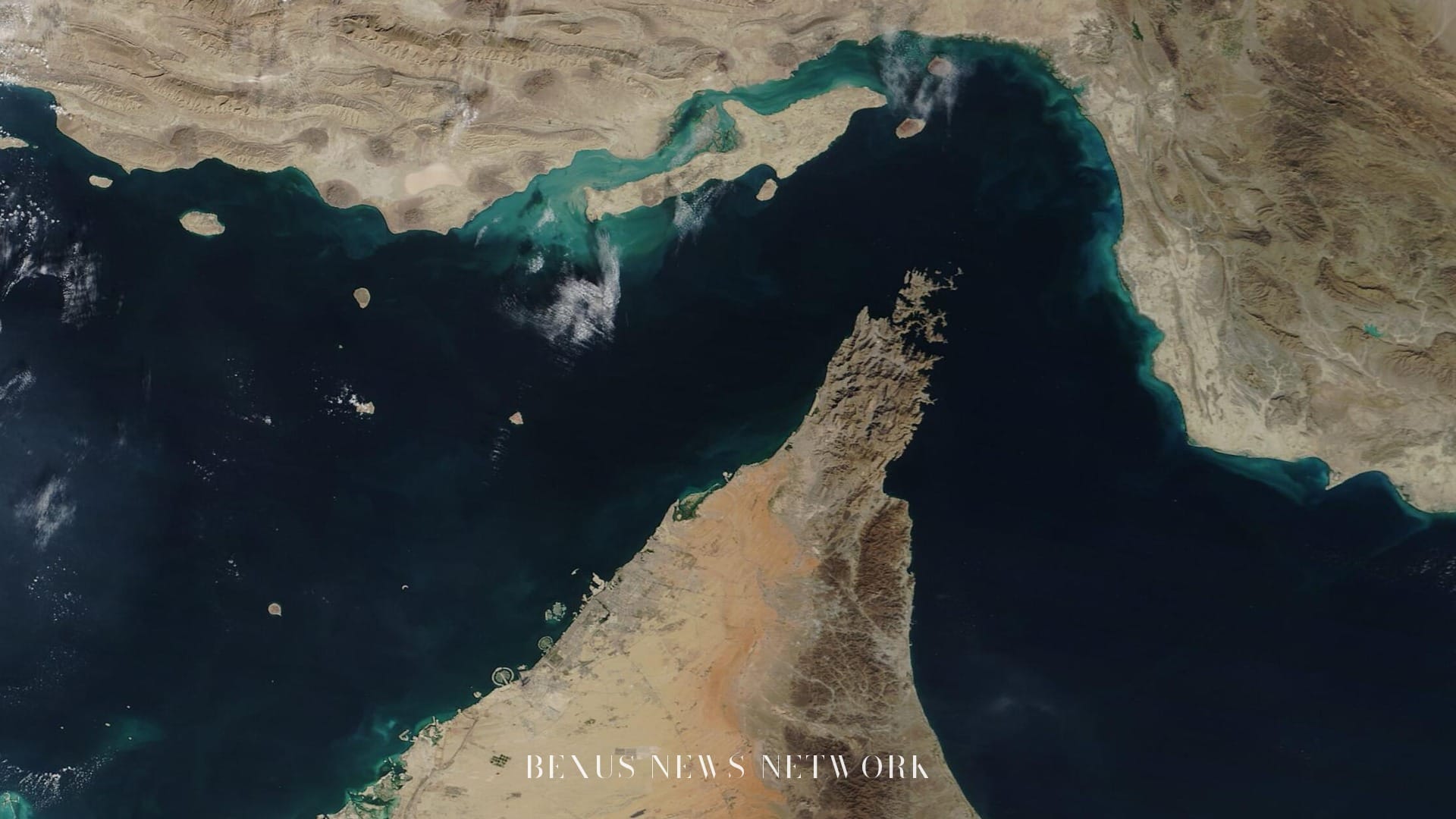
U.S.–Iran
The U.S. Department of the Treasury released a chart showing that Middle East crude oil exports have recovered to their pre-Iran war average line. Treasury Secretary Scott Bessent posted a chart on his official X account on October 23 (Eastern Time), stating, "Despite Iran’s efforts to disrupt energy shipments, oil exports from the Persian Gulf are roaring back and have surpassed pre-conflict levels." In Korea Standard Time, the post was uploaded around 6:20 a.m. on October 24. The chart is titled "MIDEAST CRUDE EXPORTS ROAR BACK," and notes that crude and condensate exports through the Strait of Hormuz, the Gulf of Oman (including the Port of Fujairah), and the Red Sea stood at "~17–18 mb/d" as of October 21. mb/d denotes million barrels per day, meaning 17 million to 18 million barrels per day. The same chart features a dotted line labeled "Jan-Feb 2026 Average," with an arrow indicating the latest figure touching near this dotted line. During the same week, Secretary of State Marco Rubio, the White House, and the International Monetary Fund (IMF) also released figures and statements regarding the flow of crude oil through Hormuz.
Treasury Chart Shows the Sum of Three Routes Reaching the January–February Average Line
The subtitle of the chart is "Crude/Condensate Exports through the Strait of Hormuz, Oman and Fujairah Ports, and the Red Sea." It shows the total by stacking three different colored areas: the route passing through the Strait of Hormuz, the route exiting through Gulf of Oman ports, and the route exiting into the Red Sea. The legend consists of three categories: "Via Strait of Hormuz," "Gulf of Oman," and "Red Sea." The source note at the very bottom reads, "Source: Seaborne crude oil and condensate exports from the Mideast region as of October 21, 2026." It represents seaborne crude oil and condensate exports from the Middle East region with an effective date of October 21.
The curve shows the total running flat from late January to late February before plunging steeply past late February, reaching its lowest point around late March. Afterward, it gradually rose from April, spiked once in late June, retreated in July, and climbed again from late August through late September and early October toward the dotted line. Exact volumes for each period are not written on the chart. The only numerical figure marked on the chart is "~17–18 mb/d" at the far right edge.
The post uploaded by Secretary Bessent consists of two sentences. In the first sentence, he wrote that despite Iran's disruption efforts, oil exports from the Persian Gulf are roaring back and have surpassed pre-conflict levels, and in the second sentence, he wrote, "The message is clear: Iran’s threats have failed to stop the flow of energy to global markets."
Despite Iran’s efforts to disrupt energy shipments, oil exports from the Persian Gulf are roaring back and have surpassed pre-conflict levels.
— Treasury Secretary Scott Bessent (@SecScottBessent) 2026년 10월 23일
The message is clear: Iran’s threats have failed to stop the flow of energy to global markets. pic.twitter.com/ZzP6CVFsPC
The date the chart was posted is October 23 (Eastern Time), and the benchmark date of the chart is October 21. Secretary Bessent's post writes "oil exports from the Persian Gulf," while the chart plots the sum of the three routes: "Strait of Hormuz, Gulf of Oman, and Red Sea." The scope of the two expressions is not identical.
The Chart Does Not Specify the Value of the Dotted Line or Route-by-Route Volumes
In the Treasury chart, the "Jan-Feb Average" drawn as a dotted line is merely a line above the scale without an explicit value written, and the arrow pointing to the latest figure touches near this dotted line. The scale on the left side of the chart is marked in increments of 2 from 0 to 20. Nor are individual volumes for Hormuz alone, the Gulf of Oman, or the Red Sea stated separately. Whether crude transiting the Strait of Hormuz alone has recovered to its pre-war average cannot be determined from this chart. What the chart compares is the sum of the three routes. The only figure confirmed numerically on the chart is the total of approximately 17 to 18 mb/d, or 17 million to 18 million barrels per day, as of October 21. This total combines the three routes: the Strait of Hormuz, the Gulf of Oman (including the Port of Fujairah), and the Red Sea.
The final tick mark on the horizontal axis of the chart is "9/30/2026," and the benchmark date in the source notation is October 21. The chart's subject is limited to crude oil and condensate, and exports of refined products such as gasoline and diesel are not included. Nor does the chart include volumes entering South Korea or South Korea's reliance ratio on Hormuz. It also does not specify which vessel tracking firm or statistical service served as the data source.
The value of 17 million to 18 million barrels per day in total as of October 21 is a figure posted by the Treasury on its official account. The precise position value of the dotted line and volumes broken down by route were not provided by the Treasury.
Hormuz Is a Route Where 20 Million Barrels Per Day Pass Under Normal Conditions
The U.S. Energy Information Administration (EIA) stated that in 2024, an average of 20 million barrels per day of oil flowed through the Strait of Hormuz, corresponding to approximately 20% of global petroleum liquids consumption. This volume accounted for more than a quarter of global seaborne oil trade, and about one-fifth of global liquefied natural gas trade passed through the same route. The IMF also noted in an annex to its October World Economic Outlook that with the strait virtually halted, about 20% of global oil supply was impacted.
The destination for crude oil leaving via this route is Asia. The EIA estimated that 84% of crude oil and condensate passing through Hormuz in 2024 went to Asian markets. Among them, China, India, Japan, and South Korea were the top four nations, with these four countries accounting for 69% of Hormuz crude and condensate flows. The EIA stated that if supplies through the strait were disrupted, these markets would be the most heavily affected. South Korea is one of the four major destinations for Hormuz crude. This proportion is an EIA estimate for 2024. According to EIA estimates, 84% of crude and condensate transiting Hormuz went to Asia, and China, India, Japan, and South Korea accounted for 69% of that flow.
There are bypass routes avoiding the strait, but their capacity is limited. Compared to the strait through which 20 million barrels per day flowed in normal times, the spare capacity of bypass routes is estimated by the EIA to be approximately 2.6 million barrels per day. The EIA estimated that among pipelines in Saudi Arabia and the United Arab Emirates, spare capacity available to bypass the strait is about 2.6 million barrels per day. The Saudi East-West Pipeline carries crude from Abqaiq near the Gulf coast to Yanbu Port on the Red Sea, with a capacity of 5 million barrels per day. The UAE connects onshore oil fields to the Fujairah export terminal on the Gulf of Oman via a pipeline with a capacity of 1.8 million barrels per day.
IMF Stated Gulf Crude Exports in September Were at 88% of Pre-War Levels
In its commodities special feature in the World Economic Outlook released on October 13, the IMF summarized crude oil exports for September. The IMF stated that the Strait of Hormuz remained mostly closed through late August. With transit increasing significantly in September, crude oil exports from the Gulf averaged 16.7 million barrels per day, reaching 88% of pre-war levels, and stood at 13.4 million barrels per day at the end of September.
Calculating the pre-war level backward from the IMF's 88% yields approximately 19 million barrels per day (calculated value). The IMF's scope is "crude exports from the Gulf," whereas the Treasury's scope is "crude and condensate exports across the three routes of Hormuz, the Gulf of Oman, and the Red Sea." The benchmark timeframes also differ, with the IMF looking at the September average and end of September, while the Treasury looks at October 21.
The IMF stated that much of the increase in September reflected a resumption of Hormuz transit substituting for the Red Sea bypass route. As Iran-aligned militants such as the Houthis attacked and threatened oil infrastructure heading toward the Red Sea, shipments shifted back to Hormuz. Although risks, freight rates, and insurance premiums remain high, volumes have returned. On the Treasury chart, the Hormuz area expands beginning in late August.
In the same document, the IMF stated that markets remain tight. The IMF summarized that when the United States and Iran signed a memorandum of understanding in mid-June, the strait temporarily reopened, releasing about 90 million barrels of crude oil that had accumulated in the Gulf and bringing oil prices down to $68 per barrel; however, this brief truce evolved into a low-intensity conflict that spread to the Red Sea. Refined product prices remain 70% to 95% above pre-war levels, and with Gulf and Russian refinery shutdowns and damage reducing global refined product supply by about 20%, export restrictions have tightened the market further, the IMF stated. Global oil inventories are depleting at a rate of about 2.7 million barrels per day, rapidly approaching threshold levels that could trigger nonlinear price adjustments, the IMF said. Brent crude futures show a trajectory returning to pre-war prices at $79 per barrel by late 2027.
The International Energy Agency (IEA)'s October Oil Market Report presented different figures for the same month of September. The IEA stated that September crude exports from Gulf producers, led by Saudi Arabia, rose by 4.4 million barrels per day to 13.9 million barrels per day, surpassing 75% of pre-war levels. For the same month of September, the IMF presented 16.7 million barrels per day (88%), while the IEA presented 13.9 million barrels per day (over 75%). The IEA characterized this rebound as fragile, citing escalating attacks on regional energy facilities and tanker transit in October that could destabilize further recovery. The IEA reported that Brent futures had risen 13% since early September to around $107 per barrel. The Treasury chart's October 21 value is 17 million to 18 million barrels per day. In IMF numbers, the rate declined from a September average of 16.7 million barrels per day to 13.4 million barrels per day at the end of September, while the IEA cited 13.9 million barrels per day for September.
Rubio, the White House, the Treasury, and the IMF Released Differing Figures on Hormuz Crude Flows This Week
There are four official remarks and figures made public this week regarding Hormuz crude flows. First, Secretary of State Marco Rubio said at a press conference in Mumbai, India, on October 20: "There are nights when as much oil is coming out of the Strait of Hormuz as before the conflict, and on most nights it is at least 70 to 80 percent of that." This sentence appears in the transcript released by the State Department. In the same response at the October 20 Mumbai press conference, Secretary Rubio added that it is not merely an issue of Hormuz, but that nations worldwide are experiencing diesel challenges due to the confluence of Houthi-targeted Saudi pipelines and strikes on refineries in the Russia-Ukraine war.
Second, the White House posted on its official X account on October 22: "More oil is coming through the Hormuz Strait than it did prior to the conflict."
More oil is coming through the Hormuz Strait than it did prior to the conflict.
— The White House (@WhiteHouse) 2026년 10월 22일
All while the evil Iranian regime makes up fake hits and kills tens of thousands of protestors. They must never be allowed to have a nuclear weapon. pic.twitter.com/X8QN05ByNU
Third, the Treasury on October 23 posted a chart indicating that the combined total across the three routes—Hormuz, Gulf of Oman, and Red Sea—reached the January–February average line at 17 million to 18 million barrels per day. Fourth, the IMF stated that September Gulf crude exports were at 88% of pre-war levels (with the IEA stating over 75% for the same month). Secretary Rubio's 70% to 80% and the White House's "more oil" refer to transit through the Strait of Hormuz, the Treasury refers to the October 21 value of the three-route total, and the IMF refers to the September average of Gulf crude exports. Among these, the ones that released figures alongside reference dates are the Treasury's chart and the IMF's document, whereas Secretary Rubio's remarks and the White House's post did not specify exact volumes or reference dates.
Arranging the figures chronologically: Secretary Rubio stated on October 20 that on most nights, at least 70% to 80% of pre-conflict volumes are moving out of the Strait of Hormuz. The White House posted on October 22 that more oil is passing through the Strait of Hormuz than prior to the conflict. The Treasury revealed via chart on October 23 that the total stood at 17 million to 18 million barrels per day as of October 21. The IMF stated that Gulf crude exports averaged 16.7 million barrels per day in September, representing 88% of pre-war levels.
Secretary Rubio, the White House, and the Treasury all stated that crude oil continues to flow despite threats from Iran.
Secretary Bessent Characterized Current Inflationary Pressure as an Energy Shock and Said Prices Will Come Down
In a video posted by the Treasury's official account on October 18, Secretary Bessent said: "Core inflation is down. Food is below the Fed’s targets. Prescription drugs have had the biggest decrease in history. Rents are down. This is an energy shock. We will get to the other side of the Iran conflict, and those prices will come down."
.@SecScottBessent: “Core inflation is down. Food is below the Fed’s targets. Prescription drugs have had the biggest decrease in history. Rents are down. This is an energy shock. We will get to the other side of the Iran conflict, and those prices will come down.” pic.twitter.com/Xw8Vf8KW6y
— Treasury Department (@USTreasury) 2026년 10월 18일
Price-side figures also appear in documents from the same week. The IMF stated that refined product prices are 70% to 95% higher than before the war and global refined product supply has declined by about 20%. The IMF reported that when the United States and Iran signed a memorandum of understanding in mid-June and the strait briefly opened, about 90 million barrels of crude oil were released and oil prices dropped to $68 per barrel. The IEA noted that Brent futures have climbed 13% since early September to around $107 per barrel. The IMF reported that Brent futures trace a curve returning to pre-war prices at $79 per barrel by late 2027.
Regarding South Korea, three facts are verified in the documents. First, based on 2024 EIA estimates, South Korea is among the top four destinations—along with China, India, and Japan—that together accounted for 69% of Hormuz crude and condensate flows. Second, the IMF stated that refined product prices are 70% to 95% higher than pre-war levels, and that refinery damage and export restrictions are squeezing the refined products market. Third, the Treasury chart only provided a numeric value for the total across the three routes, leaving Hormuz-only volumes and the value of the dotted line unstated in numbers. South Korea's import volumes, refinery inventories, and domestic gasoline and diesel prices are not covered in these documents.
Middle East crude and condensate exports combining the three routes of the Strait of Hormuz, the Gulf of Oman, and the Red Sea stood at roughly 17 million to 18 million barrels per day as of October 21, and the Treasury showed via chart that this reached the January–February average line. Secretary Bessent wrote in his October 23 post that Persian Gulf crude exports have surpassed pre-conflict levels, and in the October 18 video, he stated that current price pressures represent an energy shock and that prices will come down. September Gulf crude exports stood at 88% of pre-war levels according to the IMF, and exceeded 75% according to the IEA. Whether these numbers hold will be confirmed again in the Treasury's subsequent charts and in October statistics from external institutions such as the IMF.
Sources (KST)
- U.S. Department of the Treasury chart "MIDEAST CRUDE EXPORTS ROAR BACK" (attached to Treasury Secretary Bessent's X post, as of October 21): https://x.com/SecScottBessent/status/2113742459708817430
- X posts (U.S. Treasury Secretary Scott Bessent @SecScottBessent, The White House @WhiteHouse, U.S. Department of the Treasury @USTreasury): https://x.com/SecScottBessent/status/2113742459708817430 , https://x.com/WhiteHouse/status/2113299851265851481 , https://x.com/USTreasury/status/2111840260455866725