Bank of Russia Freezes Key Rate at 14%... Q3 Annualized Inflation at 8.0%, This Year's Growth Forecast at 0.5–1.0%
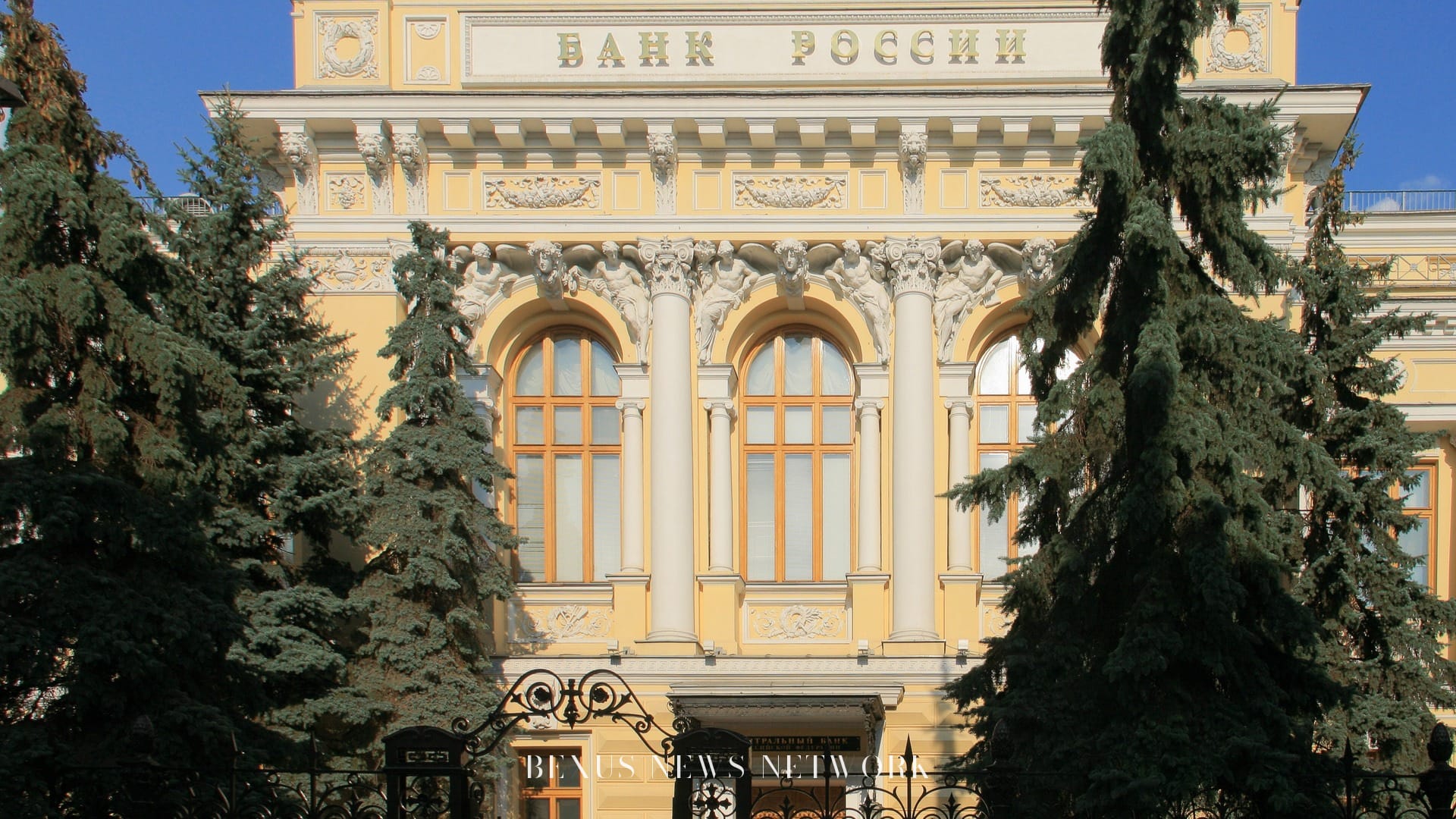
Moscow, Russia
The Bank of Russia decided on October 23 to maintain the key rate at 14.00% per annum. The key rate is the benchmark interest rate applied when the central bank lends money to commercial banks, serving as the basis for lending and deposit rates. In a statement released at 1:30 p.m. Moscow time, the Bank of Russia Board of Directors stated that current inflationary pressures remain elevated and inflation expectations (expectations by households and businesses that prices will rise in the future) are also high. After cutting the rate by 0.25 percentage points to 14.00% on July 24, it kept the rate unchanged for the second consecutive meeting following September 11. On this day, the central bank also released an updated medium-term forecast looking ahead at the economy over the next three years, presenting a projected average key rate of 12.5–13.5% for next year.
Third-quarter inflation shifted significantly within a single quarter. Seasonally adjusted inflation in the third quarter averaged an annualized rate of 8.0%, converting the quarter's increase into an annual figure. In the second quarter, it was 4.8%. Core inflation, calculated by excluding items with volatile prices, also jumped from 4.5% to 6.2%. The central bank pointed to motor fuel as the primary driver rattling prices. Inflation compared to the same month of the previous year was estimated at 6.8% as of October 19, and is projected to reach 7.1–7.6% in December this year. Inflation in December last year was 5.6%.
What the central bank viewed most seriously was price pressure that does not easily subside. The central bank stated that "underlying price growth," stripping away transitory fluctuations, remains at an annualized 5–6% and has not yet diminished. As a cause, it cited the impact of a temporary decline in production capacity across some sectors. The Governor noted that businesses are making major efforts to restore production capacity and that this factor is essentially temporary. However, she said that because this effect could last longer than anticipated in July, "moderately tight monetary conditions" will be required for a longer period to bring inflation back to 4% next year. The Governor projected that the current pace of price increases would return to 4% within the first half of next year.
The point regarding elevated inflation expectations appears in greater detail in the Governor's statement. The Governor stated that the indexation of utility tariffs (tariffs for essential utility services such as electricity, gas, and water) on October 1 somewhat exceeded the central bank's expectations. She also noted that because new utility bills have not yet arrived at households, this has been less reflected in the population's inflation expectations. Even so, the public's inflation expectations only slightly subsided in October and have remained near two-year highs in recent months, while expectations among analysts and financial market participants rose markedly. The central bank cited high inflation expectations as a risk factor, as they make it easier for businesses to pass increased costs on to prices. Wages are also a burden. The central bank stated that while wage growth is gradually approaching labor productivity growth, the gap between the two remains wide. The unemployment rate is near historical lows.
The labor market varies in temperature depending on the sector. The share of enterprises reporting labor shortages continues to decline. The Governor said that while labor is being freed up in wood processing and metallurgy, non-ferrous metals, chemical, and pharmaceutical companies continue to hire aggressively. The central bank stated that enterprises are planning smaller wage increases for next year than this year. Monetary conditions are evaluated by the central bank as "moderately tight." Although most financial market interest rates rose in the third quarter, inflation expectations rose alongside them, leaving the degree of tightness unchanged in real terms. Banks are looking slightly more stringently at non-price lending conditions, particularly credit requirements for large enterprises. Nevertheless, corporate lending expanded rapidly in the third quarter. The Governor noted that the revival of retail lending in September occurred because terms for preferential mortgage lending targeted at families were expected to change. The propensity to save slightly declined but remains elevated, and interest in savings instruments other than deposits is also growing moderately.
Reflecting stronger domestic demand, the central bank adjusted its gross domestic product (GDP) growth forecast for this year to 0.5–1.0%, and projected 1.0–2.0% for next year. Household consumption is expected to expand 3.0–3.5% this year and slow to 0.5–1.5% next year. Fixed capital investment in equipment and construction is forecast to range between a 1.0% decline and 0.0% this year. The Governor assessed that the recovery in investment is continuing and the expansion in production is spreading across various sectors. Outstanding loans (including debt securities) extended by banks to businesses and households are forecast to grow 8–11% this year, a level similar to last year's 9.9%, with corporate lending expected to increase 9–12%, household lending 5–8%, and mortgages within that category 6–9%. The Governor stated that because the pace of lending growth was faster than expected, the full-year lending growth forecast was raised to 8–11% and the money supply growth forecast to 10–13%. Money supply is the total volume of money circulating in the economy. Last year, the money supply growth rate was 10.6%.
After cutting the rate to 17.00% on September 12, 2025, the central bank lowered it eight consecutive times: to 16.50% on October 24, 16.00% on December 19, 15.50% on February 13 of this year, 15.00% on March 20, 14.50% on April 24, 14.25% on June 19, and 14.00% on July 24. The Governor explained the reason why rate cuts were paused. Having noted in September that room for further rate cuts depended on the three-year draft budget and the impact of reduced production capacity, she reiterated this in the current statement. The Governor said that although the confirmed draft budget was "somewhat conservative" compared to the assumptions in the July forecast, which could have allowed rate cuts to continue, the assessment changed because the impact of reduced production capacity could be prolonged. In its medium-term forecast, the central bank projected an average key rate of 14.6% this year, 12.5–13.5% next year, 9.0–10.0% in 2028, and 7.5–8.5% in 2029. The central bank stated that the average rate from January 1 to October 25 was 14.7%, and from October 26 to the end of the year it will average 14.0%. It said this calculation leaves room both to maintain or change the rate at the December meeting.
Fiscal and oil price assumptions were also part of this judgment. The central bank stated that the three-year draft budget from next year through 2029 envisions returning the structural primary balance—excluding cyclical fluctuations and interest expenditures—to zero by 2029. It constructed its forecast under the view that this budget will exert downward pressure on inflation going forward, and made clear that monetary policy could be adjusted if budget plans change. Oil price assumptions were raised. The central bank raised its assumption for the price of Russian crude oil used for tax calculations to an average of $72 per barrel this year and $55 next year, noting that the situation in the Middle East is keeping oil prices elevated. At these prices, goods exports this year are projected at $499 billion and imports at $349 billion, yielding a goods trade surplus of $150 billion. Last year, it was $113 billion. The current account surplus, which adds services and income to trade in goods, is projected at $71 billion this year (compared to $39 billion last year) and is expected to narrow to $31 billion next year. The Governor noted that although increased export revenues supported the ruble, the fiscal rule (a mechanism that sets aside revenues exceeding a benchmark oil price) limits the impact of global market prices on the exchange rate.
The central bank assessed that risks remain tilted to the upside for inflation. On the supply side, a further delay in the recovery of production capacity was cited, while on the demand side, persistently high inflation expectations, prolonged labor market tightness, and a "larger fiscal deficit" were identified as risks. The scenario the Governor cited as most unwelcome was the combination of a decline in the supply of goods and services alongside accelerating demand. The Governor said that while the global economy continues to grow, rising fuel prices are increasing global inflationary risks. She added that geopolitical factors could exert either upward or downward pressure on prices depending on developments. The only risk factor on the disinflationary side is if domestic demand cools more significantly than forecast.
The central bank will release a summary of the Board of Directors' discussion and a commentary on the medium-term forecast on November 5, with the next interest rate decision scheduled for December 18.
Sources (KST)
- Bank of Russia 「Банк России принял решение сохранить ключевую ставку на уровне 14,00% годовых」(2026-10-23) https://www.cbr.ru/press/PR?file=23102026_133000key.htm
- Bank of Russia 「Заявление Председателя Банка России Эльвиры Набиуллиной по итогам заседания Совета директоров Банка России 23 октября 2026 года」 https://www.cbr.ru/press/event/?id=32929
- Bank of Russia 「Среднесрочный прогноз Банка России」(2026-10-23) https://www.cbr.ru/Content/Document/File/198897/forecast_261023.pdf
- Bank of Russia 「Решения по денежно-кредитной политике」 https://www.cbr.ru/dkp/mp_dec/