Secretary of State Rubio: "U.S.-India Trade Agreement 99% Done, Weeks Not Months"… Ambassador Gor: "Trade Went from $20 Billion 15 Years Ago to $240 Billion"
India
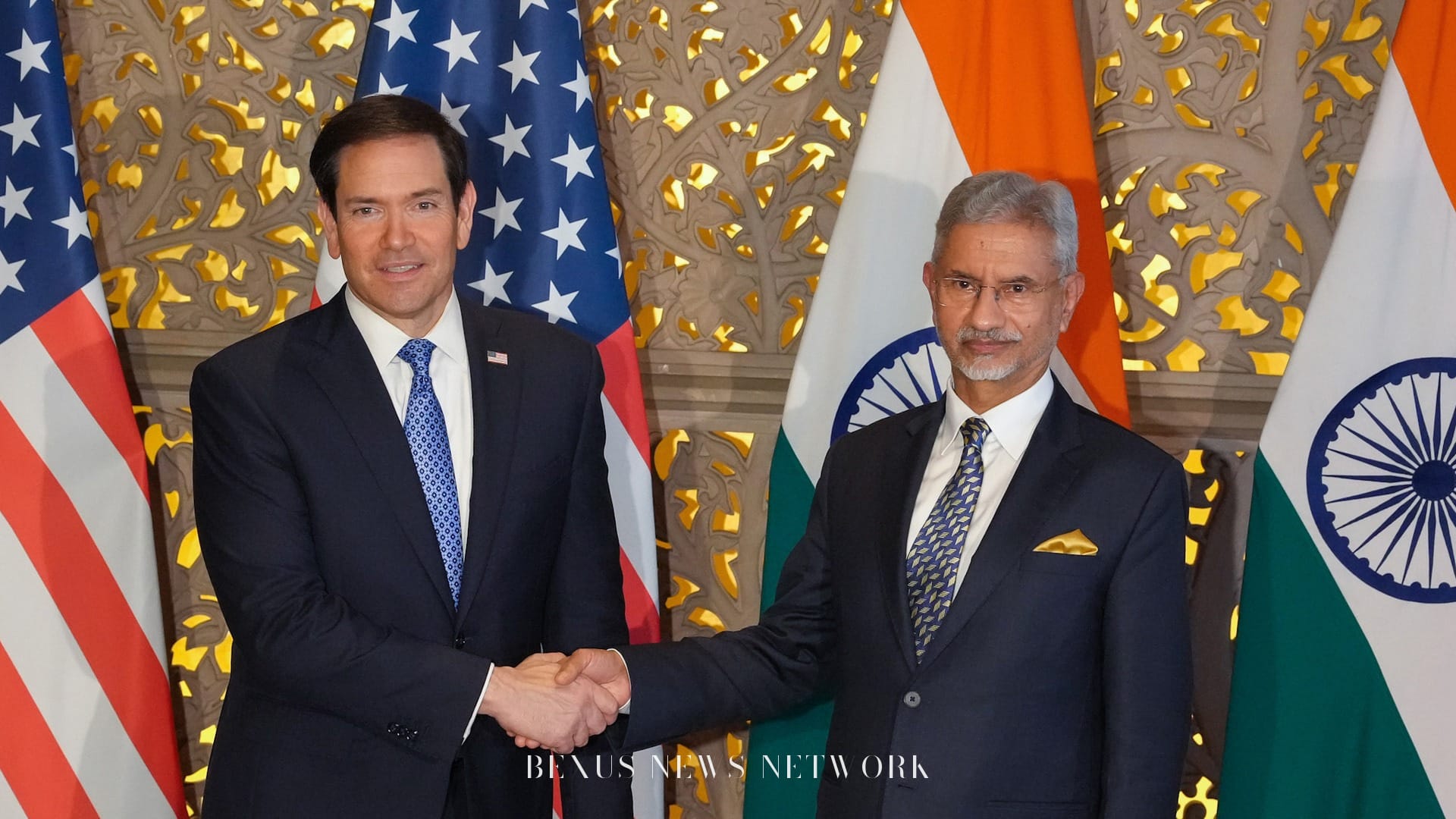
U.S. Secretary of State Marco Rubio said negotiations on a trade agreement between the United States and India are "99 percent done." The remarks came during an interview on October 20 at the U.S. Consulate General in Mumbai, India. The Secretary stated that it would take "weeks, not months" to finalize. Two days later, U.S. Ambassador to India Sergio Gor said in a Mumbai interview that bilateral trade, which was "20 billion 15 years ago, is 240 billion dollars today."
Negotiations 99% Done
In the October 20 interview at the U.S. Consulate General in Mumbai, Secretary Rubio was asked about the status of the negotiations. The Secretary declined to discuss specific details and sticking points, saying that what remains is "down to phrasing." He noted that both sides must be in "100 percent agreement" on what specific words and phrases mean, or the agreement could unravel later.
The Secretary said, "I think we're weeks, not months away from getting this done. 99 percent of the work is done."
Meeting with reporters at the Taj Mahal Palace hotel in Mumbai on the same day, the Secretary said, "The State Department doesn't negotiate trade agreements, but we've been deeply involved in the progress." He described the negotiations as "very close" with only a "handful" of items left to finalize, adding, "We hope to have good news to announce soon."
The Secretary also spoke about the reason for his visit to India, noting that India's External Affairs Minister visited the United States four times this year, while the Commerce Secretary, the FBI Director, the Vice President, and the Attorney General also visited India. He added, "If anything, I don't think we come enough."
On the same day, the Secretary posted on X that in Mumbai he discussed energy security and defense cooperation with Indian External Affairs Minister S. Jaishankar, while reaffirming the importance of advancing the U.S.-India strategic partnership.
In Mumbai, Indian External Affairs Minister @DrSJaishankar and I discussed energy security and defense cooperation while reaffirming the importance of advancing the U.S.-India strategic partnership. pic.twitter.com/NcBneQKQZL
— Secretary Marco Rubio (@SecRubio) 2026년 10월 20일
In an interview on October 22 at the Taj Mahal Palace hotel in Mumbai, the Secretary reiterated that "very few" items remain under negotiation. He declined to disclose details before an agreement is reached, stating that the deal must benefit both countries. He explained that the goal of the agreement is to provide clear rules so companies can invest.
The Secretary described relations with India as "stronger than ever," adding, "Five years from now, we'll look back and say it was one of the strongest relationships in the world." He said that once the trade agreement is completed, there will be much work to do in energy, artificial intelligence, telecommunications, and biotechnology and pharmaceuticals.
Tariffs on Russian Crude Oil
In the October 20 interview, Secretary Rubio described trade as an "area of friction to work through." Regarding the tariffs imposed on India, he said, "None of these tariffs are done to punish or harm India," explaining that they are part of a broader foreign policy aimed at ending the war between Russia and Ukraine.
The Secretary directly addressed the President's decision to issue a waiver. He noted that the President chose not to impose tariffs mandated by legislation passed by Congress, drawing criticism domestically. He explained that one reason the President did not impose them was the assessment that it could have a "very damaging impact" on the critically important relationship with India.
SECRETARY RUBIO: None of these tariffs are done to punish or harm India. They're part of a broader foreign policy that unfortunately involves a war going on between Russia and Ukraine that we'd like to see come to an end. pic.twitter.com/eOnUsAXl5X
— Department of State (@StateDept) 2026년 10월 20일
In the October 22 interview, the Secretary called this a "very wise decision." He said it helped the United States by allowing additional energy into the global market over a short period and benefited other countries at a time when diesel prices were high worldwide. Regarding India's energy diversification, he said, "It is less about buying less Russian crude and more about buying more Western Hemisphere crude, like American and Venezuelan."
Venezuelan Heavy Crude and Refining
In the October 20 interview, the Secretary stated that Venezuela would rapidly ramp up heavy crude production. He noted that there are only a few places in the world capable of refining heavy crude, and India's Reliance is one of them.
In the October 22 interview, he spoke about his visit to the Jamnagar refinery. The Secretary said the company is investing in Brownsville, Texas, adding, "We hope to see it operational by 2029."
$240 Billion in Trade
In an interview on October 22 at the Taj Mahal Palace hotel in Mumbai, Ambassador Gor said, "Bilateral trade is at an all-time high. It was 20 billion 15 years ago, and today it is 240 billion dollars."
He went on to discuss investments: "The President recently hosted Essar in the Oval Office. They are opening a multi-billion-dollar facility in the United States."
Defense and the Quad
Ambassador Gor stated that Lockheed and Boeing are operating in India, engaging in co-production. Over the past month, 500 U.S. Army soldiers participated in the joint exercise Yudh Abhyas in India, he said. In Exercise Tarang Shakti, F-35s came to India for the first time to train alongside the Indian military. The Ambassador remarked, "Our F-35s don't just go to any country. They go to countries we trust."
The Quad schedule was also addressed. The Ambassador noted that Minister Jaishankar, along with Australian and Japanese counterparts, will attend next week's G20 meeting in Atlanta. A leaders' meeting involving President Trump and Prime Minister Modi is being pursued "within the next month," he said. Secretary Rubio mentioned that the Quad Leaders' Summit would likely take place "probably in December."
In the October 20 interview, the Secretary described the Quad as "an area of very strong cooperation that is beginning to actually turn ideas into action."
SECRETARY RUBIO: We have so many areas of cooperation, the Quad being an example of an area of very strong cooperation, that is beginning to actually turn ideas into action. pic.twitter.com/QZPBpSoG6f
— Department of State (@StateDept) 2026년 10월 20일
In the October 22 interview, the Secretary said that over the past year and a half, there have likely been more Quad ministerial meetings than in the previous four years combined. Noting that President Trump has two and a half years left in his term, he pledged to arrange more leader-level summits.
Pax Silica and Small Modular Reactors
Ambassador Gor stated that India joined Pax Silica as one of the first 10 countries invited by the United States. He added that a counternarcotics meeting will be held in Delhi in three weeks, with the U.S. Attorney General, the DEA Administrator, and federal prosecutors visiting India.
Regarding small modular reactors (SMRs), he noted that India's passage of the SHANTI Act opened the way for private sector technology. He also mentioned that India is one of the locations where the United States is considering deploying its first overseas SMR.
Pakistan and China
In the October 20 interview, Secretary Rubio said that U.S. relations with any country would "never come at the expense of" its relationship with India. He declined to use the 1970s as a precedent, explaining that "the world is completely different today." On October 22, he reiterated that relations with Pakistan would "never come at the expense of our relationship with India."
Regarding China, he said that describing the U.S. stance as "'soft' is not the right word." He stated that Chinese measures such as export controls are creating friction, and the United States will continue to push back against actions it considers harmful. He added that if the United States and China enter a trade war, it would be "destructive" to the global economy and would impact India as well.
On October 22, he remarked, "We must avoid being 90 percent dependent on any single country in critical areas. That's not just singling out China." He also said that the United States and India could work together to build domestic production capabilities in artificial intelligence, biotechnology, pharmaceuticals, and critical minerals.
Sources (KST)
- U.S. Department of State · 2026-10-20 Interview (Mumbai) · https://www.state.gov/releases/office-of-the-spokesman/2026/10/secretary-of-state-marco-rubio-with-shubhajit-roy-of-the-indian-express
- U.S. Department of State · 2026-10-20 Remarks to the Press (Mumbai) · https://www.state.gov/releases/office-of-the-spokesman/2026/10/secretary-of-state-marco-rubio-remarks-to-the-press-19/
- U.S. Department of State · 2026-10-22 Interview (Mumbai) · https://www.state.gov/releases/office-of-the-spokesperson/2026/10/secretary-of-state-marco-rubio-and-u-s-ambassador-to-india-sergio-gor-with-raj-chengappa-of-india-today/
- X @SecRubio · https://x.com/SecRubio/status/2112502807723180204
- X @StateDept · https://x.com/StateDept/status/2112676731442344017
- X @StateDept · https://x.com/StateDept/status/2112675106602578218