EU's Kallas and Kos: "Serbian Voters Gave a Strong Mandate for Change"… President Costa Congratulates "Student List" Victory, Says "Serbia's Place Is in the EU"
Brussels, Belgium
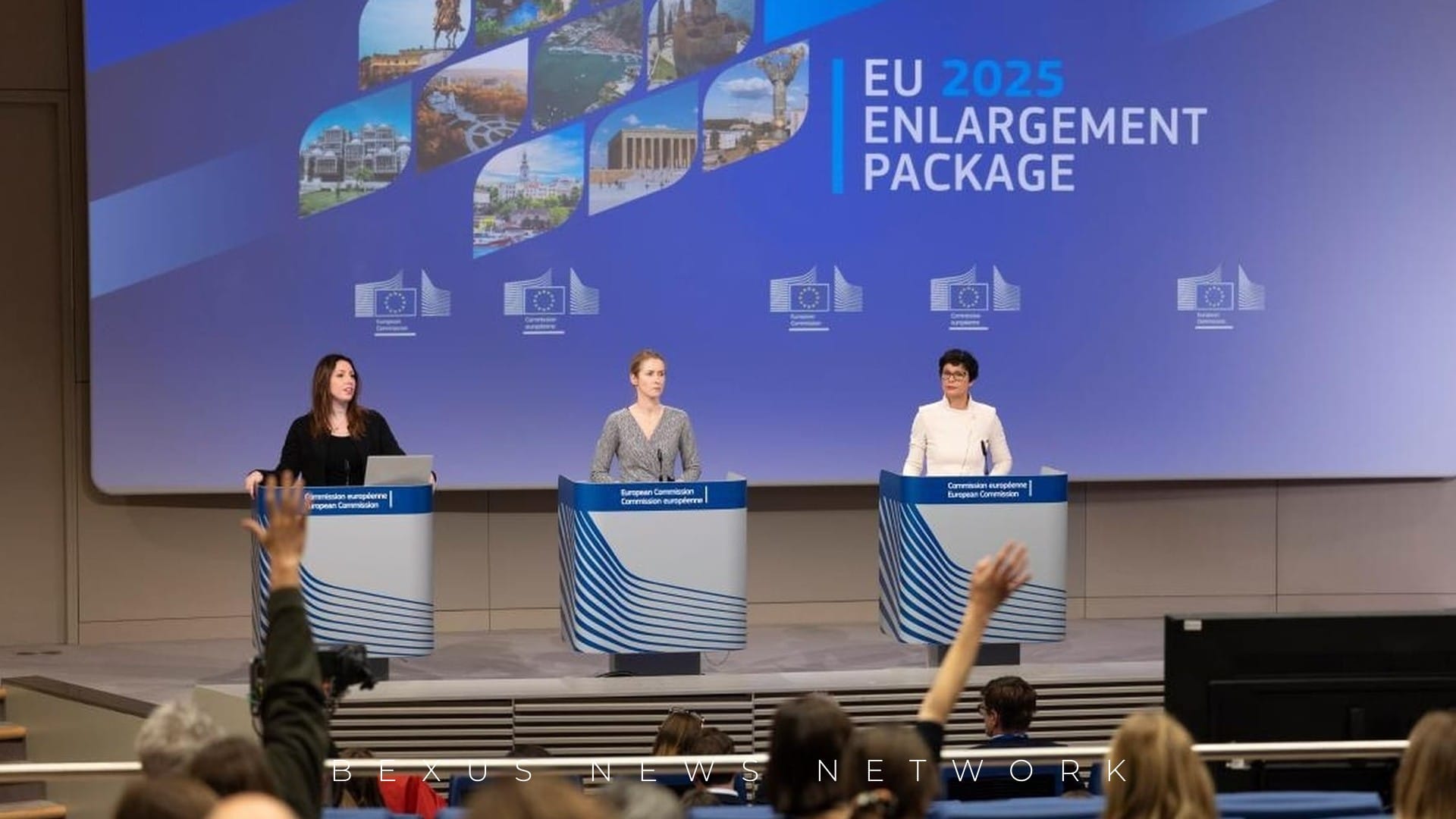
Kaja Kallas, High Representative of the European Union for Foreign Affairs and Security Policy and Vice-President of the European Commission, and Marta Kos, European Commissioner for Enlargement, issued a joint statement on the early parliamentary elections in Serbia on October 27, 2026, in Brussels, Belgium. The two stated that "On Sunday, 25 October, the citizens of Serbia turned out in historic numbers to make their voices heard," and that "Voters gave a strong mandate for change to the next government." On the same day, António Costa, President of the European Council, posted on X that he had spoken by phone with Dr. Ilija Srdanović to congratulate him on the election victory of the "Student List." The Student List is a slate of candidates fielded in this parliamentary election by a university student-led protest movement that spread nationwide following the deadly collapse of an awning at the Novi Sad railway station in November 2024. Serbia has been an EU candidate country since 2012, but there has been no official progress in accession negotiations since 2021.
According to the preliminary statement of the observation mission, the catalyst for these early parliamentary elections was the November 2024 collapse of an awning at the newly renovated Novi Sad railway station, which killed 16 people. The mission noted that following the disaster, student-led protests demanding transparency and accountability and denouncing corruption spread across the country, and amid ongoing university blockades, Prime Minister Miloš Vučević resigned in January 2025. The mission recorded that in May 2025, the student movement, supported by several opposition parties, demanded early elections and announced it would run directly. The previous government was elected in 2023, and the Serbian Progressive Party (SNS) had been in power since 2012 in a coalition with the Socialist Party of Serbia (SPS).
High Representative Kallas and Commissioner Kos State Serbian Voters Gave Strong Mandate for Change
High Representative Kallas and Commissioner Kos stated in their joint statement, "The prompt concession of the results by the key contestants demonstrates a commitment to a smooth democratic process." The two stated, "The official confirmation of the results should lead to an orderly transition of power and the swift formation of parliament and government to address key challenges facing Serbia." They also declared, "Free, fair and transparent elections in line with international standards are a prerequisite for the proper functioning of democratic institutions and necessary for Serbia to meet EU accession criteria."
Joint statement by HR/VP @kajakallas and Commissioner @MartaKosEU on the early parliamentary elections in Serbia.
— European External Action Service - EEAS 🇪🇺 (@eu_eeas) 2026년 10월 27일
The EU remains ready to work closely with the incoming Serbian government on the fundamentals of the EU accession process, specifically on democratic criteria,… pic.twitter.com/X3Zjm3rTP5
President Costa wrote on X following the phone call, "The priority now is to establish Parliament and the new government without delay, through a peaceful transition and in full respect of the election results." He wrote, "Serbia's place is in the EU," adding, "We stand ready to support Serbia's European path, with a clear focus on the reforms demanded by the Serbian people: the rule of law, the fight against corruption, and media freedom." European Commission President Ursula von der Leyen congratulated the Student List on its victory on X on election day, October 25, writing, "The Serbian people have turned out in record numbers to decide their country's future."
I just had a good phone conversation with Dr Ilija Srdanović.
— António Costa (@eucopresident) 2026년 10월 27일
I congratulated him on the Student List’s election victory in Serbia.
The priority now is to establish Parliament and the new government without delay, through a peaceful transition and in full respect of the…
According to the preliminary statement of the International Election Observation Mission (IEOM), Aleksandar Vučić conceded defeat within hours of the close of voting. The mission recorded that Vučić had resigned from the presidency on September 27 to contest the parliamentary elections, with National Assembly Speaker Ana Brnabić assuming the role of acting president. Then-President Vučić dissolved parliament on September 9 and scheduled early parliamentary elections for October 25. The mission noted that six of the eight parliamentary elections held since 2007 took place more than a year before the end of the term.
International Election Observation Mission Assesses Election Day Procedures Positively, While Noting Ruling Party's Misuse of State Resources
The International Election Observation Mission referred to in the EU joint statement was jointly deployed by the Organization for Security and Co-operation in Europe Office for Democratic Institutions and Human Rights (OSCE/ODIHR), the European Parliament, the Parliamentary Assembly of the Council of Europe (PACE), and the OSCE Parliamentary Assembly. The ODIHR is an institution that observes elections in OSCE participating States and assists democratic and human rights institutions. In its preliminary statement issued in Belgrade on October 26, the mission announced that it deployed 388 observers from 39 countries on election day and observed voting across 1,485 polling stations. The ODIHR election observation mission was led by Head of Mission Eoghan Murphy and had been deployed on the ground since September 15, while Gilles Baum, OSCE Special Co-ordinator, led the short-term observation mission. The European Parliament delegation was led by MEP Andreas Schieder.
The mission assessed that the parliamentary elections featured "active citizen engagement amid high turnout and dynamic competition between two main contestants." The mission recorded an estimated turnout of approximately 69 percent, noting that voters formed queues outside polling stations domestically and abroad from early morning. The mission announced that "Election day was assessed positively at all stages in the vast majority of polling stations observed."
The mission assessed that the legal framework provides an "improved basis" for conducting democratic elections. The mission announced that while substantial amendments to the electoral legal framework were adopted in 2025 and 2026 addressing several ODIHR recommendations, some were addressed only partially, without meaningful consultation during the legislative process and without achieving broad political consensus. The mission stated that priority recommendations—such as preventing the misuse of administrative resources, voter intimidation and pressure, effective sanctions for campaign and campaign finance violations, journalists' safety, and oversight by the media regulatory body—remained unaddressed. The mission noted that the unified voter register contained approximately 6.5 million voters, but persistent doubts regarding the accuracy of the register, such as fictitious entries, deceased voters, and incorrect addresses, continued. The mission assessed that authorities did not provide sufficiently comprehensive public explanations regarding reported discrepancies, leaving public mistrust unallayed. According to the mission, 19 candidate lists were initially registered, and after one withdrew, 18 lists competed.
However, the mission assessed that the elections were held in an "intensely polarized atmosphere" and that equality of campaign opportunity was "seriously compromised." The mission announced that "entrenched advantages enjoyed by the ruling party, including the misuse of state resources, along with intimidation and pressure on voters, candidates, and civil society, and campaign disruption, further degraded the electoral environment." The mission recorded that the state Pension and Disability Insurance Fund (PIO) distributed up to 1.9 million letters signed by the then-president just before and during the campaign, blurring one-off pension payment notices with campaign messaging. The mission assessed that pledges of financial benefits totaling nearly €1 billion announced before and during the campaign blurred the line between state duties and party activities. The mission noted that public broadcaster RTS provided biased coverage favoring the "United Serbia" bloc while covering the Student List negatively. The mission announced that reported physical attacks targeting polling board members, citizen observers, and journalists on election day raised serious concerns, and personal data of approximately 6.7 million voters was leaked online. High Representative Kallas and Commissioner Kos also stated in their joint statement that "the reported cases of physical violence cause serious concern."
Mission Notes 'Color Revolution' Rhetoric and Russian Officials' Allegations of Western Interference
The mission assessed that the campaign led by the Serbian Progressive Party (SNS) deepened political divisions by linking the student movement and civil society organizations to foreign powers. According to the mission, the ruling camp claimed that the student movement and civil society groups were part of a foreign-backed "color revolution." Color revolutions refer to instances in former Soviet states and elsewhere where citizen protests against electoral fraud led to changes of government.
The mission noted in footnotes to the preliminary statement that Russian officials also made claims that the West was seeking to interfere in Serbia's elections, and that Russian President Vladimir Putin was reported to have stated on October 1 that he hoped Vučić would become prime minister. The mission noted that on the same day, Vučić referred to the student movement as part of an "imported color revolution" during a campaign event. The mission noted that Vučić stated in an October 20 YouTube interview with Russian journalist Ksenia Sobchak that the student movement enjoyed public support from leaders of Albania, Croatia, and Montenegro. The mission recorded that the SNS website featured Vučić's allegations on October 4 that foreign intelligence services and actors from Croatia, Montenegro, and Kosovo were meddling in the elections, that the Serbian Ministry of Foreign Affairs sent a protest note to Croatia on October 14 alleging election interference, and that Croatian Prime Minister Andrej Plenković was reported to have dismissed the allegations as "ludicrous."
The mission noted that independent citizen observer organizations were also subjected to attacks. According to the mission, Vučić said of the citizen observer group CRTA on October 4, "They are part of a color revolution, the creators of the lie about acoustic cannons, and they are funded by the EU and other European countries." On the same day, Acting President Brnabić wrote on X urging citizens not to follow CRTA's opinions, assessments, and directions, stating that "it has been shown multiple times that their sole goal is regime change, irrespective of the people's will." Vučić said on October 6, "Someone from outside poured huge amounts of money in to heat up the atmosphere." The mission recorded that the Republic Electoral Commission accredited 15,539 observers from 26 citizen observer organizations and 637 observers from 57 international and foreign organizations.
The mission announced that the online environment was marred by inflammatory rhetoric, harassment and intimidation, cybersecurity incidents, coordinated inauthentic behavior, and disinformation, including content generated by artificial intelligence (AI), with fact-checking organizations identifying instances where such disinformation was amplified by mainstream media. The mission cited EU concerns regarding the rule of law and media freedom, alongside Serbia's low alignment rate with the EU Common Foreign and Security Policy, as reasons Serbia has seen no progress in its EU accession negotiations.
EU Sets Rule of Law, Anti-Corruption, and Media Freedom Reforms as Starting Point for Accession Talks with New Government
High Representative Kallas and Commissioner Kos announced in their joint statement, "Tangible improvements and reforms of the electoral framework, based on a genuine and inclusive process involving all relevant stakeholders, to genuinely address OSCE/ODIHR and Council of Europe recommendations, remain a priority." The two stated, "The EU remains ready to work closely with the incoming Serbian government on the fundamentals of the EU accession process, specifically on democratic criteria, fundamental rights including an independent judiciary and media freedom." They declared that "Looking ahead, reducing polarization within society will be essential to building trust among citizens and overcoming divisions," adding that the EU stands ready to support reforms and translate them into opportunities for the people of Serbia.
Commissioner Kos posted on X on October 26, the day after the vote, that she had spoken with Dr. Srdanović to congratulate the Student List on its "impressive election victory." Commissioner Kos wrote, "The Serbian people have given a strong mandate for change," adding, "Their demands for the rule of law, the fight against corruption and free media are the reforms that will bring Serbia closer to the EU." On the night of the vote, Commissioner Kos wrote, "After nearly two years of protests for democracy, rule of law, and anti-corruption, Serbians have turned out in historic numbers," adding, "The EU's door is open."
I spoke with Ilija Srdanović to congratulate the Student List on their impressive election victory. We discussed how important it is to build trust.
— Marta Kos (@MartaKosEU) 2026년 10월 26일
The Serbian people have given a strong mandate for change. Their demands for the rule of law, the fight against corruption and…
The mission announced that the ODIHR will publish a final report containing recommendations approximately eight weeks after the completion of the electoral process, and PACE will present its report during its January 2027 part-session. In a footnote, the mission noted that the European Parliament, in a report on Serbia adopted on July 8, 2026, by 468 votes in favor and 116 against, assessed "democratic backsliding, weakened rule of law, poor implementation of key reforms, and low alignment with EU foreign policy."
Sources (KST)
- EU High Representative Kallas and Commissioner Kos Joint Statement, "Joint statement on the early parliamentary elections in Serbia" (STATEMENT/26/2275, October 27, 2026): https://ec.europa.eu/commission/presscorner/detail/en/statement_26_2275
- International Election Observation Mission (OSCE/ODIHR, OSCE PA, PACE, European Parliament), "Republic of Serbia – Early Parliamentary Elections, 25 October 2026: Statement of Preliminary Findings and Conclusions" (October 26, 2026): https://odihr.osce.org/sites/default/files/documents/official_documents/2026/10/SRB%20Early%20Parliamentary%202026_PS_26.10.2026.pdf
- European External Action Service (EEAS) X Post (October 27, 2026): https://x.com/eu_eeas/status/2115154794759204920
- European Council President António Costa X Post (October 27, 2026): https://x.com/eucopresident/status/2115124331688632372
- EU Commissioner for Enlargement Marta Kos X Post (October 26, 2026): https://x.com/MartaKosEU/status/2114762565586751709
- EU Commissioner for Enlargement Marta Kos X Post (October 25, 2026): https://x.com/MartaKosEU/status/2114483686699589776
- European Commission President Ursula von der Leyen X Post (October 25, 2026): https://x.com/vonderleyen/status/2114483453404045768