Japan’s Joint Staff to Hold “Joint Senior Leaders Seminar” With U.S. Pacific Command in Hawaii on the 13th
Indo-Pacific
Japan’s Joint Staff announced on the 11th that it will hold a “Joint Senior Leaders Seminar (J-SLS)” with U.S. Pacific Command in Hawaii, United States, on Friday, Nov. 13. The Joint Staff said it will share perceptions of the Indo-Pacific security environment and discuss matters Japan and the U.S. will jointly pursue for regional peace and stability, as well as deeper Japan-U.S. cooperation.
The Joint Staff said in its press release that the Self-Defense Forces Joint Operations Command will also take part in the seminar. The announcement did not include the names and titles of participants or a detailed schedule.
Hawaii seminar set for the 13th
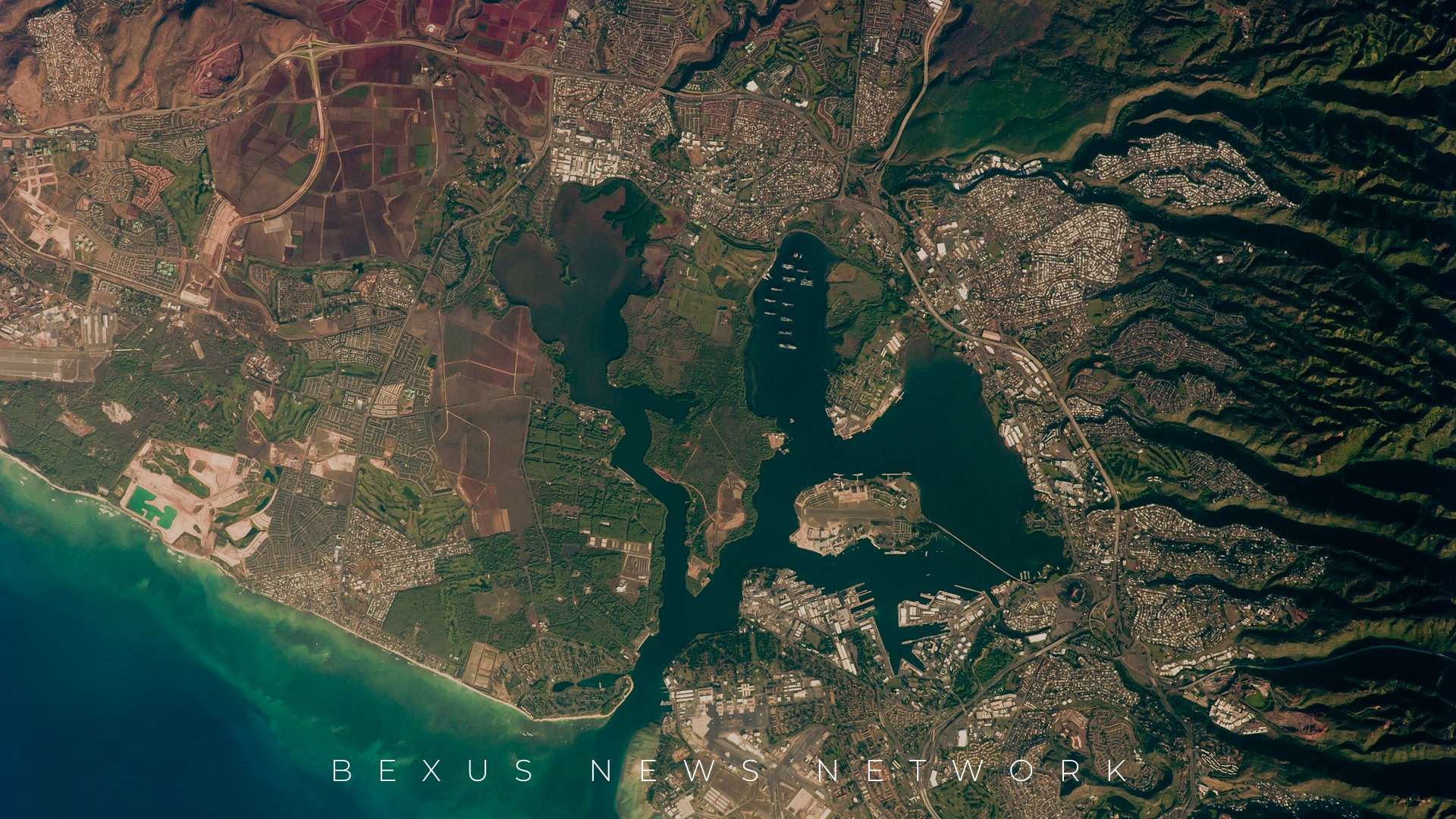
In its press release dated the 11th, “Regarding the Implementation of the Joint Senior Leaders Seminar (J-SLS) With U.S. Pacific Command Headquarters,” the Joint Staff gave the date as “November 13, Reiwa 8 (Friday)” and the location as “State of Hawaii, United States.” The Japanese side is the Joint Staff, and the counterpart is the U.S. military command that the release designates “U.S. Pacific Command.”
The seminar’s name was given using the English abbreviation J-SLS as is. The Joint Staff did not say in the release which iteration of the seminar this is or when the previous one was held.
The Joint Staff did not announce the seminar’s start and end times or the structure of its program.
Agenda
The Joint Staff described the J-SLS agenda in three parts. The first is sharing perceptions of the Indo-Pacific security environment. The second is matters Japan and the U.S. will jointly pursue for regional peace and stability. The third is deeper Japan-U.S. cooperation, among other things. The Joint Staff said these would be discussed “across a wide range of areas,” with the Joint Operations Command also taking part.
No specific agenda items were disclosed. The Joint Staff did not mention in the release country-specific issues concerning China, Russia or North Korea, or any specific operational plans.
Joint Operations Command takes part
The Self-Defense Forces Joint Operations Command (JJOC) was established in Ichigaya, Tokyo, in March 2025. In the summary of its “Defense of Japan 2025” white paper, Japan’s Ministry of Defense explained that the commander can exercise unified command from peacetime over the main Ground, Maritime and Air Self-Defense Force units and over space and cyber domain units. The summary said the arrangement is meant to carry out cross-domain operations seamlessly at every stage from peacetime to contingencies.
In the white paper summary, the ministry explained that the Commander of the Joint Operations Command, on orders from the Minister of Defense, assigns missions to the unit commanders suited to the situation and, when several operations run at the same time, allocates forces with the overall balance in mind.
The Joint Staff did not disclose what specific role the Joint Operations Command will play at the seminar.
Japan-U.S. joint drills this fall
In the month before announcing the J-SLS, the Joint Staff made public two Japan-U.S. joint drills. On Oct. 14, two Air Self-Defense Force F-15 fighters from the 9th Air Wing and one E-767 airborne early warning and control aircraft from the Airborne Early Warning and Control Wing conducted various tactical training with four U.S. military F-22s over the East China Sea northwest of Okinawa’s main island.
In its Oct. 15 press release, the Joint Staff said the drill confirmed “the strong will of Japan and the U.S. not to allow unilateral changes to the status quo by force” and the readiness of the Self-Defense Forces and the U.S. military, further strengthening the deterrence and response capabilities of the Japan-U.S. alliance.
On Oct. 23, a Japan-U.S.-Philippines trilateral Maritime Cooperative Activity took place in the South China Sea. In its Oct. 25 press release, the Joint Staff said the Maritime Self-Defense Force destroyer Kirisame, the U.S. Coast Guard national security cutter Bertholf, the Philippine Navy frigate BRP Miguel Malvar and aircraft (C-208B, FA-50, A-29B), and the Philippine Coast Guard patrol vessel BRP Gabriela Silang took part and conducted various tactical drills.
The Joint Staff described the Maritime Cooperative Activity as “an activity that supports freedom of navigation and overflight and respects maritime rights under international law as reflected in the United Nations Convention on the Law of the Sea.”
Japan-U.S. drill record this year
The Joint Staff’s official X account has posted news of Japan-U.S. joint command post exercises and Japan-U.S. and Japan-U.S.-South Korea drills since early this year. On Jan. 29, it announced the start of the Reiwa 7 fiscal year Japan-U.S. Joint Integrated Exercise (command post exercise).
https://x.com/jointstaffpa/status/2016704177888776417
In that post, the Joint Staff gave the exercise’s purpose as strengthening the deterrence and response capabilities of the Japan-U.S. alliance and improving integrated operational capability. In September, it announced the end of the Freedom Edge 26 drill that Japan, the United States and South Korea held in and over the East China Sea.
https://x.com/jointstaffpa/status/2098699519869493294
The Joint Staff said on Sept. 11 that all training had ended, and that the drill had strengthened Japan-U.S.-South Korea interoperability and cooperative relations, including in cross-domain operations by the Self-Defense Forces. It wrote that the Self-Defense Forces will continue defense cooperation with the United States and South Korea to contribute to “creating a security environment that does not allow unilateral changes to the status quo by force.”
The Joint Staff announced on its official X account on June 26 that on June 22–23 it conducted Japan-U.S. joint integrated anti-ship strike training during Valiant Shield 26.
Japan-U.S. cooperation in the white paper
In the summary of “Defense of Japan 2025,” Japan’s Ministry of Defense wrote that Japan’s National Defense Strategy and the U.S. defense strategy are aligned in prioritizing “preventing unilateral changes to the status quo by force.” The ministry said Japan and the U.S. will deepen discussions on their respective roles, missions and capabilities and strengthen joint Japan-U.S. deterrence.
The ministry explained that Japan and the U.S. have set up the “Alliance Coordination Mechanism (ACM)” to coordinate responses. It said the ACM was used for close coordination during the Kumamoto earthquake and the Noto Peninsula earthquake, North Korean ballistic missile launches, and Chinese activity in the sea and airspace around the Senkaku Islands. The summary included, with photos, the Japan-U.S. bilateral exercise “Keen Sword 25” in October 2024, as well as a joint press conference that month attended by Chief of the Joint Staff Yoshida and Stephen Koehler, Commander of the U.S. Pacific Fleet.
Chinese military activity in the past month
The Joint Staff also made public, by press release, Chinese military activity around Japan during the same period. At around 11 a.m. on Oct. 13, the Maritime Self-Defense Force spotted the Chinese Navy aircraft carrier Liaoning (hull number 16), two Renhai-class guided-missile destroyers (103, 104) and a Luyang III-class guided-missile destroyer (123) — four ships in all — heading south about 390 km southwest of the Danjo Islands in Nagasaki Prefecture. The ships passed southeast between Okinawa’s main island and Miyako Island on the 14th and headed out to the Pacific.
The Joint Staff said it confirmed Liaoning’s carrier-based fighter takeoffs and landings about 250 km south of Ishigaki Island on the 14th, and in its release of the 15th said it confirmed about 10 takeoffs and landings of carrier-based fighters and helicopters. The four ships headed for the South China Sea on the 15th. The Air Self-Defense Force responded, including by scrambling fighter jets in response to the carrier-based fighters’ takeoffs and landings.
The Joint Staff confirmed and announced other Chinese military movements as well.
| When confirmed | Subject | Details |
|---|---|---|
| Oct. 16–17 | Luyang III-class destroyer (122), Jiangkai II-class frigate (576), Fuchi-class supply ship (889) | Headed northeast about 220 km south of Miyako Island, then northwest between Okinawa’s main island and Miyako Island into the East China Sea |
| Oct. 27 | Renhai-class destroyer (102), Fuchi-class supply ship (903) | Headed southeast about 140 km northeast of Miyako Island, entering the Pacific between Okinawa’s main island and Miyako Island |
| Oct. 27 | Renhai-class destroyer (109), Luyang III-class destroyer (133), Jiangkai II-class frigate (530), China Coast Guard ship (2307) | Headed east about 200 km west of Kuchinoerabu Island, passing through the Osumi Strait into the Pacific |
| Oct. 31 | One suspected Chinese drone | Flew in from the East China Sea, passed between Yonaguni Island and Taiwan and exited into the Pacific |
| Nov. 5 | TB-001 reconnaissance/attack drone | Flew over the East China Sea as far as southwest of the Danjo Islands, then turned around off Okinawa’s main island |
| Nov. 10 | One Y-9 intelligence-gathering aircraft | Made a round trip between south of the Danjo Islands and northwest of Okinawa’s main island |
Fighters of the Air Self-Defense Force’s Southwestern Air Defense Force scrambled in response to the Oct. 31 drone, the Nov. 5 TB-001 and the Nov. 10 Y-9. A China Coast Guard ship was among the four vessels that passed through the Osumi Strait, and the Maritime Self-Defense Force listed it as a “China Coast Guard ship.”
Defense Ministry announcement the same day
On the 11th, Japan’s Ministry of Defense announced, separately from the J-SLS, that the relocation of training from Iwakuni airfield to Misawa Air Base under the realignment of U.S. forces (Japan-U.S. joint training) will take place from Nov. 30 to Dec. 11. It is the 13th training relocation at the Air Self-Defense Force’s Misawa Air Base. The same day, the Joint Staff also announced three Russian Navy ships heading west through the Soya Strait.
Sources (KST)
- Japan’s Joint Staff · 2026-11-11 · 米太平洋軍司令部とのジョイント・シニア・リーダーズ・セミナー(J-SLS)の実施について · https://www.mod.go.jp/js/pdf/2026/p20261111_01.pdf
- Japan’s Joint Staff · 2026-10-15 · 日米共同訓練の実施について · https://www.mod.go.jp/js/pdf/2026/p20261015_01.pdf
- Japan’s Joint Staff · 2026-10-25 · 日米比共同訓練の実施について · https://www.mod.go.jp/js/pdf/2026/p20261025_02.pdf
- Japan’s Ministry of Defense · 2025 · Defense of Japan 2025 (Digest) · https://www.mod.go.jp/j/press/wp/wp2025/pdf/DOJ2025_Digest_EN.pdf
- Japan’s Joint Staff · 2026-10-14·15 · 中国海軍艦艇の動向について · https://www.mod.go.jp/js/pdf/2026/p20261014_01.pdf
- Japan’s Joint Staff · 2026-10-27·28 · 中国海軍艦艇(等)の動向について · https://www.mod.go.jp/js/pdf/2026/p20261028_01.pdf
- Japan’s Joint Staff · 2026-11-05·10 · 中国軍機の動向について · https://www.mod.go.jp/js/pdf/2026/p20261110_01.pdf
- Japan’s Ministry of Defense · 2026-11-11 · 米軍再編に係る岩国飛行場から三沢基地への訓練移転について · https://www.mod.go.jp/j/press/news/2026/11/11a.pdf
- Japan’s Joint Staff official X @jointstaffpa · 2026-01-29 · https://x.com/jointstaffpa/status/2016704177888776417
- Japan’s Joint Staff official X @jointstaffpa · 2026-09-12 · https://x.com/jointstaffpa/status/2098699519869493294
- Japan’s Joint Staff official X @jointstaffpa · 2026-06-26 · https://x.com/jointstaffpa/status/2070433912116199863