IISS: "Iran War Pushes Gulf States' Diplomatic, Defense, and Economic Models to Their Limits"… Strategic Report 'The Gulf at War' Released on Opening Day of Manama Dialogue
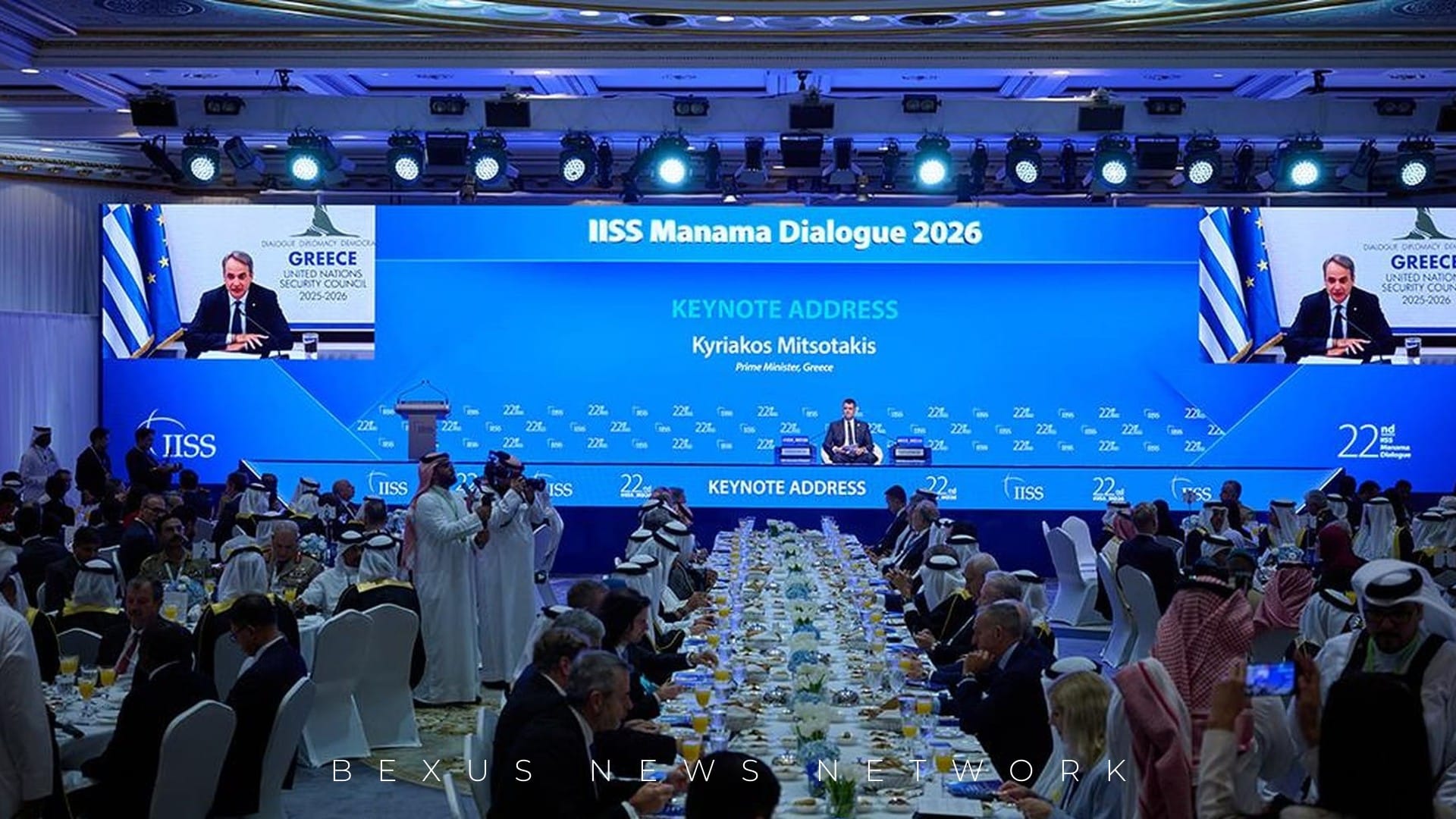
Manama, Bahrain
On October 30 (local time), the opening day of the IISS Manama Dialogue 2026 (October 30–November 1) held in Manama, Bahrain, the International Institute for Strategic Studies (IISS) released its strategic dossier "The Gulf at War: Geopolitical, Defence and Geo-economic Dimensions."
Composed of 11 chapters and a conclusion, the dossier addresses the impact of the 2026 U.S.–Israel war against Iran on the foreign policies, defense, and economies of the six Gulf states: Bahrain, Kuwait, Oman, Qatar, Saudi Arabia, and the United Arab Emirates (UAE). In the introduction, the IISS noted that "The core proposition of this dossier is that the war with Iran challenged those assumptions, pushing the Gulf states’ models across the diplomatic, defence and economic spheres to their limits."
On the same day, the IISS posted an image of the dossier's cover on its official X account, introducing it by stating, "Over the past two decades, successive crises have reinforced the global significance of the Gulf states," and adding that "The latest IISS Strategic Dossier examines the multifaceted implications of the 2026 United States–Israel war with Iran for the foreign policies and defence and economic priorities of the Gulf states."
Over the past two decades, successive crises have reinforced the global significance of the Gulf states.
— IISS News (@IISS_org) 2026년 10월 30일
The latest IISS Strategic Dossier examines the multifaceted implications of the 2026 United States–Israel war with Iran for the foreign policies and defence and economic… pic.twitter.com/nYvSbrZqMj
"Premise of U.S. Security Guarantees Shaken"... Diagnosis of a 'Post-American Gulf'
The introduction of the dossier pointed out that since the early 1990s, the Gulf states had built their defense and security systems on the premise of credible U.S. security guarantees and the forward presence of U.S. forces on their territories, regarding themselves as "too big to fail" due to their weight in global energy security and foreign investment. The IISS noted that this war shook such assumptions and, "above all, punctured the self-confidence the Gulf states had projected to their own societies and to the world."
In the introduction, the IISS projected that "after the war, the US may not maintain as large a forward military footprint in the Gulf, given its vulnerability to Iranian attack," adding that the U.S. is instead more likely to establish a larger footprint in the Eastern Mediterranean.
Chapter 3, which covers "The Making of a Post-American Gulf," characterized this war as a turning point in Gulf–U.S. relations comparable to the 1991 Gulf War. The dossier noted that while the U.S.-led liberation of Kuwait solidified a U.S.-centric Gulf security architecture, the war with Iran is likely to reverse that architecture.
The dossier noted that the security policies of the Gulf states are shifting toward self-reliance and regional alliance-building, citing as examples the "Mecca Joint Defense Agreement" among Pakistan, Saudi Arabia, and Türkiye, and the deepening security ties between the UAE and Israel. However, the dossier added that this has not translated into strengthened collective defense at the Gulf Cooperation Council (GCC) level.
Air Defense Achievements and Limitations..."Countering Cheap Mass Is Top Priority"
In the military sector, the dossier identified vulnerabilities of the Gulf states, including heavy reliance on U.S.-made air and missile defense systems and munitions, failure to integrate regional defenses, a deficit in minesweeping capabilities, limited means of retaliation, and the cost-exchange ratio problem of using expensive systems to intercept cheap uncrewed aerial vehicles (UAVs) and missiles.
Chapter 5 stated that, according to IISS analysis of figures released through March 6, the first week of the war, the UAE intercepted approximately 93% of incoming projectiles and Qatar intercepted 89%, while Bahrain's overall interception rate was 76%. The dossier recorded that by the April 8 ceasefire, more than 3,000 ballistic missiles and one-way attack (OWA) UAVs had been launched against the UAE, and half of all weapons fired by Iran against the Gulf states were directed at the UAE.
Content regarding South Korea was also included. The dossier noted that South Korea provided Cheongung-II (KM-SAM Block II) interceptor missiles to the UAE, which reportedly achieved a 96% interception rate. It also projected that since South Korea exported KM-SAM Block II to the UAE in 2022 and Saudi Arabia signed a purchase contract in 2024, the strong operational performance of the system in the UAE could help secure buyers for the L-SAM Block I, scheduled for deployment in 2027. The dossier also assessed that, with the exception of South Korea, Asian nations heavily reliant on Gulf energy were far more passive in the defense of the Gulf states.
According to Chapter 5 of the dossier, the Gulf states engaged 4,670 one-way attack UAVs and more than 1,400 ballistic missiles, based on figures aggregated from announcements by respective ministries of defense and governments as well as media reports, while land-attack cruise missiles (LACMs) were used in relatively small numbers. The dossier stated that Qatar achieved a 97% missile interception rate and a 72% UAV interception rate, while Bahrain recorded 86% for missiles and 71% for UAVs. The dossier also recorded that Qatar intercepted and shot down two Iranian Sukhoi Su-24 Fencer-D attack aircraft. The IISS noted that "overall interception rates across the Gulf states, the US and other allies appear to have remained very high throughout the conflict."
The dossier noted that the backbone of Bahrain’s air defense was the modernized Patriot PAC-3, reinforced by additional U.S. Patriot deployments, while upgraded Bahraini F-16 fighters flew combat air patrols to increase surveillance density over the island. The Gulf states responded through national rather than regional air defense architectures under reachback coordination with the United States, while U.S. Central Command (CENTCOM) directed offensive operations from Tampa, Florida, and Shaw Air Force Base in South Carolina, according to the dossier.
The dossier also detailed military support from partner nations. According to the dossier, Israel deployed an Iron Dome battery, the Iron Beam laser interception system, and dozens of personnel to the UAE, supported Spectro surveillance systems for drone detection, and provided real-time intelligence on Iranian missile launches to the UAE. The dossier noted that U.S. officials stated they transferred Patriot interceptors from Europe and the Indo-Pacific to the Middle East and dispatched 10,000 Merops counter-UAV interceptors to the Gulf region to bolster U.S. force protection against Iranian drones. It also recorded that France sent an additional six Rafale fighters to the UAE, the United Kingdom dispatched four additional Typhoon fighters to Qatar, and Pakistan sent 8,000 troops along with JF-17 fighters and HQ-9 long-range air defense missiles to King Abdulaziz Air Base in Saudi Arabia.
On October 31, the IISS quoted the dossier on its official X account, stating, "Countering cheap mass has become the primary requirement for Gulf air defenders," and posted a table detailing the ground-launched long-range strike capabilities of the Gulf states, including South Korean K239 Chunmoo multiple launch rocket systems operated by Saudi Arabia and the UAE.
Countering cheap mass has become the primary requirement for Gulf air defenders. Systems that can counter uncrewed aerial vehicles with sufficient magazine depth and at sustainable price points are available. However, sensor integration to find and fix the targets, as well as the… pic.twitter.com/SGgiPB9Y92
— IISS News (@IISS_org) 2026년 10월 31일
"Struggle for Control of Hormuz Is Central to Post-Ceasefire Phase"
The conclusion of the dossier assessed that "the struggle over who controls the Strait of Hormuz was the defining feature of the post-ceasefire phase of the war with Iran." The IISS noted that the United States degraded Iran's ability to disrupt shipping by striking its coastal surveillance systems, naval assets, and missile launchers, while the Gulf states increased shipments of crude and refined oil under U.S. protection through methods such as nocturnal transits, turning off AIS transponders, and ship-to-ship transfers in the Gulf of Oman.
The dossier assessed that Iran's stranglehold on the strait had weakened, noting that as of mid-September 2026, multiple estimates put throughput via the strait at an average of 5 million to 10 million barrels per day.
Regarding escalation risks, the dossier warned that the U.S. "Operation Economic Outcast"—which includes secondary sanctions against Iranian financial and trading partners—along with the blockade of Iranian ports, could provoke high-intensity military action if the Iranian regime faces severe domestic pressure. It also recorded that mid-September attacks shut down Saudi Arabia's East-West pipeline, pushing oil prices above $100 per barrel.
Economic Shock: "Geography Delineated Fortunes"... Hit to Supplier Reliability
Chapter 8, which addresses economic impacts, noted that prior to the war, approximately one-fifth of global oil consumption and liquefied natural gas (LNG) trade passed through the Strait of Hormuz, which was also a food security chokepoint carrying up to 30% of internationally traded fertilizer. The dossier recorded that International Energy Agency (IEA) member states decided on March 11 to execute a record release of 400 million barrels of strategic reserves, as supply losses from the Gulf exceeded 13 million barrels per day. It also noted that in April, the World Bank slashed its 2026 growth forecast for the six Gulf states from 4.4% to 1.3%.
The dossier analyzed that "the economic impacts of the war vary significantly among the six Gulf states, determined primarily by geography and infrastructure," explaining that while Oman, Saudi Arabia, and the UAE—whose reliance on the Strait of Hormuz is partial—continued hydrocarbon exports and benefited from high oil prices, Bahrain, Kuwait, and Qatar, which depend entirely on the strait, were unable to do so.
Chapter 11 on energy exports concluded that "the war did not make Gulf energy replaceable, but the historical reputation as a reliable supplier has been irreparably damaged." The dossier noted that the Islamabad Memorandum of Understanding signed by the U.S. and Iran in June 2026 revealed the gap between formal transit access and commercial confidence, and that diversification of transport routes now dictates relative resilience.
IISS Assessment of War with Iran... Gulf Resilience "Relatively High"
In the conclusion of Chapter 2 examining the Iranian perspective, the IISS evaluated that "despite vocal claims, Iran did not win this war," stating that by most objective measures of socio-economic and military performance, Iran was in a far worse position as of September 2026 than in February of the same year or June 2025.
The conclusion of Chapter 1 diagnosed that the Gulf states were held hostage to Iran’s strategy of horizontal and asymmetric escalation against stronger adversaries, namely the United States and Israel. The dossier stated that neither diplomatic engagement with Iran, economic ties, nor U.S. security guarantees protected the Gulf states from Iranian attacks, leaving them with few alternatives other than developing the capacity to deter and defend against Iranian aggression both independently and collectively.
Chapter 10, which addresses food and water security and business continuity, assessed that the Gulf states demonstrated a relatively high level of resilience, maintaining continuous electricity, food, and water supplies with the exception of limited blackouts in Kuwait and Bahrain. However, the dossier noted that no definitive agreement was reached between the United States and Iran, and that the fragile ceasefire leaves open the possibility of renewed attacks on the Gulf states. The dossier suggested that extensive reforms are needed, including the decentralization and redundancy of critical infrastructure, a significant expansion of strategic stockpiles, and improvements in domestic food and water production.
"Added Value of Gulf Diplomacy Confirmed"... Conclusion Stresses De-escalation Through Diplomacy
The dossier's conclusion diagnosed that while Gulf officials feared a state of "neither war nor peace" would harm investor and business confidence, they were unable to steer the conflict toward a definitive diplomatic settlement. At the same time, the IISS assessed that "the war also demonstrated the added value of Gulf diplomacy," with Qatar playing a crucial role alongside Pakistan in concluding the Islamabad Memorandum of Understanding, and Oman's mediation role over transit arrangements through Hormuz proving essential. The dossier noted that Bahrain, as an elected non-permanent member of the UN Security Council, will continue its role in keeping Gulf security on the Council's agenda.
The dossier also noted that in the early stages of the war, the Gulf states publicly displayed diverging postures regarding how to handle Iran, with Saudi Arabia and Qatar favoring de-escalation while the UAE favored a "comprehensive" dismantlement of the Iranian threat.
Ahead of the dossier's release, the IISS also previewed contents of the energy exports chapter on its official X account on October 28, stating, "Iran’s attacks on Gulf energy facilities and in the Strait of Hormuz have resulted in unprecedented disruption to Gulf energy exports and global energy markets."
Iran’s attacks on Gulf energy facilities and in the Strait of Hormuz have resulted in unprecedented disruption to Gulf energy exports and global energy markets.
— IISS News (@IISS_org) 2026년 10월 28일
The upcoming IISS Strategic Dossier examines the multifaceted implications of the 2026 United States–Israel war with… pic.twitter.com/JM7Pz9cJot
Sources (KST)
- IISS "The Gulf at War: Geopolitical, Defence and Geo-economic Dimensions" (2026.10.30): https://www.iiss.org/publications/strategic-dossiers/the-gulf-at-war-strategic-security-and-geo-economic-dimensions/
- IISS Dossier PDF (2026.10.30): https://www.iiss.org/globalassets/media-library---content--migration/files/publications---free-files/strategic-dossier/md-dossier-2026/iiss_the-gulf-at-war_30102026.pdf
- IISS "Introduction" (2026.10.30): https://www.iiss.org/publications/strategic-dossiers/the-gulf-at-war-strategic-security-and-geo-economic-dimensions/introduction/
- IISS Official X (2026.10.30): https://x.com/IISS_org/status/2116153658349883541
- IISS Official X (2026.10.31): https://x.com/IISS_org/status/2116553323339710749
- IISS Official X (2026.10.28): https://x.com/IISS_org/status/2115420336074236364