Ethiopia and Eritrea Submit Letters to the UN Security Council Accusing Each Other of “Self-Defense” and a “Declaration of War”…U.S. Secretary of State Urges Restraint From Cross-Border Actions
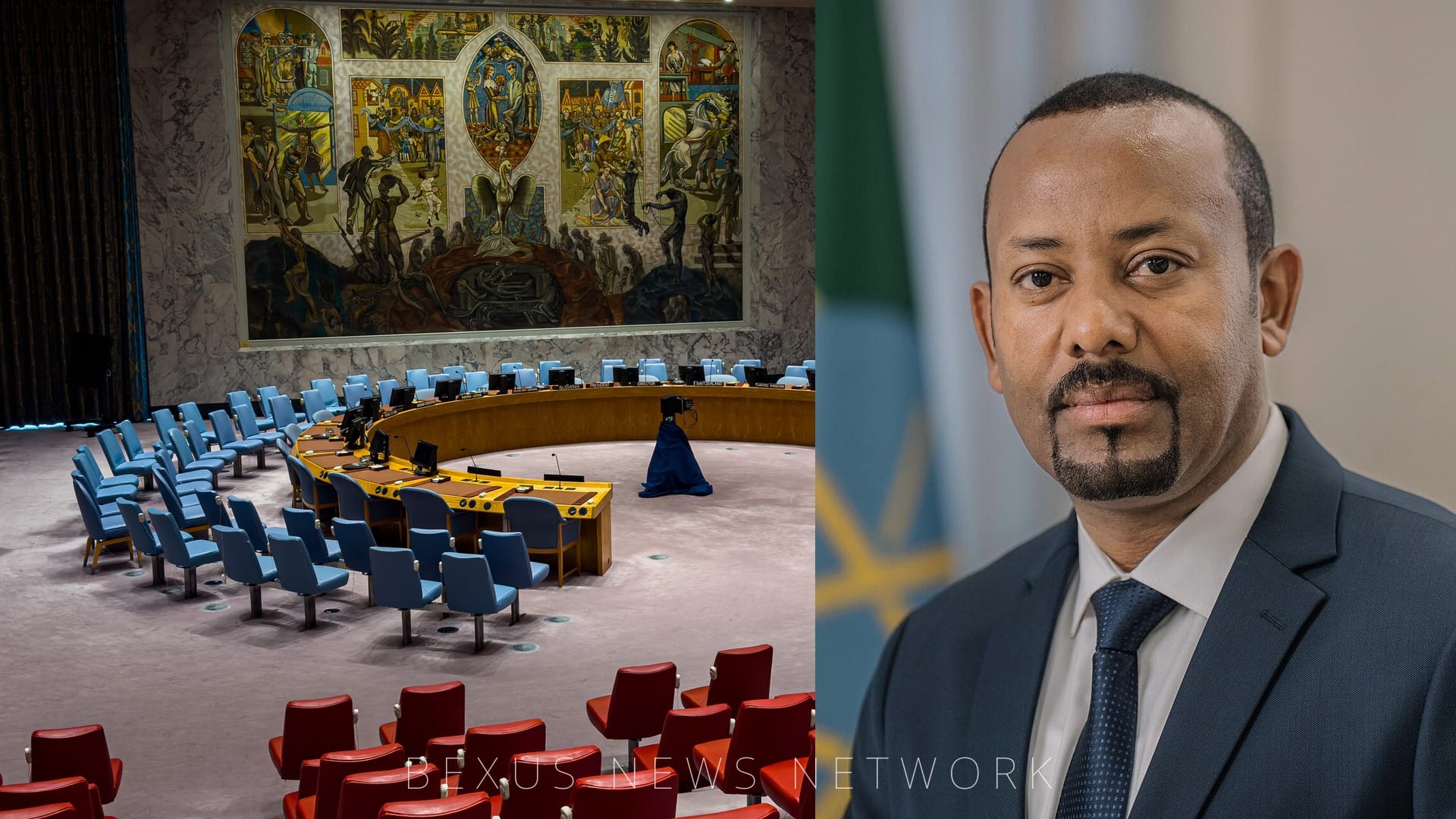
Ethiopia and Eritrea sent letters in succession to the United Nations Security Council in the second week of October, identifying each other as the aggressor. Ethiopia notified the Council that it was taking “self-defense measures,” saying Eritrean forces had entered the northern Tigray region, while Eritrea defined this as a “declaration of war” and demanded a response from the Security Council. The U.S. Department of State said on October 14 (local time) that Secretary of State Marco Rubio spoke by phone with Ethiopian Prime Minister Abiy Ahmed and demanded “de-escalation by all parties.”
What Happened
According to the Associated Press, Ethiopian Foreign Minister Gedion Timotheos notified the Security Council in a letter dated October 9 that Ethiopia was “taking measures” against Eritrea on the basis of the right of self-defense under the UN Charter. Ethiopia claimed that Eritrean forces had crossed the border, occupied part of the north, and were supporting anti-government armed groups. The UN original text and document number of this letter could not be obtained, so the date and wording rely on the AP report.
Eritrea rebutted the following day. Eritrean Information Minister Yemane Gebremeskel posted on his own account a summary of Foreign Minister Osman Saleh’s October 10 letter to the Security Council. However, the original letter registered with the United Nations has not been confirmed, and the content below is based on the public summary on the minister’s own account. Eritrea defined Ethiopia’s notification as a “declaration of war” and demanded that the Security Council take “deterrent measures” under Chapter VII of the UN Charter. Chapter VII is a provision that leaves open measures ranging from sanctions to military action, but the Security Council has not actually made such a decision. So far, this remains at the stage of a request by a member state.
https://x.com/hawelti/status/2108900389647253807
Diplomatic relations between the two countries have already been severed. According to an Eritrean Foreign Ministry letter conveyed by China’s Xinhua News Agency, Ethiopia designated 10 Eritrean diplomats at the embassy in Addis Ababa as personae non gratae (PNG) on October 1. When Ethiopia closed its embassy in Asmara, Eritrea declared a severance of diplomatic relations. These numbers and procedures are based on reports conveying the Eritrean Foreign Ministry letter, and an official announcement of the same content by the Ethiopian government has not been confirmed. The Eritrean Foreign Ministry sent a letter to the African Union (AU) on October 15 demanding the return of its representation rights at AU headquarters. Because AU headquarters is located in the Ethiopian capital, the expulsion of diplomats has spread into an issue concerning representation at the AU.
https://x.com/hawelti/status/2110707613537333616
What the United States and the United Kingdom Said
According to a statement from the U.S. Department of State spokesperson’s office, Secretary Rubio discussed the escalating tensions with Eritrea with Prime Minister Abiy. The Department of State said that “the only sustainable solution is dialogue and engagement in accordance with the 2018 Ethiopia-Eritrea peace framework.” It also conveyed that Secretary Rubio emphasized that “all countries in the Horn of Africa must respect the sovereignty and territorial integrity of their neighbors and avoid cross-border actions” and that “this region cannot afford further conflict.” State Department spokesperson Tommy Pigott also posted the same content.
https://x.com/statedeptspox/status/2110477445942124896
Prime Minister Abiy wrote on his own account the same day that he had had a “very productive call” with Secretary Rubio. Because this post is at the level of announcing the fact of the call, whether the Ethiopian government accepted the United States’ demand for de-escalation cannot be confirmed from this post alone.
https://x.com/AbiyAhmedAli/status/2110383532967170462
The UK Foreign, Commonwealth and Development Office (FCDO) said in a statement on October 15 that it “opposes actions by any party that violate the borders of a neighboring country” and expressed support for AU mediation. The official FCDO account also shared a related post by Kirsty McNeill.
Situation on the Ground (Including Unconfirmed Reports)
Al Jazeera and AFP reported that Ethiopian federal forces and pro-government armed groups had entered Adigrat, Adwa, and Aksum in Tigray. There was also testimony from residents that they had approached to about 5km south of the border town of Zalambessa (a major battlefield in the 1998–2000 war). However, this content is based on the words of anonymous residents and officials of armed groups and has not been confirmed by an official announcement from the Ethiopian Ministry of Defense. Minister Yemane rebutted as “false” a pro-government armed group’s claim that Eritrean forces had suffered heavy losses and retreated. Neither government nor any international organization has released an official tally of the scale of casualties.
Minister Yemane said that the Eritrean government also circulated an “information note” to Security Council members on October 13. This note and the “note on the current situation” issued by Ethiopia on the 11th have both been confirmed only through explanations on ministerial accounts, and the UN original texts have not been obtained.
Why It Matters
This standoff matters because it stands at a threshold at which the two countries could again enter state-to-state armed conflict over the border issue. The precedent is the 1998–2000 Ethiopia-Eritrea War. That war, which began with the dispute over the border town of Badme, ended with the 2000 Algiers Agreement, but implementation of the border demarcation was postponed until Prime Minister Abiy’s peace declaration in 2018. This is also why Secretary Rubio specifically mentioned the “2018 peace framework.” Added to this is the issue of identity and maritime access: Ethiopia has put forward access to the Red Sea as a national task, while Eritrea accepts this as targeting its own territory, including the port of Assab. Prime Minister Abiy also said this month that “Ethiopia must have the right of access to the Red Sea,” Al Jazeera conveyed. Because the original transcript of the remarks from the Prime Minister’s Office has not been confirmed, this sentence is conveyed with attribution to the Al Jazeera report.
Next Steps
The first test will be whether the Security Council places the two countries’ letters on its agenda and holds a meeting, and whether it issues a presidential statement or a press statement. The AU demanded “maximum restraint” from the three countries of Ethiopia, Eritrea, and Egypt in an AU Commission statement on October 1, and Eritrea is in a position of having demanded that the issue of representation be placed before the AU Executive Council and the Assembly. Whether there is actually cross-border movement in the Zalambessa area will be reported again as soon as it is confirmed by official announcements from the two governments.
Background: From the Algiers Agreement to the Pretoria Agreement
The starting point of this exchange of letters lies in a course in which a border delimitation procedure exists in documents but did not lead to marking on the ground. According to the original text of the Algiers Agreement of December 12, 2000, disclosed by the United Nations Peacemaker peacebuilding document archive, the UN document conveyed that Ethiopia and Eritrea reaffirmed the June 18 agreement of the same year on the cessation of hostilities, and agreed that a five-member Boundary Commission would delimit and demarcate the border and that its decision would be accepted as final and binding. The same original text stated that the agreement also recorded that the two sides would permanently cease the threat and use of force.
The end point of the UN mission is as follows. According to the official chronology of the United Nations Mission in Ethiopia and Eritrea (UNMEE), the United Nations stated that the Security Council unanimously adopted Resolution 1827 on July 30, 2008, and terminated the UNMEE mandate from the following day. The same chronology conveyed that the United Nations cited as the reason for termination the restrictions imposed by Eritrea on the mission and the cutoff of fuel supplies. The UN materials therefore show that the institutional background to this standoff is that, since 2008, the two countries’ claims have confronted each other in a state in which no UN mission monitoring the border on the ground has been permanently present.
The five items of the 2018 declaration are as follows. According to the original text of the July 9, 2018 Asmara Joint Declaration disclosed by UN Peacemaker, the declaration stated that the two countries jointly recorded, first, the end of the state of war; second, political, economic, social, cultural, and security cooperation; third, the resumption of transport, trade, and communications and the resumption of diplomatic relations; fourth, implementation of the Boundary Commission decision; and fifth, regional peace, development, and cooperation. The UN Department of Public Information conveyed that the Security Council, in press statement SC/13416 on July 10, 2018, the following day, welcomed the signing of the declaration and noted the commitment to implement the Boundary Commission decision. The U.S. Department of State stated that, in a statement dated December 12, 2023, in the name of spokesperson Matthew Miller, on the occasion of the 23rd anniversary of the Algiers Agreement, it recalled the fact that the two countries had recommitted in 2018 to respect the border and reiterated its call for respect for the sovereignty and territorial integrity of both countries. This confirms, through the Department of State’s existing position document, the background to Secretary Rubio’s mention of the “2018 peace framework” in this call, and does not mean that the 2023 statement foreshadows or defines the content of the 2026 call.
For the Tigray issue, a separate agreement already exists. The African Union (AU) Executive Council stated, in a statement on November 2, 2023, marking the first anniversary of the Pretoria Permanent Cessation of Hostilities Agreement (COHA), that this agreement was concluded on November 2, 2022, in Pretoria, South Africa, between the Ethiopian government and the Tigray People’s Liberation Front (TPLF), and that the AU Peace and Security Council approved it on November 9, 2022. The AU conveyed that, in the same statement, it listed as implementation achievements the handover of medium and heavy weapons, the resumption of basic services, the resumption of schools and commercial activities, and the establishment of an interim administration in Tigray. The AU African Commission on Human and Peoples’ Rights, in a more recent statement on October 8, 2026, said it was concerned about the recurrence of tensions in northern Ethiopia, recalled that the Pretoria Agreement provides for a permanent cessation of hostilities and confidence-building measures, and urged the parties to abide by their agreement obligations and return to dialogue, the Commission stated. This October 8 statement shows that an AU human rights body had already officially pointed out that this exchange of letters is not separate from the issue of implementing the Pretoria Agreement.
The meaning of the procedures is provided in the Charter. According to the original text of Article 51 of the UN Charter, the United Nations posted that a member state against which an armed attack has occurred may exercise the right of individual or collective self-defense until the Security Council takes the necessary measures, but that such measures must be reported immediately to the Security Council. The UN Security Council Repertoire of Practice explained that Chapter VII is a framework under which the Security Council can determine the existence of a threat to the peace, a breach of the peace, or an act of aggression and decide on recommendations or non-military and military measures. Therefore, the Charter and UN guidance distinguish that Ethiopia’s act of “notifying” self-defense measures and Eritrea’s act of “requesting” Chapter VII measures are different in legal character, and that neither letter by itself means that the Security Council has determined aggression or decided on Chapter VII measures. At a stage where there is no official determining body, the two countries’ claims are conveyed only with attribution to each country.
The Pretoria Agreement also has a monitoring mechanism. According to an AU Executive Council statement of March 11, 2024, the AU stated that, following the agreement, it held two high-level commanders’ meetings in Nairobi and established a Monitoring, Verification and Compliance Mission in Mekelle. The same statement conveyed that a Joint Committee and a High-Level Panel have tracked the implementation situation together with this mission. This mechanism monitors implementation of the agreement between the Ethiopian government and the TPLF, not the border between Ethiopia and Eritrea, and is not a body that directly determines this border letter dispute. However, the fact that a verification mission already exists for the internal Tigray agreement shows, within the scope of official documents, the contrast that no such on-the-ground verification mechanism has yet been presented for the border claims.
Sources
U.S. Department of State readout (10/14): https://www.state.gov/releases/office-of-the-spokesman/2026/10/secretary-rubios-call-with-ethiopian-prime-minister-abiy-4 UK FCDO statement (10/15): https://www.gov.uk/government/news/uk-statement-on-escalating-tensions-between-ethiopia-and-eritrea-15-october AU Executive Council statement (10/1): https://www.au.int/en/pressreleases/20261001/statement-auc-escalating-tensions-between-ethiopia-eritrea-and-egypt Original text of the Algiers Agreement (2000-12-12, S/2000/1183, five-member Boundary Commission) UN Peacemaker: https://peacemaker.un.org/sites/default/files/document/files/2024/05/er20et001212agreementeritreaethiopia.pdf Resolution 1827 terminating UNMEE (2008-07-30) UNMEE official chronology: https://unmee.unmissions.org/en/algiers-peace-agreement Original text of the five items of the 2018 Joint Declaration (2018-07-09) and Security Council SC/13416 (2018-07-10): https://press.un.org/en/2018/sc13416.doc.htm U.S. Department of State statement on the 23rd anniversary of Algiers (2023-12-12, Miller): https://2021-2025.state.gov/23rd-anniversary-of-the-algiers-agreement-between-the-governments-of-ethiopia-and-eritrea/ AU statement on the first anniversary of the Pretoria COHA (2023-11-02, concluded 2022-11-02, approved by AU PSC 2022-11-09): https://au.int/en/pressreleases/20231102/au-commission-chairperson-commends-all-ethiopians-embracing-peace AU Commission on Human and Peoples’ Rights statement on renewed tensions in the north (2026-10-08): https://achpr.au.int/en/news/press-releases/2026-10-08/statement-renewed-tensions-northern-ethiopia UN Charter Article 51 and Chapter VII guidance: https://www.un.org/en/about-us/un-charter/chapter-7 AU COHA strategic review statement (2024-03-11, two Nairobi commanders’ meetings, Mekelle MVCM): https://au.int/en/pressreleases/20240311/statement-chairperson-occasion-1st-strategic-reflection-implementation