UK fighters join French nuclear strike exercise for first time as Typhoons escort Rafales on simulated nuclear attack
LONDON · PARIS
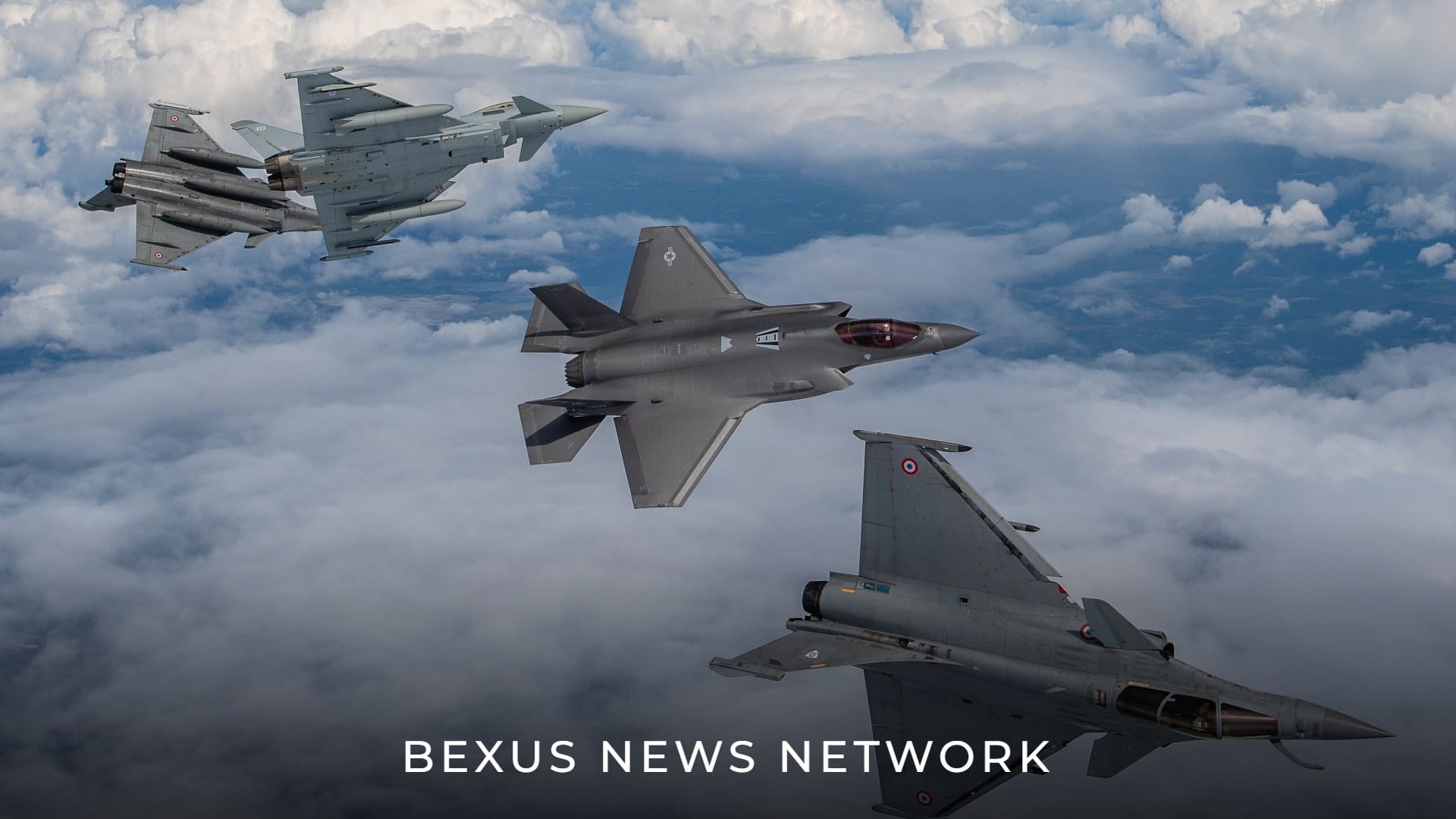
Royal Air Force (RAF) Typhoon fighters took part in a French nuclear air exercise for the first time, escorting French Rafale fighters on a simulated nuclear strike mission. The UK Ministry of Defence announced on Oct. 23 (local time) that the two countries' forces conducted the exercise "Rummy" together over the Mediterranean on Oct. 20-21. The ministry described the exercise as a "historic first joint air exercise" between the United Kingdom and France. French Rafales took off from Saint-Dizier air base in France and carried out a simulated nuclear strike mission, escorted by British Typhoons. No nuclear weapons were used in the exercise.
British Typhoons escort Rafales on simulated nuclear strike over the Mediterranean
According to the Ministry of Defence announcement, British and French forces operated side by side over the Mediterranean during the Rummy exercise. Rafales flying from Saint-Dizier took on the simulated nuclear strike mission, with British Typhoons attached as the escort force. The ministry said, "Conducted under robust safety and security arrangements, the exercise did not involve nuclear weapons."
The ministry explained that the exercise focused on improving how the two countries' forces operate together. The aim, the ministry said, is to ensure that if a serious threat emerges, British forces can respond quickly and effectively alongside their closest ally in Europe. The ministry said the readiness and capabilities of the two countries' forces deter threats and keep the United Kingdom safe.
The ministry described the United Kingdom and France as close NATO allies and Europe's nuclear powers, and said the two countries play an important role in Euro-Atlantic security. The ministry assessed that global instability is growing and the security environment is becoming increasingly complex. The ministry explained that the exercise demonstrates the UK's commitment to stand together against any threat and strengthens deterrence together with European allies.
A Ministry of Defence note to editors called the exercise "Operation Rummy" and gave its dates as Oct. 20-21, 2026. It did not disclose the number of aircraft involved, flight routes or the composition of the escort formation.
The ministry added that both countries retain their own sovereign, independent nuclear forces and national decision-making.
Streeting calls it "a new chapter" in UK-France nuclear relationship
UK Defence Secretary Wes Streeting said, "This exercise marks a new chapter in the defence nuclear relationship between the United Kingdom and France."
Streeting said, "As Europe's nuclear powers, we have a shared responsibility to contribute to the security and stability of the Euro-Atlantic region." Streeting went on, "This exercise demonstrates the depth of our partnership, the credibility of our deterrents and our determination to stand together in the face of emerging threats."
Streeting also issued a warning: "In an increasingly dangerous world, our adversaries should be in no doubt: the UK and France remain united in our commitment to European security and to maintaining the deterrence that has helped preserve peace for generations."
Vautrin stresses independent nuclear forces do not rule out coordination
Catherine Vautrin, France's Minister for the Armed Forces and Veterans, said, "Having independent nuclear forces does not exclude coordination." The remark appeared in English in the UK Ministry of Defence announcement.
Vautrin said, "Our nuclear cooperation with the United Kingdom keeps deepening: on Tuesday night, UK Typhoons participated for the very first time to a French nuclear exercise alongside Rafales." The Tuesday in the remark is Oct. 20, the first day of the exercise.
Vautrin said, "Through coordination, our nuclear forces demonstrate that they can contribute even more significantly to the overall security of the Alliance and to the peace and stability of the Euro Atlantic area."
UK to invest 63 billion pounds in nuclear deterrent over four years
In the same announcement, the UK Ministry of Defence said it will invest 63 billion pounds over the next four years to strengthen the nuclear deterrent. It listed as investment targets the Dreadnought submarines and SSN-AUKUS submarines, a new nuclear warhead and other nuclear-related programs. The ministry said the Rummy exercise complements this investment.
The United Kingdom is also buying 12 F-35A fighters to join the North Atlantic Treaty Organization (NATO) nuclear mission. The ministry explained that the F-35A acquisition and participation in the NATO nuclear mission will make NATO more European and expand the UK's contribution to collective defence.
The ministry said the exercise is a major step forward in UK-France defence cooperation under the Northwood Declaration. The ministry called the Rummy exercise a key milestone in the UK-France nuclear partnership and explained that it is one of the cooperation plans agreed under the Northwood Declaration. The ministry said the two countries' defence cooperation is underpinned by the renewed Lancaster House agreements, which include expanding combined deployable forces, strengthening nuclear cooperation and developing next-generation advanced weapons.
UK-France leaders' nuclear declaration states the two countries would respond together to extreme threats to Europe
French President Emmanuel Macron and Keir Starmer, then UK prime minister, held the 37th UK-France summit at 10 Downing Street on July 10, 2025. It was the last day of Macron's three-day state visit to the United Kingdom that began on July 8. The two leaders visited the operations room of NATO's Maritime Command at Northwood the same day. The Élysée explains that the Northwood Declaration signed at the summit created a UK-France Nuclear Steering Group. The two countries' declaration on nuclear policy and cooperation released by the Élysée said there had been significant progress in nuclear cooperation since 2010.
The declaration stated that the two countries' nuclear forces are "indépendantes mais peuvent être coordonnées (independent but can be coordinated)." The declaration said the two countries' nuclear weapons are intended to deter extreme threats to their vital interests, and that the two nuclear forces contribute significantly to the overall security of the Alliance and to peace and stability in the Euro-Atlantic area.
The declaration noted that since 1995 the two countries have stated that they cannot imagine a situation in which the vital interests of one were threatened without the other's also being threatened. On that basis, it stated firmly that "il n'existe pas de menace extrême contre l'Europe qui ne susciterait pas de réponse de nos deux nations (there is no extreme threat to Europe that would not prompt a response from our two nations)."