Bosnian Arms Dealer Who Brokered Deal for North Korean SA-18 Igla Man-Portable Air Defense Missiles Sentenced to 60 Months in U.S.… Pleaded Guilty to Violating IEEPA and North Korea Sanctions Regulations
NEW MEXICO
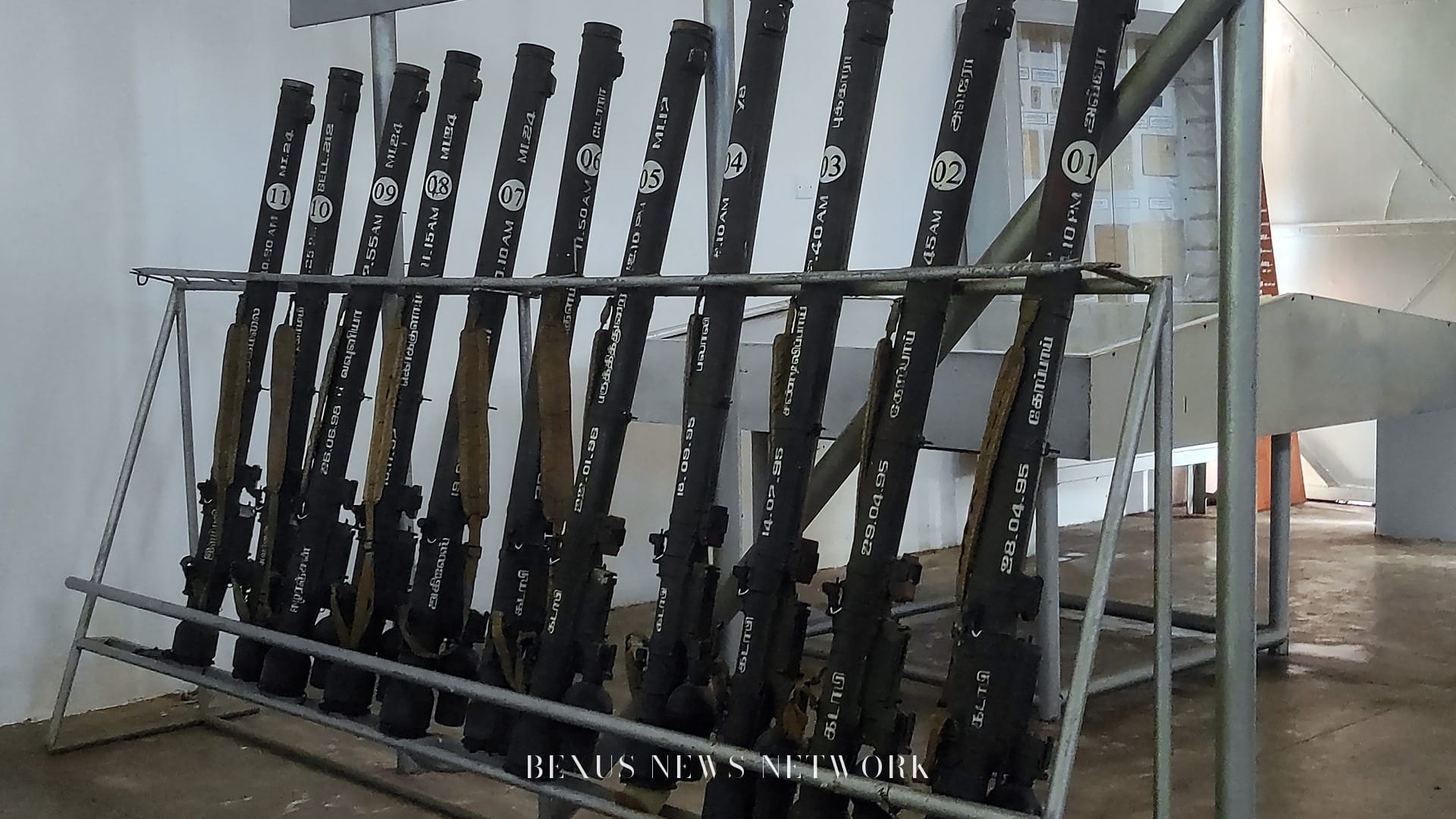
The U.S. Department of Justice announced on October 14 that Sasa Micevic, 43, a Bosnian national and international arms dealer who attempted to broker the purchase of North Korean-origin SA-18 Igla man-portable surface-to-air missiles, was sentenced in New Mexico to 60 months in prison. Micevic pleaded guilty to violating the International Emergency Economic Powers Act (IEEPA) and the North Korea Sanctions Regulations. The Justice Department stated that Micevic conspired and attempted to broker the sale of man-portable anti-aircraft missiles. The scheme began in 2020.
Micevic Discussed Purchasing North Korean-Origin Iglas with New Mexico-Based Co-Conspirator in 2020
According to court documents, Micevic, along with a co-conspirator based in New Mexico and others, sought to violate and evade restrictions established by the U.S. Department of the Treasury under the North Korea Sanctions Regulations. Their target was to acquire SA-18 Igla man-portable surface-to-air missiles from North Korea. The Justice Department noted that Micevic brokered the purchase without obtaining a license or authorization from the Treasury Department's Office of Foreign Assets Control (OFAC).
In 2020, Micevic and his co-conspirator discussed methods to illegally obtain the Igla missiles on multiple occasions. Micevic provided pricing information and participated in attempts to secure the items using fraudulent documentation. The Justice Department stated that Micevic sought to acquire the missiles despite knowing that transactions procuring weapons from North Korea are prohibited under U.S. and international law.
In outlining the judgment, the Justice Department referred to the missiles as Man Portable Air Defense Systems, explaining them as anti-aircraft missiles. The Igla that Micevic attempted to procure is a weapon that was introduced into service by the Soviet military in the 1980s.
Bosnian National Sentenced for Violating International Sanctions Against North Koreahttps://t.co/ObfAcZf2tF
— National Security Division, U.S. Dept of Justice (@DOJNatSec) 2026년 10월 14일
The SA-18 Igla Is an Infrared-Guided Man-Portable Surface-to-Air Missile Adopted by the Soviet Military in 1983
The U.S. Army's Operational Environment Data Integration Network (ODIN) classifies the 9K38 Igla (SA-18 Grouse) as a Russian-made man-portable infrared-guided surface-to-air missile. The Russian industrial designation for the overall system is 9K38, and the missile is the 9M39. According to data, it is a third-generation man-portable surface-to-air missile and was adopted by the Soviet military in 1983. SA-18 is its NATO reporting name.
ODIN also notes improvements this weapon offers over its predecessor, the Igla-1. Its resistance to flares and jamming was significantly enhanced, and its seeker became more sensitive. Under favorable conditions, it can engage head-on approaching fighter aircraft, and its range was slightly extended. The naval variant carries the NATO reporting name SA-N-10 Grouse. The Justice Department did not include such technical specifications in its announcement.
What the Justice Department's announcement detailed was a transaction attempting to purchase these weapons from North Korea, a deal that fell apart in late 2020.
The Pair Traveled to Ankara in Late 2020, but the Deal Fell Through Over a Price Dispute
In late 2020, Micevic and his co-conspirator traveled to Ankara, Türkiye, to finalize the sale of the Iglas. However, a dispute arose with North Korean counterparts over pricing, and the sale was not consummated. The Justice Department cited only the price dispute as the reason the deal fell through. Approximately six years have passed from late 2020, when the deal collapsed, to this announcement.
The Justice Department did not disclose all specific details concerning the transaction. It did not release the name or case outcome of the co-conspirator, the transaction amount, or the quantity of missiles involved. It also did not disclose the sentencing date or the city where the sentencing court is located.
The collapse of the transaction does not absolve liability. The Justice Department noted that Micevic pleaded guilty to violating IEEPA and the North Korea Sanctions Regulations. The law makes not only the violation itself, but also attempts and conspiracies to violate it, illegal. These penalty provisions are codified in IEEPA.
IEEPA Criminalizes Attempts and Conspiracies, Imposing Up to 20 Years in Prison
IEEPA makes it unlawful to violate, attempt to violate, or conspire to violate any license, order, regulation, or prohibition issued under the Act. Section 1705 of Title 50 of the United States Code sets forth these provisions. Anyone who willfully commits, attempts to commit, or conspires to commit a violation may be fined up to $1 million upon conviction, and individuals may face imprisonment of up to 20 years. Micevic's sentence announced by the Justice Department is 60 months, or five years, in prison.
The North Korea Sanctions Regulations are the regulations governing OFAC's North Korea sanctions program. They are codified in Part 510 of Title 31 of the Code of Federal Regulations. Under this program, OFAC authorizes otherwise prohibited activities through licenses. It issues specific licenses upon application, or embeds general licenses in the regulations that all U.S. persons may use without an application. The Justice Department noted that Micevic lacked the necessary license or authorization for the transaction.
Sanctions against North Korea do not derive from a single statute. OFAC's guidance page explains that the program implements multiple statutory authorities. Executive orders include Executive Order 13466 issued in June 2008, followed by Executive Order 13551 effective August 30, 2010; Executive Order 13570 effective April 18, 2011; Executive Order 13687 effective January 2, 2015; Executive Order 13722 effective March 16, 2016; and Executive Order 13810 effective September 21, 2017. Statutes include IEEPA, the North Korea Sanctions and Policy Enhancement Act of 2016, the Countering America's Adversaries Through Sanctions Act (CAATSA), and the Otto Warmbier Act. OFAC also incorporates United Nations Security Council resolutions into these sanctions as necessary. Micevic pleaded guilty specifically to violations of IEEPA and the North Korea Sanctions Regulations. The same transaction was already prohibited by UN resolutions.
UN Security Council Banned North Korean Missile Transactions Under Resolution 1718 in 2006, Expanding to All Arms Under Resolution 1874 in 2009
Resolution 1718, adopted on October 14, 2006, required member states to prevent the supply, sale, or transfer of missiles and missile systems to North Korea. The same resolution prohibited North Korea from exporting such items and barred member states from procuring them from North Korea. The items listed in the resolution include missiles and missile systems, alongside battle tanks, combat aircraft, and warships.
Resolution 1874, adopted on June 12, 2009, expanded these measures to cover all arms and related materiel. It also encompassed financial transactions, technical training, advice, services, and assistance related to weapons. The procurement ban under Resolution 1718, which had been limited to major conventional weapons, was thus widened to cover weapons in general. The Justice Department noted that Micevic's transaction was prohibited under U.S. and international law. These two resolutions represent the international norms barring weapons procurement from North Korea.
The announcement does not state whether North Korea actually possessed the Iglas or where they were manufactured. What the Justice Department stated was that Micevic attempted to broker a transaction to purchase Iglas from North Korea. Prosecutors and heads of investigating agencies handling the case each delivered remarks in the announcement.
First Assistant U.S. Attorney Ryan Ellison of the District of New Mexico Stated Sanctions Mean Little if Those Who Knowingly Evade Them Face No Consequences
First Assistant U.S. Attorney Ryan Ellison for the District of New Mexico stated in the release: "Sanctions mean little if those who knowingly evade them face no consequences." First Assistant Ellison remarked that Micevic aided an international scheme to engage in business prohibited by U.S. law. He stated that this sentence holds Micevic accountable. He also expressed pride in the investigators and prosecutors who brought the case to sentencing in New Mexico.
A Bosnian national was sentenced to 60 months in federal prison after pleading guilty to federal export and sanctions violations by conspiring and attempting to broker the sale of Man Portable Air Defense Systems, which are anti-aircraft missiles.
— U.S. Attorney NM (@USAO_NM) 2026년 10월 14일
🔗 https://t.co/VgVQDFFym0 pic.twitter.com/UGYOFDnEUD
Ryan G. McRae, Acting Special Agent in Charge of Homeland Security Investigations (HSI) El Paso, stated: "Those who knowingly evade export controls and international sanctions to facilitate the illicit trade of military weapons pose a significant threat to our national security and global stability." Acting Special Agent in Charge McRae noted that their willingness to profit from prohibited arms deals demonstrates a blatant disregard for the law. He stated that HSI will aggressively pursue and hold accountable those who illegally traffic military technology.
HSI is the investigative arm of the Department of Homeland Security within ICE. According to ICE's counter-proliferation investigations guidance, HSI combats the illegal export of munitions and dual-use items, and investigates violations of U.S. sanctions imposed on countries, entities, and individuals. HSI holds statutory authority to investigate violations of export control statutes, including IEEPA. HSI also leads the Export Enforcement Coordination Center (E2C2), established in 2010 by Executive Order 13558. The center includes representatives from 24 agencies, including the Department of Homeland Security, Department of Justice, Department of Commerce, Department of State, Department of Energy, Department of the Treasury, Department of Defense, and the Office of the Director of National Intelligence.
The Counterintelligence and Export Control Section (CES) of the Justice Department's National Security Division is designated in Justice Department guidelines as the division supervising prosecutions of export control violations. The same guidelines specify that IEEPA violations involving the export of property in which a foreign national or foreign country has an interest may not be prosecuted without prior approval from CES. A prosecutor from CES participated in this case.
The investigation was led by HSI Albuquerque and Phoenix. The Justice Department noted that Assistant U.S. Attorneys Thavo Holl and Holland Castryn for the District of New Mexico prosecuted the case. Trial Attorney Maria Fedor of CES assisted on the matter.
Sources (KST)
- U.S. Department of Justice Press Release 26-1188, issued 2026-10-14 · https://www.justice.gov/opa/pr/bosnian-national-sentenced-violating-international-sanctions-against-north-korea
- X @DOJNatSec · https://x.com/DOJNatSec/status/2110397309754233188
- X @USAO_NM · https://x.com/USAO_NM/status/2110399651706728901