U.S. and Japan to close noisy 'LZ Phoenix' helipad at Okinawa's Camp Schwab, consolidating functions at nearby 'LZ Rail'
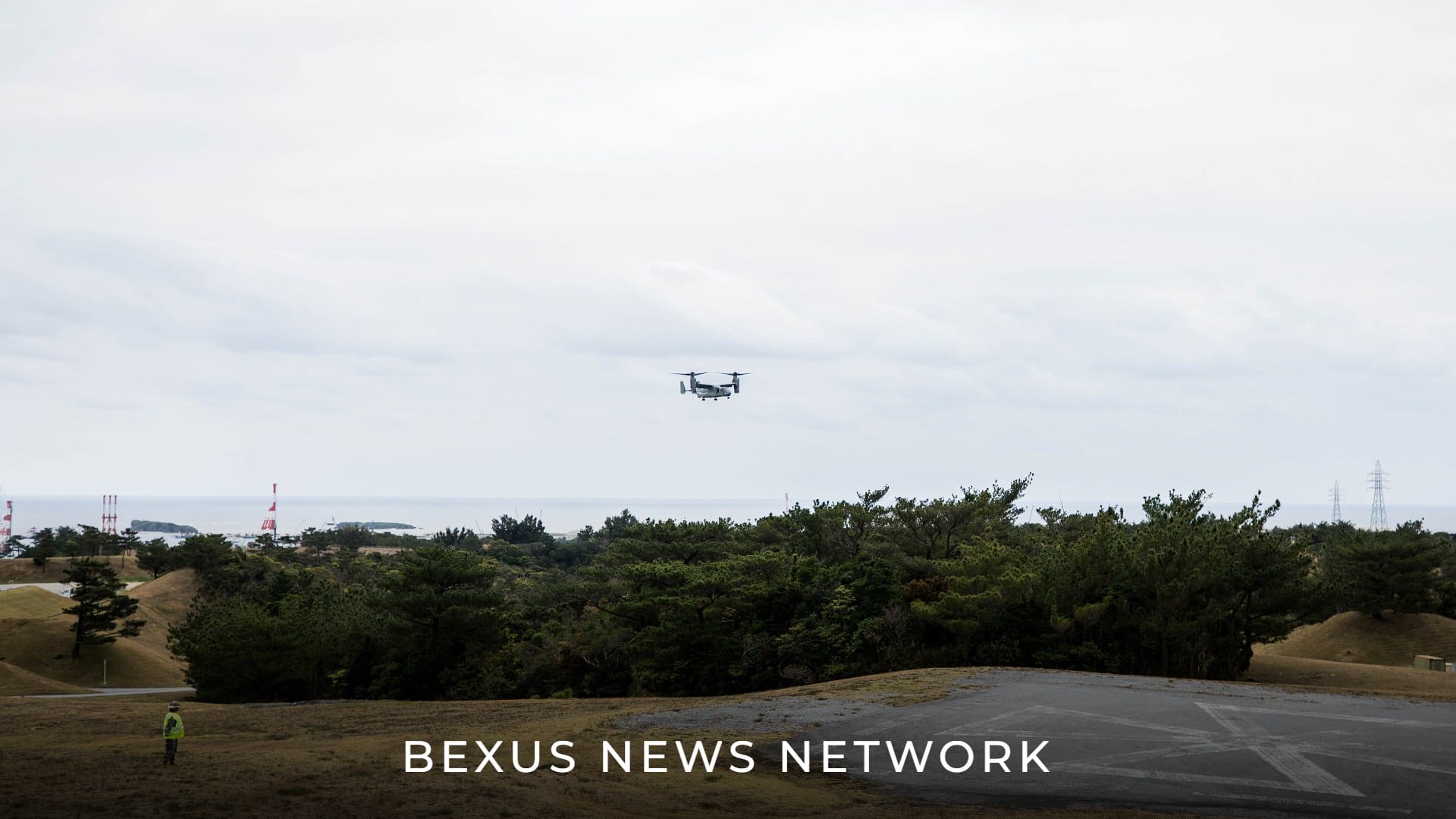
TOKYO
The United States and Japan have decided to close "LZ Phoenix," a helicopter landing zone at Camp Schwab in Okinawa Prefecture, and have agreed on part of the work on "LZ Rail," which will take over its functions. Defense Minister Koizumi said at a post-Cabinet press conference held in the first-floor lobby of the House of Representatives annex building on the morning of Oct. 23 (local time), "At the Japan-U.S. Joint Committee yesterday, it was agreed to carry out site preparation and other work as part of the renovation work on LZ Rail." The plan is to renovate LZ Rail, located inside the same camp, and consolidate the necessary functions there before closing LZ Phoenix. Koizumi said the specific timing of the closure would be announced again once coordination with the U.S. side is complete.
Koizumi says Phoenix will close after functions are consolidated at LZ Rail
The press conference that day began at 8:42 a.m. and ended at 8:47 a.m. Koizumi raised LZ Phoenix as the first announcement item. The minister described LZ Phoenix as "a helicopter landing zone located at Camp Schwab in Okinawa Prefecture, where noise from takeoffs and landings of U.S. military aircraft has been an issue locally." The minister went on to say, "This time, coordination has been completed with the U.S. side to carry out renovation work at LZ Rail, also located at Camp Schwab, consolidate the necessary functions, and then close LZ Phoenix." The original reads: "LZレイルにおいて改修工事を行い、必要な機能を集約した上でLZフェニックスを閉鎖することで、アメリカ側との調整が整いました."
According to the minister's explanation, the functions of LZ Phoenix will be moved not outside the camp but to LZ Rail inside the same camp. Koizumi did not disclose the scale, cost or duration of the LZ Rail renovation work at the press conference.
Japan-U.S. Joint Committee agreed on LZ Rail site preparation on the 22nd
The 2026 Defense White Paper states that Japan provides facilities and areas for U.S. forces in Japan "in accordance with the provisions of the Japan-U.S. Status of Forces Agreement, based on agreements between the governments of Japan and the United States through the Japan-U.S. Joint Committee." The Ministry of Defense's Aug. 27 notice listed facility improvement projects, the provision of completed facilities to the U.S. government, the return of parts of buildings and the provision of replacement buildings, and limited use of facilities for joint training, all together as Joint Committee agreement items. Koizumi said that at the meeting on the 22nd, it was agreed "to carry out site preparation and other work as part of the renovation work on LZ Rail." Site preparation is part of the renovation work, not the whole of it. The content of the remaining stages and the timing of their submission to the Joint Committee were not disclosed.
The Ministry of Defense usually publishes the contents of Joint Committee agreements in notices titled 「日米合同委員会合意について (On the Japan-U.S. Joint Committee Agreement)」. The notices list in tables the facility number, location, area, description of the matter and items to be implemented for each case. Camp Schwab's facility number is FAC6009, and its location is Nago City, Okinawa Prefecture.
Closure timing to be announced after coordination with the U.S. side
Koizumi said, "Regarding the specific timing of the closure, I would like to inform you again once coordination with the U.S. side is complete." The minister added, "We will continue to work toward the closure of LZ Phoenix as soon as possible, so as to firmly respond to the wishes of local residents." The original reads: "LZフェニックスの一日も早い閉鎖に向けて取り組んでまいります."
No reporter asked about the closure schedule at the press conference. The question-and-answer session was taken up by questions about the year-end revision of the three security documents and about China and Russia, and there were no exchanges dealing with Camp Schwab, LZ Phoenix, LZ Rail or the Japan-U.S. Joint Committee. As a result, whether closure is possible only after the LZ Rail work is complete, or whether use of LZ Phoenix will be reduced during the work, was not confirmed that day.
Nago mayor and residents have continued to call for early removal
Koizumi cited local demands as the background to the measure. The minister said, "We have long been asked by local people, including Nago Mayor Toguchi (渡具知), to remove it at an early date." The minister also said, "In January this year, I told Mayor Toguchi that we were coordinating with the U.S. side toward the closure of LZ Phoenix," and "This time, there has been progress in efforts toward closure, so I am informing you."
The January message the minister mentioned was delivered during the minister's first visit to the main island of Okinawa after taking office. At an extraordinary press conference held in the first-floor lobby of the Okinawa Prefectural Government building on Jan. 8, Koizumi said, "Yesterday, I told the mayor of Nago and the heads of the three Kube (久辺) districts that we are coordinating toward the closure of LZ Phoenix, where noise from takeoffs and landings of U.S. military aircraft has been an issue locally." The minister went on, "This is something we have repeatedly been asked for by Nago City until now." At an earlier extraordinary press conference held at the Okinawa Harbor View Hotel on Jan. 7, the minister said Mayor Toguchi had made a request to "resolve citizens' anxiety and protect the living environment," and had also asked for continued support for regional development. At the same press conference, when a reporter said Mayor Toguchi was calling for financial support to replace realignment grants, the minister replied, "As for measures from FY2027 onward, we will consider what can be done while listening to the views of Nago City and the people of the three Kube districts."
Noise around Camp Schwab has been taken up several times in the Diet as well. A written answer (Answer No. 291) in the name of Prime Minister Shinzo Abe, received by the House of Representatives on June 2, 2016, dealt with the issue of explosion sounds around Camp Schwab. It was an answer to a question by House of Representatives member Toshinobu Nakazato. The government said it was aware of reports to the effect that "84.5 decibels was recorded at 1:42 p.m. on April 14, exceeding by 3.5 decibels the standard value of 81 decibels to which soundproofing work applies." The government explained that the LCden value used as the standard for soundproofing work on homes around training ranges covers sounds produced by shooting mainly involving artillery fire, bombing and other uses of explosives. This value, it said, "evaluates the amount of energy over a standard day in a year, and is not evaluated on the basis of a single noise occurrence." Citing measurement results for 2015 published by Nago City, the government said noise of 80 decibels or more was measured about 500 times a year at the Toyohara and Henoko measuring stations around Camp Schwab. Even so, it took the position that the possibility of noise at or above LCden 81, the standard for eligibility for residential soundproofing work, occurring around Camp Schwab was not recognized. It then answered, "At present, we are not considering conducting a noise level survey for the purpose of carrying out residential soundproofing work."
In the same written answer, the government also mentioned the nearby National Institute of Technology, Okinawa College (Okinawa KOSEN). The government said, "It is possible to subsidize the cost of soundproofing work where noise exceeding certain standards is recognized," but added, "Since there has been no request for soundproofing work from the facility's founder, noise measurements have not been conducted, and we are not aware of the details of the noise situation." The answer also presented the standard under the School Environmental Hygiene Standards based on the School Health and Safety Act that the equivalent noise level inside classrooms is desirably 50 decibels or less with windows closed.
Diet question raised use of landing zone behind Okinawa KOSEN
The name LZ Phoenix appears directly in a 2018 Diet written question. In Question No. 303 submitted on May 17, 2018, House of Representatives member Seiken Akamine asked, "How does the government grasp the status of use of the U.S. military landing zone 'Phoenix' located directly behind Okinawa KOSEN?" Akamine also pressed for the government's understanding of the facts, saying, "It has been reported that two square helipads were built on this landing zone, which had been a grassy open field."
The same written question also dealt with height restrictions on surrounding buildings resulting from construction of the Futenma Replacement Facility. The question cited the school buildings and student dormitory of Okinawa KOSEN and Kube Elementary and Junior High Schools, among others, as facilities subject to height restrictions under the U.S. Department of Defense's Unified Facilities Criteria for airfields and heliports. Akamine said that in answers at the House of Representatives Committee on Security and the House of Councillors Committee on Foreign Affairs and Defense on April 10, 2018, the government had indicated its understanding that Okinawa KOSEN "is not subject to the relevant height restrictions as a result of coordination with the U.S. side to date," and asked when and by what means the government had confirmed this with the U.S. side.
Complaints about U.S. military aircraft noise around schools have been on record since the early days of the Osprey deployment. The "Results of Visual Survey of Osprey Flight Conditions (Summary Table)," posted on the Okinawa Prefecture website, covers a survey from Oct. 1 to Nov. 30, 2012. The Nago City column of the summary table records that aircraft "are flying over urban areas, including flying over the National Institute of Technology, Okinawa College, Kube Elementary School, Kube Junior High School and the children's care facility Nagomi." It also includes the records "flying at low altitude over the school buildings of the National Institute of Technology, Okinawa College and the children's care facility Nagomi" and "at Kube Elementary School, Kube Junior High School and the National Institute of Technology, Okinawa College, the noise is severe and is disrupting classes."