UN Security Council Adopts Presidential Statement Condemning Houthi Attacks on Saudi Airports and Aramco…Saudi Arabia's "Right of Self-Defense" Specified
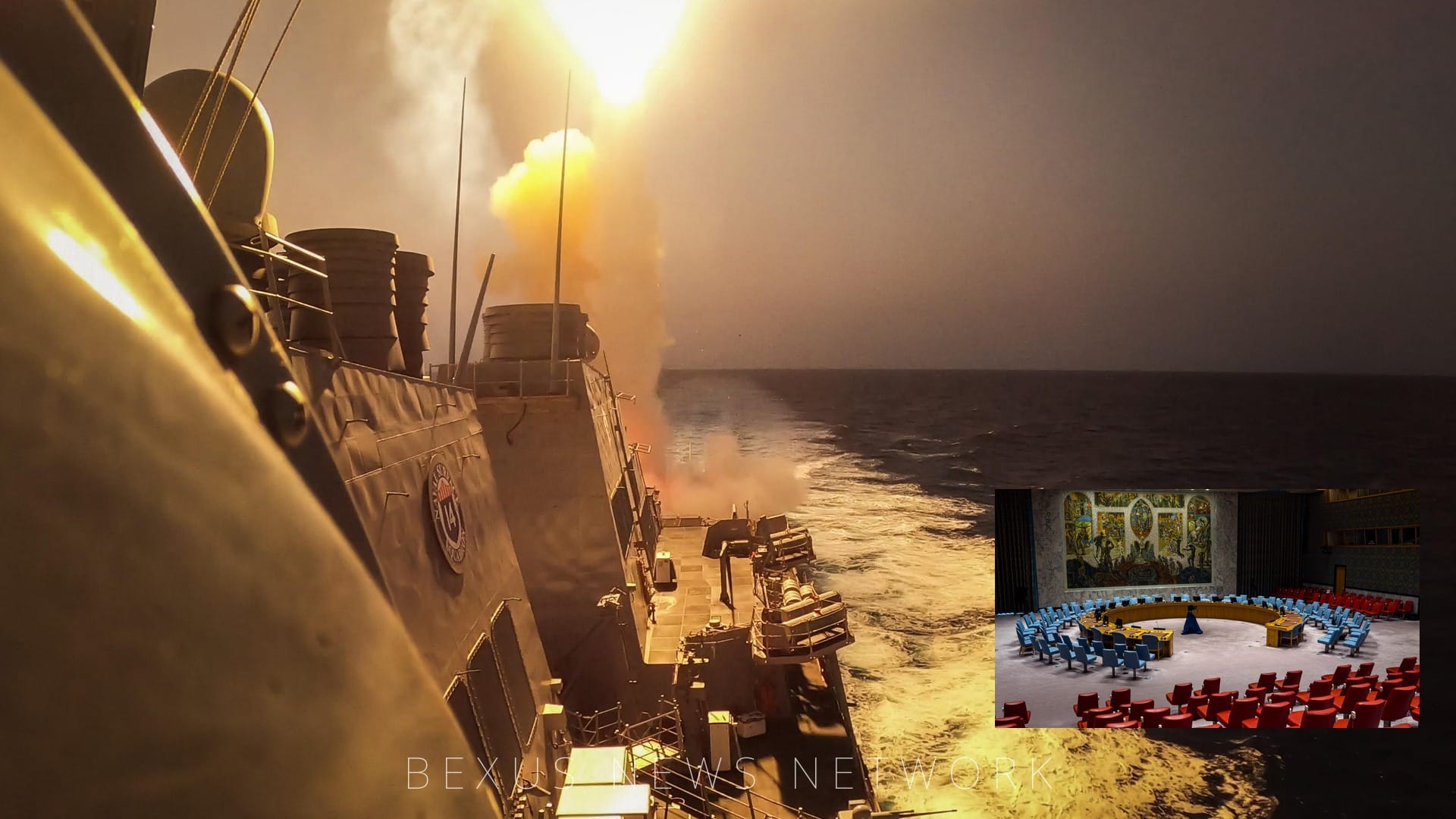
The United Nations Security Council adopted a presidential statement on October 15 (local time) condemning attacks on Saudi Arabia by the Yemeni armed group the Houthis (self-styled Ansar Allah). The Security Council stated that 13 people were killed and more than 300 injured in the October 10–11 attack on Riyadh's King Khalid International Airport, and affirmed Saudi Arabia's "inherent right of self-defense." The Saudi Foreign Ministry issued a statement the following day welcoming it.
What Happened
According to a press release from the UN Department of Public Information, the Security Council, in a presidential statement to be issued as S/PRST/2026/4, strongly condemned the "sustained and escalatory Houthi attacks affecting civilian aviation and energy infrastructure." The Security Council specified the "reckless attacks" on King Khalid Airport on October 10 and 11, and multiple attacks on other airports and Saudi Aramco facilities. It also again condemned Houthi attacks and threats targeting merchant shipping in the Red Sea and the Bab el-Mandeb Strait.
A presidential statement is a document adopted by consensus of the 15 Council members, and unlike a resolution, it does not go through a vote. This statement urged implementation of resolution 2216 (2015) and compliance with the obligation of a "targeted arms embargo" on the Houthis. It did not decide on new sanctions.
The Saudi Foreign Ministry said in a statement on the 16th that it welcomed the presidential statement.
https://x.com/KSAmofaEN/status/2111104844853391756
Casualty Figures Differ by Counting Body
The figures must be viewed divided by counting body and reference date. The Security Council presidential statement stated 13 deaths and more than 300 injuries from the October 10–11 King Khalid Airport attack. Al Arabiya reported that Saudi-led coalition spokesperson Turki Al-Maliki said at a press conference in Riyadh on the 15th that at least 19 people had been killed and 364 injured in attacks targeting Saudi airports since October 1. Of these, the coalition explained, King Khalid Airport was attacked 20 times, with 17 killed and more than 330 injured. Spokesman Al-Maliki also said that since the military operation began, 1,104 ballistic missiles and 1,135 drones had been launched toward Saudi Arabia. All are provisional figures on the coalition's announcement basis, and there is no Houthi tally or independent verification. Because the original briefing texts of the coalition and the Saudi state news agency were not obtained, the figures and quotations are limited to values confirmed through Al-Monitor reporting conveying Al Arabiya and Reuters.
The coalition also announced that it had intercepted a cruise missile over Medina. The Houthis denied responsibility for this attack, the Associated Press conveyed. Because neither side's original text was obtained and there was no cross-confirmation between governments, the perpetrator of the Medina case is not determined.
Diplomatic Support Gathers
According to the Saudi Foreign Ministry, Crown Prince Mohammed bin Salman received a phone call on the 13th from Turkish President Recep Tayyip Erdoğan. President Erdoğan affirmed "complete solidarity" with Saudi Arabia against the Houthi attacks. The same day, German Chancellor Friedrich Merz also spoke with the Crown Prince by phone and condemned the Houthi attacks.
https://x.com/KSAmofaEN/status/2110041890863436179
https://x.com/KSAmofaEN/status/2110041736823132240
Humanitarian Situation Inside Yemen
The United Nations said the front lines are spreading inside Yemen as well. The World Food Programme (WFP) warned that aid to 800,000 people in places including Taiz had been cut off due to the spread of fighting. The UN Office for the Coordination of Humanitarian Affairs (OCHA) tallied that more than 216,000 people had been displaced since August. These figures are internally displaced persons (IDP) and are distinguished from refugees. Because OCHA's original report was not obtained, this tally is limited to the figure conveyed by the UN account.
https://x.com/UN_News_Centre/status/2110498405495480423
UN High Commissioner for Human Rights Volker Türk also said he was "appalled" by the Houthis' repeated attacks on Saudi airports, and the official UN account shared this. Meanwhile, the United Nations said Sami Al-Kalabi, a staff member of the Office of the UN Special Envoy for Yemen who had been detained by the Houthis since 2024, was released on the 14th. UN News conveyed that 71 UN staff members are still detained by the Houthis. That condemnation of the airport attacks and the release of a detainee came side by side in the same week is read as a signal that the UN is maintaining a communication channel with the Houthis. However, this is the reporter's interpretation, and the UN has never said this is progress in negotiations.
Why It Matters
This statement matters because the Security Council recorded in a document, together with figures, the damage to a civilian airport and energy facilities on the Saudi mainland, and specified Saudi Arabia's right of self-defense. This can be used as an argument providing an international-law basis for the coalition's military operations inside Yemen. The precedent is the September 14, 2019 attack on the Abqaiq and Khurais Aramco facilities. Aramco said in an announcement that day that this attack halted 5.7 million barrels per day of crude oil production. Reuters, citing the Saudi state news agency, conveyed that the Saudi Energy Minister said this was about 50% of Aramco's production. The original text of the minister's statement could not be obtained. The U.S. Energy Information Administration (EIA) estimated that this corresponded to about 6% of global supply, and tallied that Saudi crude production fell from 9.9 million barrels per day in August to 8.5 million barrels per day in September. At the time, the Houthis claimed the attack, but a dispute continued over the perpetrator. This time as well, the coalition claimed the Houthis had "obtained advanced technology with the help of a regional power," but did not disclose official evidence identifying a specific country. Because the original coalition briefing text was not obtained, this claim is also conveyed with attribution to media reporting.
Next Steps
The key point will be whether, at the next regular Security Council briefing by UN Special Envoy for Yemen Hans Grundberg, a negotiation path emerges after the attacks on airports and energy facilities. Reuters conveyed that a Houthi military spokesperson again warned airlines that Saudi airspace and airports, excluding over Mecca and Medina, are "not safe." Because the original statement by the Houthi spokesperson was not obtained, the exact scope and date of the warning require further confirmation. Whether the Saudi General Authority of Civil Aviation (GACA) issues a notice concerning operations must be watched. Korean shipping and refining industries passing through the Red Sea route should judge on the basis of dangerous-waters notices from the Ministry of Land, Infrastructure and Transport and the Ministry of Oceans and Fisheries.
Background: The Clauses of Resolution 2216 and the Legal Weight of a Presidential Statement
The clauses of resolution 2216 cited by this presidential statement are as follows. According to UN Security Council documents and UN Department of Public Information SC/11859, the United Nations conveyed that resolution 2216 was adopted on April 14, 2015, and passed by vote with Russia abstaining. The UN original text stated that operative paragraph 14 provided that Member States must prevent the direct or indirect supply, sale, or transfer of arms, related materiel, components, and technical, training, and financial assistance related to military activities to the individuals listed by name, to individuals and entities designated by the 2140 Committee, and to those acting on their behalf. The same resolution stated that operative paragraph 15 in particular called upon Member States, including countries neighboring Yemen, to inspect cargo bound for Yemen at ports and airports in their territory when there are reasonable grounds to believe prohibited items are loaded, and that operative paragraph 16 provided that if prohibited items are found, they must be seized and disposed of and Member States must cooperate. The 2026 presidential statement did not create a new embargo but urged implementation of the 2015 obligation.
The form of a presidential statement is as follows. According to the Security Council document guidance of the UN Dag Hammarskjöld Library, the Library explained that a Presidential Statement is first issued as an individual document under the document symbol S/PRST/year/number, comes out after consultations, does not go through a vote, and is included in the annual compilation of Security Council resolutions and decisions. In the same guidance, it distinguished a resolution as an official decision usually adopted by vote. UN Ask DAG explained "consensus" as a state of no objection without a formal vote, and said it is not the same meaning as unanimity. Therefore, the UN guidance shows that conveying this S/PRST/2026/4 as the "agreement of the 15 Council members" does not go so far as to mean that all attending countries agreed with the same intensity to every expression in the text, and must be limited to the procedural meaning that it was issued as a statement because no objection was raised.
The basis for the self-defense wording is in the Charter. The United Nations posted that Article 51 of the UN Charter provides that it recognizes the inherent right of individual and collective self-defense of a Member State that has been subjected to an armed attack until the Security Council has taken necessary measures, provided that measures taken must be immediately reported to the Security Council. Security Council practice guidance explained that Article 51 is treated as an exception to the prohibition on the use of force in Article 2, paragraph 4, of the Charter, and does not limit the Security Council's own authority to take measures. There is no basis in the statement's wording alone to read it as meaning the Security Council approved all of Saudi Arabia's future operations, and affirmation of the right of self-defense and approval of operations are different legal acts. The legality of coalition operations is not judged by the single document of the presidential statement.
The parent body of the Yemen sanctions system is as follows. According to the official summary of UN Security Council resolution 2216, the United Nations said this resolution imposed a targeted arms embargo on those designated by the Committee established by resolution 2140 (2014), added violations of the arms embargo and obstruction of the delivery, access, and distribution of humanitarian assistance as designation criteria, and increased the Yemen Panel of Experts to five members. In other words, UN documents show that this statement dealing with attacks on airports and energy facilities is not a standalone document, but sits on a monitoring system in which the 2014 Sanctions Committee and Panel of Experts have continued. When a follow-up report by the Panel of Experts comes out, whether there was an embargo violation must be confirmed again through documents of that panel and committee, and a specific country's support cannot be determined by coalition claims alone.
The negotiation track is not completely cut off. According to the UN Peacemaker original text, the United Nations posted that the Yemeni government and the Houthis held UN-sponsored consultations in Sweden from December 6 to 13, 2018, and reached the Stockholm Agreement, containing an agreement on the city and port of Hodeidah and the ports of Salif and Ras Isa, an implementation mechanism for prisoner exchange, and a statement of understanding on Taiz. The UN Department of Public Information conveyed that the Security Council unanimously adopted resolution 2452 on January 16, 2019, and established the United Nations Mission to support the Hodeidah Agreement (UNMHA), with an initial six-month mandate, to support the ceasefire, redeployment of forces, and mine action through the Redeployment Coordination Committee. Whether UNMHA's current mandate has been extended and its 2026 activity report have not been confirmed because the UN document originals have not been made public.
Sources
UN Security Council presidential statement press release SC/16479 (10/15): https://press.un.org/en/2026/sc16479.doc.htm 2019 Abqaiq: Aramco announcement (5.7 million b/d halted): https://www.aramco.com/en/news-media/news/2019/incidents-at-abqaiq-and-khurais EIA Administrator Senate testimony (about 6% of global supply, 9.9→8.5 million b/d): https://www.energy.senate.gov/wp-content/uploads/media/doc/Capuano%20Testimony%2010-17-19%20SENR%20Cmte%20Hrg.pdf Energy Minister "about 50%" (SPA statement) — 🔶 Via Reuters: https://www.reuters.com/article/us-saudi-aramco-attack/saudi-energy-minister-says-attacks-partially-halted-aramco-production-idUSKBN1VZ0NU/ Resolution 2216 adopted (2015-04-14) · operative paragraphs 14–16 originals UN: https://press.un.org/en/2015/sc11859.doc.htm Presidential statement format · no vote · S/PRST symbol UN Dag Library: https://research.un.org/en/docs/prst Definition of consensus (no vote · no objection ≠ unanimity) UN Ask DAG: https://ask.un.org/faq/260981 UN Charter Article 51 · Security Council practice guidance: https://www.un.org/en/about-us/un-charter/chapter-7 Stockholm Agreement (2018-12-13) · resolution 2452 UNMHA established (2019-01-16): https://press.un.org/en/2019/sc13664.doc.htm