North Korea Announces Test of Two Types of Submarine-Launched Strategic Cruise Missiles; JCS Says It Tracked Them "From Before Launch Through the End of Flight"
What Happened
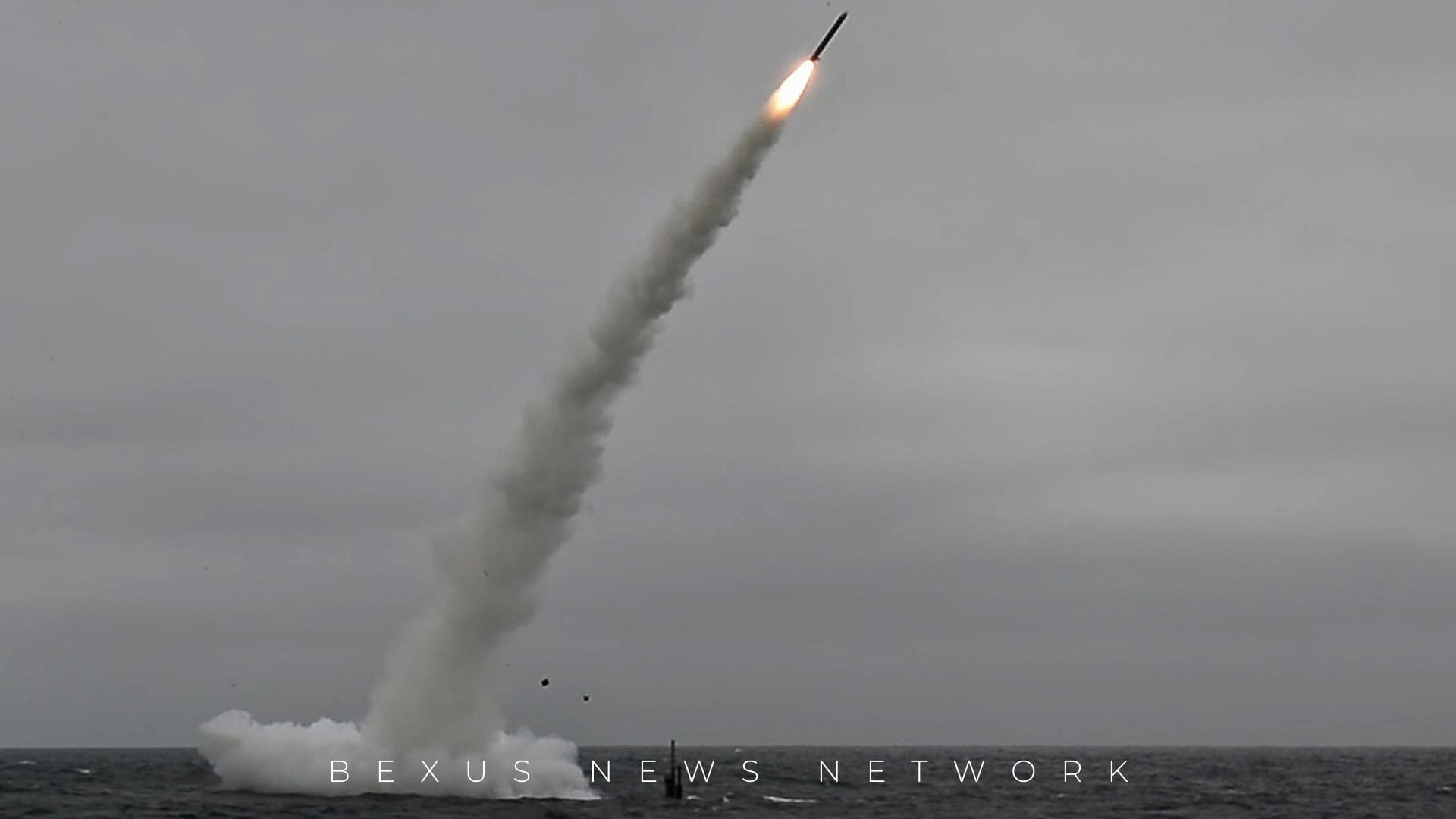
North Korea's state-run Korean Central News Agency reported on October 15 that the country's Missile Administration had test-launched "two types of submarine-launched strategic cruise missiles" in the East Sea on the previous day, the 14th. According to the agency, the test was overseen by Kim Jong-sik, member of the Central Military Commission of the Workers' Party and first vice department director of the Party Central Committee, Jang Chang-ha, director general of the Missile Administration, and technicians of the underwater weapon systems of the Korean People's Army Navy. There was no mention of attendance by State Affairs Commission Chairman Kim Jong Un.
The agency claimed the purpose of the test was to check "the current mobilization posture of the underwater operational system," contribute to the Navy's "proficiency in carrying out its strategic missions," and demonstrate the "high reliability" of North Korea's war deterrent. It also said the test "did not pose any negative effect on the security of neighboring countries." It did not disclose specifications such as range, flight time, or impact points. Performance and success are North Korea's claims and must be read together with the Joint Chiefs of Staff assessment below.
What the JCS Confirmed
At a regular briefing on the 15th, Joint Chiefs of Staff public affairs director Jang Do-young (Navy captain) said, "Our military continuously monitored and tracked the cruise missile activity North Korea reported yesterday, using various assets from before launch through the cruise phase to the end of flight." Asked about the launch methods, he replied that one type was assessed to have been launched from a vertical launch system (VLS) and the other from a torpedo launch tube.
Two points deserve attention here. First, the reason the JCS did not announce the launches in real time but said the next day, after North Korea's report, that it had "tracked them" is that cruise missiles fly low, unlike ballistic missiles, and notification practice differs. Second, the JCS did not officially confirm the names of the missiles or the launch platform (which submarine it was).
From Which Submarine Were They Launched — an "Estimate"
Based on photographs released by North Korea, South Korean experts raised the possibility that the missiles were launched from the 3,000-ton-class Hero Kim Kun Ok, launched in September 2023. It is the vessel North Korea calls a "tactical nuclear attack submarine." This is expert analysis, however, and the North Korean report itself did not specify the launch platform. The launch platform therefore remains an unconfirmed estimate, the Hero Kim Kun Ok. The JCS assessment that a VLS and a torpedo tube were tested at the same time fits with the large-submarine interpretation, but this too is "circumstance," not "confirmation."
Why Now — a Comparison Baseline
This is the first time North Korea has announced a test of submarine-launched strategic cruise missiles since January 2024. At that time, North Korea claimed it had launched the Pulhwasal-3-31 from the 2,000-ton-class 8.24 Yongung, and Kim Jong Un attended in person. This time, by contrast, no attendance was reported and only the names of the military working-level line appeared. Rather than settling the meaning of this, it is accurate to write only up to the fact that "the overseeing principals changed."
There is also a flow within the same week. The JCS said that at around 9:20 a.m. on October 12, several ballistic missiles were launched from the Pyongyang area into the East Sea, and at least one of them flew more than 900km. U.S. Indo-Pacific Command said North Korea "launched two ballistic missiles on October 12 (Korea time)" and that, on its current assessment, they were not an immediate threat to U.S. personnel or territory or to allies.
Japan's Ministry of Defense also held a temporary press conference the same day by Parliamentary Vice-Minister of Defense Koyari. https://x.com/PressSec_JMOD/status/2109513854472659034
The following day, the 13th, questions and answers about the North Korean ballistic missile launch continued at Defense Minister Koizumi's regular press conference. https://x.com/PressSec_JMOD/status/2109822004153205026
The disclosure of submarine-launched cruise missiles (the 14th) two days after ballistic missiles (the 12th) can be summarized as showing, in succession, two branches of launch means, ground-based and underwater. It should also be kept distinct that ballistic missile launches violate UN Security Council resolutions, in the position of the South Korean, U.S., and Japanese governments, while cruise missiles are not expressly subject to the wording of Security Council resolutions.
The South Korean Military's Response
On the 14th, the day of the test, Minister of National Defense Kang Shin-chul visited the Air Force's 1st Fighter Wing in Gwangju and the Army's Ground Operations Command to check military readiness on site. This is the schedule the Ministry of National Defense posted on its official account. The ministry's post does not say this schedule was in response to the North Korean test, so it should be written only as something that happened on the same day. https://x.com/ROK_MND/status/2110306977020579997
Two days later, on the 16th, Minister Kang visited Marine Corps Headquarters and the Northwest Islands Defense Command and received a report on the operational situation in the combat control room. https://x.com/ROK_MND/status/2110998142896439510
Background — Comparison with the January 2024 Test
Placing this announcement alongside the 2024 case reveals both continuity and change in North Korea's announcement grammar. On January 29, 2024, the Korean Central News Agency reported that Kim Jong Un had overseen, on the morning of the previous day, the 28th, a test launch of the newly developed submarine-launched strategic cruise missile Pulhwasal-3-31. The specific figures the agency disclosed at the time were flight times of 7,421 seconds and 7,445 seconds for the two missiles, and a claim that they hit an island target. Converted, the flight times are about 123 minutes and about 124 minutes respectively. The 2024 report also included Kim Jong Un's expression of satisfaction, his remark that nuclear armament of the Navy was an urgent task of the times, and an inspection of the nuclear submarine construction project. In contrast, the October 15, 2026 announcement contains no flight time, range, or impact figures, and the overseeing principals are written not as Kim Jong Un but as the working-level and munitions line, including Kim Jong-sik and Jang Chang-ha. In other words, the earlier case was a demonstrative type combining the supreme leader's attendance with disclosure of figures, while this case is a working-level type emphasizing a check of operational readiness without figures — a difference that can be confirmed by comparing the official texts alone.