The Chinese Ambassador Says China Could Win Easily If It Used Force, and the Philippine Department of Foreign Affairs Says the Remark Looks Like a Thinly Veiled Threat of Force
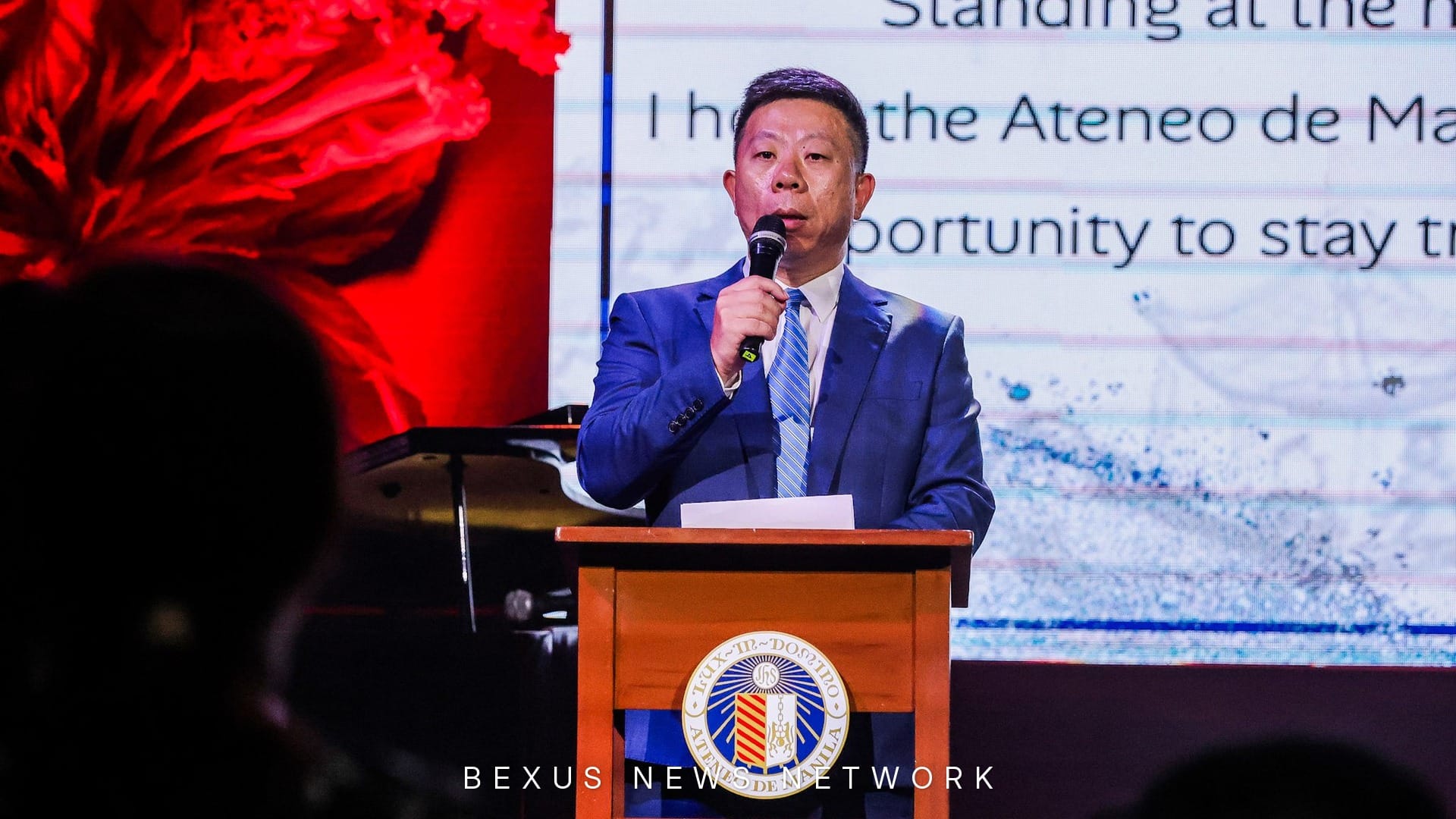
Jing Quan (井泉), China's Ambassador to the Philippines, said at the 「Diliman Dialogue」 event held in Manila, the Philippines, on October 15 that "if we used force, we could win easily, but we do not use force. We love peace," the Chinese Embassy in the Philippines disclosed. The Philippine Department of Foreign Affairs stated in a statement on the night of the same day that the remark "looks like a thinly veiled threat of force" and expressed "regret." The Chinese Embassy rebutted on October 16 that it was "selective quotation and excessive interpretation," and Ferdinand Marcos Jr., President of the Philippines, said this issue was "a matter to discuss directly with the ambassador," the Philippine Star reported.
The Order in Which the Remark and the Statements Were Exchanged
According to a press Q&A released by the Chinese Embassy on its official X account on October 16, Ambassador Jing Quan's remark was a response to the Philippine Secretary of National Defense calling China a "troublemaker". The passages commonly conveyed by the embassy's released version and transcripts by local media such as the Philippine Star and GMA are the words "if we used force, we could win easily" and the words "we love peace." The quotation above is the section the embassy's released version and media transcripts convey in common.
https://x.com/Chinaembmanila/status/2110952204698075338
The Philippine Department of Foreign Affairs issued a statement after 10 p.m. on October 15 in the name of spokesperson Rogelio Villanueva Jr. The Department of Foreign Affairs also posted the statement on its official X account. The purport of the statement is that "the choice of words spoken today by Chinese Ambassador Jing Quan is regrettable. Words that may look like a thinly veiled threat of force in the context of complex bilateral relations are not helpful." The statement was posted on the Department of Foreign Affairs' official X account. The department's measure was the issuance of a statement, not an official protest or a summoning of the ambassador.
https://x.com/DFAPHL/status/2110748625823514645
The Chinese Embassy posted a rebuttal on its official X account on the morning of October 16. The Embassy stated that "it is regrettable that the Philippine Department of Foreign Affairs issued such a statement," and that "such selective quotation and excessive interpretation show that there is still a long way to go to foster effective communication and dialogue between China and the Philippines." Both sides used the same word "regret" regarding the other side's response, but the Philippines took issue with the ambassador's remark itself, and China took issue with the quotation method of the Department of Foreign Affairs statement, respectively.
https://x.com/Chinaembmanila/status/2110904895167660497
President Marcos said on October 16 that the ambassador's remark was "not diplomatic language but sounded like a threat," the Philippine Star exclusively reported. Asked whether he would summon the ambassador, the President was reported to have answered that it was "a matter for the ambassador and me to discuss directly" and that he wanted to understand exactly what the ambassador meant. No transcript from the Philippine Presidential Communications Office carries this remark. The President's expression is closer to an assessment that he would discuss it directly than to a decision to summon.
Why This Remark Became a Problem
The two countries have confronted each other in the South China Sea. The Philippines calls the waters inside its exclusive economic zone the 「West Philippine Sea」, and China views the same sea as part of the South China Sea. The commonly used name is the South China Sea, and the Philippine name is the West Philippine Sea. Scarborough Shoal is Bajo de Masinloc in the Philippine name and Huangyandao in the Chinese name. On the ground, confrontations between the Philippine Coast Guard and the Chinese Coast Guard have been repeated, and this time the Department of Foreign Affairs and the Embassy exchanged statements over one sentence by an ambassador, not over vessels or water cannons.
The dated precedent is the Permanent Court of Arbitration (PCA) arbitral award of 2016-07-12. The award judged that there was no legal basis for China's maritime claims in the South China Sea, but China has maintained its position of not recognising this award. The Philippine Department of Foreign Affairs did not directly mention the arbitral award in this statement. However, in the background to the ambassador's words "could win easily" being received in the Philippines as a threat, there is the point that the two countries' differences in position surrounding the maritime dispute and the award remain as they are.
The venue of the remark also forms context. The Diliman Dialogue was a public event, and the ambassador's remark came out in a press Q&A format, not in closed diplomatic consultations. Therefore, the Philippine Department of Foreign Affairs also answered with a public statement, not a closed protest, and the Chinese Embassy also rebutted with a public X post. Because both sides left positions in public documents over the interpretation of a single sentence, which side first softens its expression becomes the next sequence.
Jay Tarriela, spokesperson for the Philippine Coast Guard, wrote on his own X account on October 15 to the effect that the ambassador's remark was a direct threat. Spokesperson Tarriela's post is a public reaction by a spokesperson of a Philippine government agency, but the announcing entity differs from the Department of Foreign Affairs statement. The Department of Foreign Affairs statement and the Coast Guard spokesperson's post came from different announcing entities. The point that the level of expression of the on-site ministry and the foreign affairs authorities differed immediately after the remark is also among the background that continued to the President's remark the next day.
https://x.com/jaytaryela/status/2110650655559823805
The Bilateral Consultation Framework Previously Created to Lower Tensions
Even before this statement exchange, the Philippines and China had operated a separate channel to reduce the possibility of maritime collisions. According to a Philippine Department of Foreign Affairs announcement, the two countries held the 9th Bilateral Consultation Mechanism (BCM) on the South China Sea in Manila on 2024-07-02, and Philippine Undersecretary Maria Theresa Lazaro and Chinese Vice Minister Chen Xiaodong confirmed their respective positions surrounding Ayungin Shoal while deciding to ease tensions within a scope that does not prejudice the other side's position. At the same meeting, the two sides signed an agreement on improving the Philippines-China maritime communications mechanism, and passed how to actually operate it to follow-up discussions (Philippine Department of Foreign Affairs, 2024-07-02).
Subsequently, the Philippine Department of Foreign Affairs announced on 2024-07-21 that it had reached a provisional understanding on principles and approaches to avoid misunderstanding and misjudgment in the Philippine rotation and resupply mission to the BRP Sierra Madre at Ayungin Shoal. The Department of Foreign Affairs wrote that this understanding is regularly reviewed through the BCM and does not prejudice either side's South China Sea position. At the same time, it stated that the Philippines maintains its claim that, under the United Nations Convention on the Law of the Sea (UNCLOS), Ayungin Shoal lies within its exclusive economic zone and continental shelf (Philippine Department of Foreign Affairs, 2024-07-21).
This consultation is not a venue created as a one-off. The 9th meeting announcement wrote that the immediately preceding round was the 8th BCM held in Shanghai on 2024-01-17, and explained that working-level preparatory meetings continued in Manila and Beijing before the main meeting was held. The Department of Foreign Affairs stated that the Philippine side directly conveyed to the Chinese side at that venue its intention to protect its interests and sovereignty, sovereign rights, and jurisdiction in the West Philippine Sea.
The most recent BCM progress is the 10th meeting held in Xiamen, China, on 2025-01-16. The Philippine Department of Foreign Affairs announced that the two sides confirmed the positive outcomes of the provisional understanding on Ayungin resupply and decided to continue implementation, and agreed to reactivate the coast guard cooperation platform. Because this consultation framework was originally designed to manage contingencies at the maritime scene such as vessel approaches and resupply missions, neither foreign affairs authority has said whether the public wording dispute surrounding an embassy event remark is handled by the same procedure. The remaining schedules are whether the two authorities place this remark issue on the next BCM meeting schedule or the coast guard cooperation resumption schedule.
The Skeleton of Maritime Claims Hardened by Domestic Law and the Arbitral Award
The Philippine Congress has also transferred its maritime claims into the text of domestic law. Republic Act No. 12064, the ‘Philippine Maritime Zones Act’, posted in Philippine Senate legislative materials and the Philippine Supreme Court Electronic Library, was approved on 2024-11-07, and, on the basis of the Constitution and the 1982 United Nations Convention on the Law of the Sea, declared Philippine jurisdictional maritime zones and provided for the exclusive economic zone as up to 200 nautical miles from the baselines (Philippine Republic Act No. 12064). China's Ministry of Foreign Affairs criticised in a separate statement the next day, 2024-11-08, that this law illegally includes Huangyandao and most of the Nansha Islands in Philippine maritime zones and seeks to harden the South China Sea arbitral award into domestic legislation. China's Ministry of Foreign Affairs also stated that its territorial sovereignty and maritime rights and interests are not affected by the implementation of this law, and that if the Philippines commits infringement or provocative acts on the basis of this law, it will respond resolutely (China's Ministry of Foreign Affairs, 2024-11-08). The two documents show that, at a time prior to this ambassador's remark, the two countries had already fixed the same waters in different legal languages.
The 2016-07-12 award press release released by the Permanent Court of Arbitration also contains specific judgments that form the background to this dispute. The tribunal judged that there was no legal basis for China to claim historic rights exceeding rights under the United Nations Convention on the Law of the Sea inside the so-called ‘nine-dash line’, and viewed Mischief Reef and Second Thomas Shoal as low-tide elevations within the Philippine exclusive economic zone and continental shelf. It also judged that China interfered with Philippine fishing and petroleum exploration and built an artificial island at Mischief Reef without Philippine permission, infringing Philippine sovereign rights (Permanent Court of Arbitration press release, 2016-07-12). Because the Chinese government has maintained its existing position of not accepting this award, the newly added domestic law and the existing award wording continue to be read overlapping in both sides' statements surrounding the interpretation of the ambassador's remark. Section 19 of the Philippine law text provides that it takes effect 15 days after being published in the Official Gazette or a national daily newspaper, so the point that the approval date of November 7 and the actual effective date are not the same date is also distinguished in the law text itself. China's Ministry of Foreign Affairs statement also claimed, regarding the Philippine ‘Archipelagic Sea Lanes Act’ promulgated together, that several provisions do not conform to international law and International Maritime Organization resolutions, and demanded that the Philippine side abide by international law and not harm the lawful rights enjoyed by other countries under international law. In other words, Beijing's November 2024 document is a record opposing, in one bundle, not only the scope of maritime zones but also the passage regime through archipelagic sea lanes.
Each Side's Position in One Line
- The Chinese government (Chinese Embassy in the Philippines): The ambassador said force would not be used, and the Philippine Department of Foreign Affairs statement is "selective quotation and excessive interpretation" (10/16 X rebuttal).
- The Philippine government (Department of Foreign Affairs and President): The Department of Foreign Affairs stated that the ambassador's remark "looks like a thinly veiled threat of force," and the President said it "sounds like a threat" and was a matter to discuss directly (10/15 statement and 10/16 Philippine Star reporting).
What to Watch Next
- No schedule for a meeting between President Marcos and Ambassador Jing Quan had been announced as of October 17.
- Posting of the original statement text on the Philippine Department of Foreign Affairs website, and release of a transcript of the President's remarks by the Presidential Communications Office, are the remaining steps.
- An additional statement from the Chinese Embassy and related queries at the Philippine Department of Foreign Affairs' next regular briefing are the next schedule.
Sources
https://x.com/DFAPHL/status/2110748625823514645 https://x.com/Chinaembmanila/status/2110952204698075338 https://x.com/Chinaembmanila/status/2110904895167660497 Philippine Department of Foreign Affairs statement reprint (Inquirer): https://www.inquirer.net/493081/dfa-rebukes-chinese-envoy-over-thinly-veiled-threat-to-use-force-vs-ph/ President Marcos remarks (Philippine Star, 2026-10-16): https://www.philstar.com/headlines/2026/10/16/2563637/marcos-chinese-ambassadors-force-remark-sounds-very-much-threat 2016 Permanent Court of Arbitration arbitral award case page: https://pca-cpa.org/en/cases/7/ Philippine Department of Foreign Affairs, 9th BCM announcement (2024-07-02): https://dfa.gov.ph/dfa-news/dfa-releasesupdate/35075-ph-china-convene-9th-bilateral-consultation-mechanism-on-the-south-china-sea Philippine Department of Foreign Affairs, Ayungin resupply provisional understanding announcement (2024-07-21): https://dfa.gov.ph/dfa-news/statements-and-advisoriesupdate/35166-philippines-and-china-agree-on-arrangement-for-rotation-and-resupplying-rore-to-brp-sierra-madre-on-ayungin-shoal Philippine Department of Foreign Affairs, 10th BCM announcement (2025-01-16): https://dfa.gov.ph/dfa-news/dfa-releasesupdate/36032-philippines-and-china-convene-10th-bilateral-consultation-mechanism-on-the-south-china-sea-2 Philippine Republic Act No. 12064 (Philippine Supreme Court Electronic Library): https://elibrary.judiciary.gov.ph/thebookshelf/showdocs/2/98027 China's Ministry of Foreign Affairs, statement on the Philippine Maritime Zones Act (2024-11-08): https://www.fmprc.gov.cn/eng/xw/wjbxw/202411/t20241108_11523786.html Permanent Court of Arbitration 2016-07-12 award press release: https://docs.pca-cpa.org/2016/07/PH-CN-20160712-Press-Release-No-11-English.pdf