European Union Leaders Confirm Execution of Ukraine Support Loan and Release of European Peace Facility Funds
Belgium
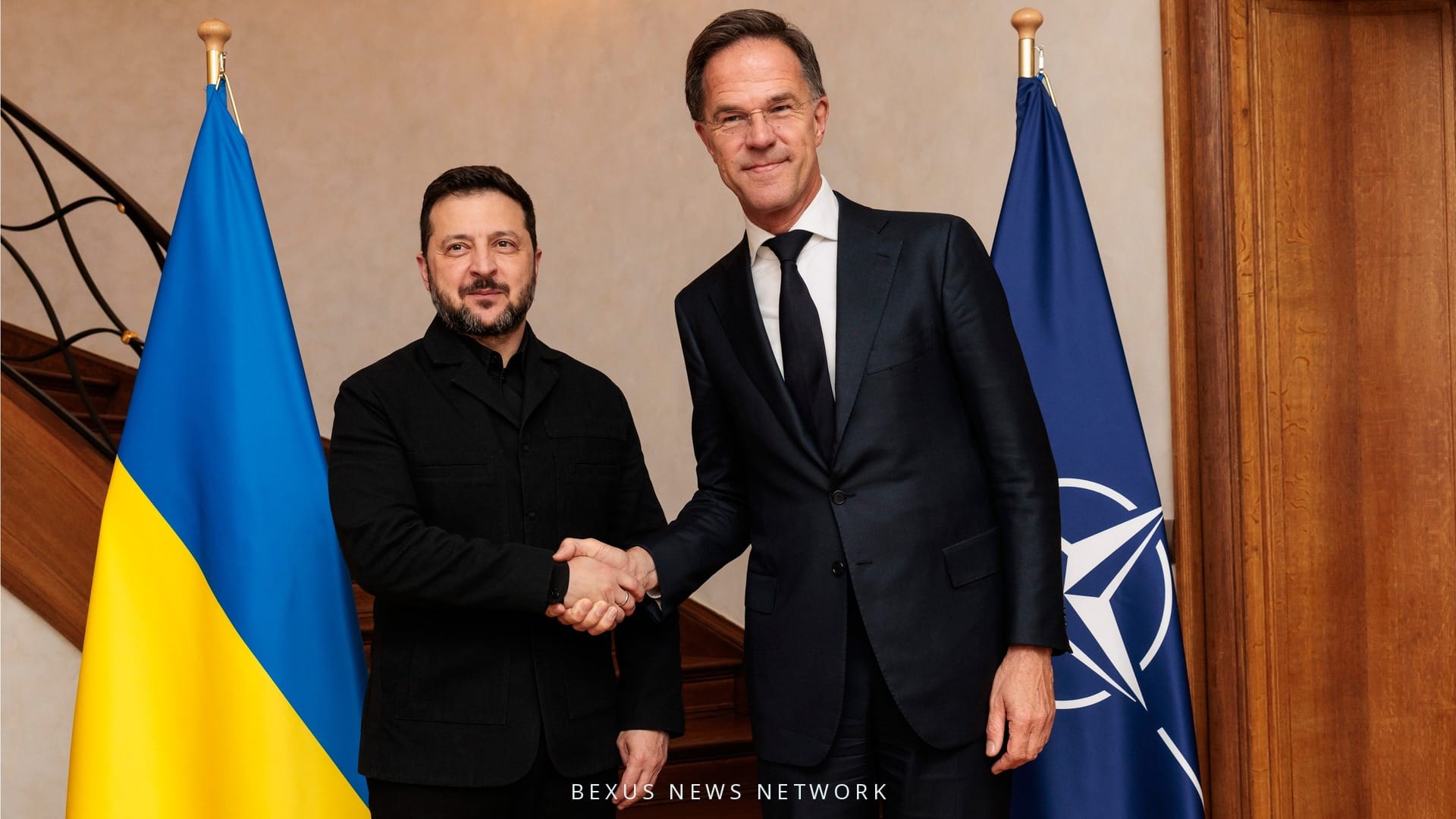
European Union leaders reaffirmed their unwavering support for Ukraine and agreed to continue the execution of financial and military assistance at the European Council held in Brussels on October 15 and 16, 2026. The leaders discussed the latest battlefield situation with Ukrainian President Volodymyr Zelenskyy. The European Council conclusions welcomed the ongoing disbursements under the €90 billion Ukraine Support Loan covering 2026 and 2027, and stated that funds to cover Ukraine's 2026 budget and defense needs have been confirmed. The leaders urged all actors to step up efforts to fulfill the requirements of the revised Ukraine Plan so that 2026 commitments under the loan and the Ukraine Facility are disbursed in a timely manner.
https://x.com/EUCouncil/status/2110282113094127968
The European Council also emphasized that Ukraine must continue its reform efforts and uphold the rule of law. The support loan is disbursed only upon meeting the conditions of the Ukraine Plan. The European Council stated that it looks forward to the European Commission and the International Monetary Fund providing updated assessments of Ukraine's financial and military needs. The European Council maintained its policy of addressing urgent financial needs together with international partners and stated that it would return to this issue at an appropriate time. The leaders urged international partners to swiftly scale up support to meet Ukraine's urgent financial and military needs. The €90 billion loan confirmed the scale of support whose execution has already begun, and the conclusions reflected a structure where the future pace of disbursements depends on the fulfillment of conditions and the results of assessments.
Regarding military support, the leaders welcomed the agreement to release €6.6 billion from the European Peace Facility. The European Council conclusions also welcomed the agreement to extend and revise the mandate of EUMAM Ukraine, the European Union Military Assistance Mission in support of Ukraine. Bilateral support from member states, progress in EU-Ukraine defense industry cooperation, and the establishment of the Integrated Ballistic Missile Defense Coalition were also presented as components of continuing military assistance. The conclusions also included language stating that all military support and security commitments will be provided in full respect of the security and defense policies of certain member states and taking into account the security and defense interests of all member states. The release of €6.6 billion is a decision that unblocks funding for military equipment and supplies through the European Peace Facility, confirmed alongside the financial loans at the summit.
The conclusions began with a condemnation of Russia's attacks on civilians and critical infrastructure. The leaders condemned Russia's deliberate and systematic attacks on Ukrainian civilians and critical infrastructure, including energy and transport systems, as well as healthcare and educational facilities. Ahead of winter, they stated that resilience must be strengthened through the Ukraine Energy Support Fund, and that regional energy cooperation and cross-border electricity interconnections must be enhanced. They pointed out that Russian attacks on agricultural infrastructure, grain storage and export facilities, and vessels in Black Sea and Danube ports undermine global food security, particularly affecting Africa, Asia, and the Middle East. They stated that attacks on civilian vessels, including recent serious incidents involving civilian ships in the exclusive economic zones of Bulgaria and Romania, represent grave violations of international law and the law of the sea. The leaders urged the immediate restoration of safe passage for grain cargo vessels in the Black Sea and the further consolidation of the EU-Ukraine Solidarity Lanes.
Regarding peace, they reaffirmed their commitment to a comprehensive, just, and lasting peace. The leaders stated that strong security commitments ensuring Ukraine's long-term security and stability must underpin peace. The European Union stated its readiness to contribute to such commitments, including as part of a coalition of the willing and in cooperation with the United States, emphasizing that Europe will play a key role in a future peace settlement and safeguard its interests. The leaders urged Russia to agree to a ceasefire and engage in meaningful peace negotiations, stating that humanitarian relief and confidence-building measures, including prisoner exchanges and the return of civilian detainees, are part of the path to peace. There is a reason financial discussions appear in the same document alongside calls for a ceasefire: even after the fighting stops, debt and reconstruction costs remain.
Discussions ahead of the summit had already taken place at the defense ministers' level. At the Foreign Affairs Council in defense configuration on September 28, 2026, ministers discussed Ukrainian air defense, the European Peace Facility, EUMAM Ukraine, and the Russian shadow fleet. High Representative for Foreign Affairs and Security Policy Kaja Kallas said that air defense is Ukraine's core priority and that attacks continue daily. The High Representative conveyed that Ukraine's Defense Minister made the same point clear. The ministers confirmed that a procurement plan worth €28.3 billion under the Ukraine Support Loan had already been approved and that it would include future purchases of Patriot missiles. The need for immediate deliveries from existing stocks alongside the need to expand production capacity was also raised.
The €6.6 billion from the European Peace Facility was mentioned as the same amount during the September 28 meeting. The High Representative emphasized that the European Peace Facility remains one of the European Union's central instruments supporting Ukraine and announced that discussions with member states would take place regarding replenishing the fund after the current funding cycle. The Irish Presidency stated that it would swiftly advance technical work to disburse the funds. Regarding EUMAM Ukraine, ministers agreed on the first step of a strategic review to extend the mission's mandate by another two years, and stated that the mission would establish a coordination cell in Kyiv to strengthen military training and facilitate the exchange of battlefield lessons learned. The leaders essentially adopted what defense ministers had agreed upon earlier.
A joint statement by the European Commission and Ukraine outlined the financial needs ahead of the summit. The joint statement published in Brussels on October 1, 2026, stated that through cooperation, means to cover Ukraine's 2026 budget and defense needs had been identified and reiterated the necessary steps for timely release. For 2027, subject to specified conditions, they agreed to swiftly advance work on allocating €45 billion under the Ukraine Support Loan and to begin work on identifying additional budget and defense needs. Both sides agreed that other partners must also fulfill their financial commitments and scale up efforts in light of the significant challenges facing Ukraine. The Commission and Ukraine agreed to meet monthly to coordinate joint efforts. This money is not yet a finalized disbursement; it is an amount promised to be allocated next year once conditions are met.
The Ukraine Facility is a financial framework operating separately from the support loan. According to explanations from the Council of the European Union, the Ukraine Facility is an instrument providing over €50 billion in stable and predictable financial support from 2024 to 2027. This facility supports macro-financial stability, recovery, modernization, reforms, uninterrupted public services, civil society, and private sector investment mobilization. The first pillar, responsible for direct financial support, exceeds €38 billion and is conditional upon Ukraine meeting reform milestone requirements set out in the Ukraine Plan. The second pillar, an investment framework worth €9.6 billion, supports companies and entities hesitating to invest due to war risks and high insurance costs, while the third pillar, accession assistance exceeding €4 billion, helps Ukraine align with EU law and implement reforms necessary for accession.