US Enacts Immediate Temporary Flight Restriction on Drones over 1 Nautical Mile along Southern Border
WASHINGTON
Drone Restrictions within 1 Nautical Mile of Southern Border Below 400 Feet Took Immediate Effect
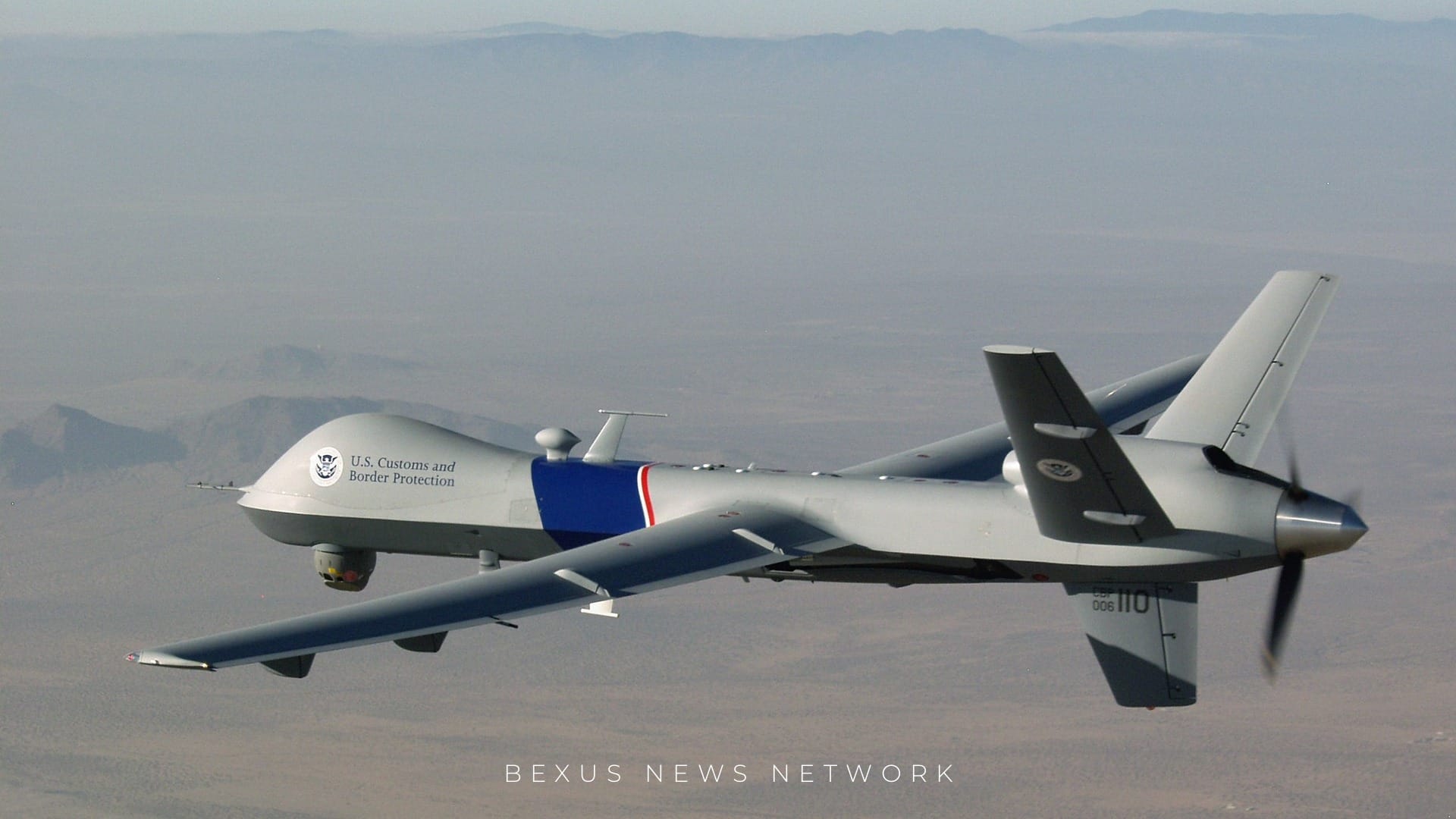
On October 16 (local time), the U.S. Department of Transportation (DOT), the Department of War (DoW), and the Department of Homeland Security (DHS) announced joint measures to strengthen security over the airspace along the southern border. The core of the action is the immediate enactment of a Temporary Flight Restriction (TFR) targeting drones, effective that day. Under this measure jointly announced by the three departments, unauthorized drone flights are prohibited within 1 nautical mile (approximately 1.85 kilometers) north of the U.S.-Mexico border, from the surface up to an altitude of 400 feet (approximately 122 meters).
A Temporary Flight Restriction differs from a permanent prohibited area that continuously blocks peacetime air traffic. It is a measure that restricts flights only for a specified period and designated area, and the actual operational conditions are contained in a Notice to Air Missions (NOTAM) issued by the Federal Aviation Administration (FAA). In their announcement, the three departments stated that the FAA will issue the relevant NOTAM, which will include domestic notices and guidance linking to the FAA unmanned aircraft data distribution system. The three departments urged drone operators to personally verify all applicable NOTAMs and restrictions before flying and to comply with the effective requirements for their planned flights. While the prohibition itself takes effect upon the announcement, the detailed conditions applied on the ground will be governed by the FAA notice.
A distinctive feature of this measure is that the three departments specified the operational scope with precise numerical figures. It covers not just the immediate border line, but forms a ribbon-like strip extending 1 nautical mile inward from the border, capped at an altitude of 400 feet—the low-altitude airspace where small drones are typically operated. In effect, low-altitude airspace that cannot be reached solely through ground border walls and patrols has been consolidated into a separate restricted zone. The three departments explained that this measure will mitigate risks to ongoing border security operations, safeguard federal personnel, facilities, and the homeland, and enhance enforcement against violations of the restriction.
Secretaries Vowed to Protect the Skies from Cartel Drones
Secretary of Transportation Sean Duffy stated, "President Trump promised to secure the Southern Border and he delivered. Now, we are doubling down by protecting our skies against cartel drone threats and other illicit activity." Secretary Duffy expressed gratitude for the close partnership with the Department of Homeland Security and the Department of War, adding that they are moving together to defend airspace and keep the American people safe.
Secretary of War Pete Hegseth broadened the scope of border control across land, air, and sea. He said, "The U.S. government will maintain 100 percent operational control of our borders across land, air, and sea," and stated, "For too long, cartels have exploited gaps along our Southern Border. Thanks to President Trump, those days are over." Hegseth explained that restricting unauthorized drone activity provides commanders with greater situational awareness, decision-making space, and more options to defend the homeland. Stating that they are equipped with advanced technologies, including directed energy weapons, he asserted, "Our warfighters will shoot down any cartel drone that threatens American sovereignty." This statement regarding downing drones directly reflects the text of the Secretary of War's announcement and does not imply that the actual rules of engagement have been made public.
Secretary of Homeland Security Markwayne Mullin said, "DHS will continue building upon the historic progress we have made in securing our southern border." Secretary Mullin noted that this measure will help counter the threat of cartel drones, protect frontline personnel, and reinforce airspace security over the border. He concluded his remarks by emphasizing that they are fulfilling the president's commitment to secure the border through sustained action and strong cooperation with the Department of Transportation and the Department of War.
The statements of the three secretaries reflect divided roles. The Department of Transportation set forth the aviation regulatory framework and flight restrictions; the Department of War framed border defense as a homeland defense operation; and the Department of Homeland Security prioritized the protection of frontline border enforcement operations. The three departments linked aviation administration and border enforcement into a single document.
It Is an Operational Restriction Preventing Unauthorized Drone Flights
A TFR is not a statute establishing flight itself as a new criminal offense. It is an operational restriction that prohibits unauthorized flights within a designated area, altitude, and period, allowing violations to be addressed under existing aviation regulations and enforcement authorities. The three departments specifically targeted drones—namely, unmanned aircraft. The target is not the upper airspace that overlaps with standard operating altitudes of manned aircraft, but the lower layer extending from the surface up to 400 feet. This directly coincides with the altitude primarily used by small unmanned aircraft for border surveillance and smuggling.
The 1-nautical-mile width can be understood in the same context. While the border itself is a line, drones can cross that line to drop contraband or conduct surveillance within a short span of time. By setting the restriction width up to 1 nautical mile north of the border, takeoffs and low-altitude approaches in the airspace immediately inside the border line fall within the scope of enforcement. The three departments described the establishment of this zone as directly targeting illicit cartel activity. In their announcement, the three departments stated that this measure builds upon the Trump administration's ongoing efforts to secure the southern border and defend the homeland against national security threats, including illicit cartel operations.
However, not all details can be gleaned from the statements of the three departments alone. How long the restriction will remain in effect, what authorization procedures permit flights within the restricted zone, and what exceptions apply to federal agency mission flights will be determined by FAA NOTAMs and domestic notices. The three departments only noted that the notice would be issued. What is present in the current announcement is solely that the restriction has commenced, its geographic area and altitude, and the objectives stated by the three departments. The end date and authorization exemptions have not yet been specified.
A Measure Aimed at Curbing Reconnaissance and Smuggling by Cartel Drones
The three departments expanded the scope of border security from the ground into the airspace. In the announcement, the three departments directly included the assessment that cartels have exploited gaps along the border. Drones allow individuals to see beyond the border without crossing it on foot, transport small items, and pinpoint the positions of enforcement personnel. This is precisely why the three departments singled out illicit cartel activity as the primary risk.
Secretary Hegseth's mention of directed energy weapons signals that the Department of War views this matter not merely as an aviation regulatory issue, but as a defense issue. Directed energy weapons are a general concept referring to countermeasure systems—such as lasers or high-power microwaves—that concentrate energy onto a target. However, the three departments did not disclose what equipment was deployed or where. The secretary's remarks represent an expression of resolve to respond, and should not be read as an announcement confirming actual deployments.
The Department of Homeland Security's emphasis on protecting personnel also stems from a frontline enforcement perspective. Low-altitude drones can serve as a means to monitor border patrol personnel and facilities; establishing a restricted zone creates grounds to respond at an earlier stage based solely on unauthorized flight. The Department of Transportation joined the effort because such responses must be executed within the aviation regulatory framework. Flight restrictions are communicated through the FAA's notice system, and operators bear the responsibility to verify those notices.