US Navy Takes Delivery of First 'Doomsday' Nuclear Command Plane Successor
WASHINGTON
First Step Toward Fielding the E-130J Has Begun
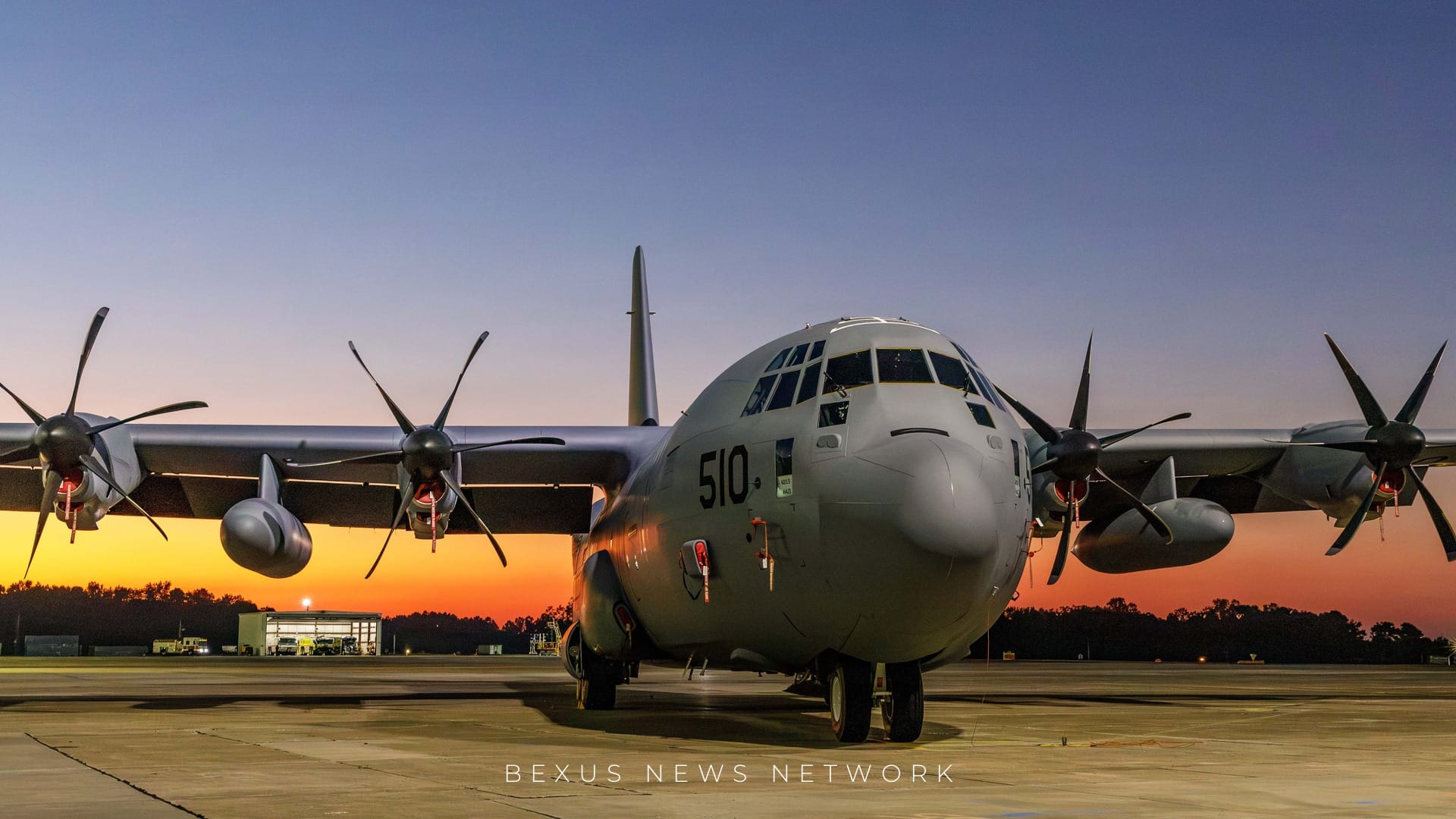
On October 15 (local time), the US Navy accepted one newly manufactured C-130J-30 Super Hercules aircraft from Lockheed Martin in Marietta, Georgia. The Department of War described the acceptance as the first step toward fielding the future E-130J Phoenix II. The acceptance ceremony was held at the Marietta production facility, attended by officials from the Navy's Airborne Strategic Command, Control, and Communications Program Office, which manages the airframe, and Strategic Communications Wing 1 (SCW-1), which will operationally fly the aircraft.
The aircraft delivered this time is the first airframe of the successor that will take over the 'Doomsday' nuclear command and communications mission from the E-6B Mercury. Going forward, this airframe will undergo mission equipment modification and flight testing to be transformed into the E-130J Phoenix II. The mission the Navy will assign to it is the strategic communications mission known as 'Take Charge and Move Out' (TACAMO). The Department of War explained that this mission system provides survivable, reliable, and secure communications between the President, the Secretary of War, and US Strategic Command. It serves as an airborne link for one axis of the nuclear command, control, and communications system.
The aircraft's name, Phoenix II, carries a meaning directly disclosed by the Navy. The Department of War stated that the name symbolizes rebirth and refers to the EC-130Q Hercules model used by the Navy during the Cold War to perform the same TACAMO mission. The strategic communications mission is returning once again to the propeller-driven Hercules family. The aircraft currently performing this mission is the jet-based E-6B Mercury. The Navy stated that the acceptance of this first airframe honors the decades of service of the E-6B while marking a turning point that begins establishing the next system.
At the acceptance ceremony, a Lockheed Martin official presented a commemorative plaque and a ceremonial key to Navy Captain Roger Davis, program manager of the Navy's Airborne Strategic Command, Control, and Communications Program Office. Captain Davis then handed the key to Navy Captain David Gardner, commander of Strategic Communications Wing 1. The Department of War explained that this symbolic handover signifies the transition of the new aircraft into mission equipment modification, ground testing, and developmental flight testing phases. The airframe has been transferred to the Navy, and now modification and testing remain.
Dates for Remaining Two Aircraft and Mission Deployment Have Not Yet Been Announced
According to the Department of War, this aircraft is the extended-fuselage C-130J-30 variant and is one of three aircraft the Navy initially procured in September 2024. The Navy procured three aircraft in September 2024, and has now received the first of them. When the remaining two aircraft will be transferred and when the E-130J will enter operational service have not yet been released.
The Department of War noted that this modernized system maintains the resilience and reliability of the national nuclear command, control, and communications architecture. It added that the new platform enhances survivability, capacity, and operational reach to support mission success in complex global environments. This outlines the program goals set forth by the Navy. It did not present performance figures in numbers. The Navy called this acquisition the cornerstone of the strategic deterrence posture.
Prior to the acceptance ceremony, some service members from Strategic Communications Wing 1 took part in a fleet engagement event. Simulator flights, production line tours, and program briefings were included in the day's schedule. Strategic Communications Wing 1 is based at Tinker Air Force Base in Oklahoma and is the unit that will operate and sustain the modernized fleet. Operational unit personnel viewing the production site from the time the new aircraft was being built aligns with the Navy's explanation that preparations for transitioning to operational service are running concurrently with modification and testing.
Strategic Deterrence Is Only as Credible as Its Unbroken Communications
Captain Davis said, "The handover that took place today on the historic Marietta line represents more than just a new airframe; it represents the foundation of our future strategic deterrence posture." He stated that through close partnership with Lockheed Martin and the industry team, they will ensure the nation maintains an unwavering communications lifeline to its ballistic missile submarine fleet. This remark directly identified ballistic missile submarines as the operational destination that communications must reach.
Captain Gardner remarked that strategic deterrence is only as credible as the capability to communicate, emphasizing that the mission rests in the hands of the service members of Strategic Communications Wing 1. He stated, "The E-130J will provide our warfighters with unmatched capability and next-generation survivable, reliable communications, ensuring our team remains an unbroken link between the President and the strategic nuclear forces." The statements of both commanders place the survivability and reliability of communications at the center of the program. It means that keeping command-and-control communications uninterrupted even during a crisis is the very reason for this aircraft's existence.
A Mission to Maintain Command from the Air Even if Ground Facilities Are Attacked
TACAMO refers to the airborne communications mission that links command and control from the President, the Secretary of War, and Strategic Command to strategic forces, especially ballistic missile submarines, during crises. The Department of War specified that the mission system to be undertaken by the E-130J provides communications between the President, the Secretary of War, and US Strategic Command. Built on the scenario where ground facilities could come under attack, airborne aircraft serve as relay points connecting national leadership and strategic forces. This is why the Navy repeatedly describes these communications as survivable.
The shift in aircraft types also overlaps with the history of this mission. During the Cold War, the EC-130Q Hercules performed this mission, and the E-6B Mercury subsequently took over the role. With the Navy now creating the E-130J based on the C-130J-30—another Hercules variant—the mission returns full circle to a propeller-driven aircraft. This is why the name Phoenix II contains an explicit reference to the Cold War-era airframe. The symbolism of rebirth and the actual fleet replacement are intertwined in a single name.
However, the Department of War did not explain whether replacing the aircraft model equates to replacing the overall method of operation. The new airframe will serve as the baseline to install mission equipment, and the replacement to continue what the E-6B has done has begun. When the E-6B will be retired and how long the two aircraft types will operate concurrently will be announced by the Navy later. Accepting the first aircraft marks the starting point of that long transition.
US Nuclear Command and Control Communications Modernization Enters Physical Hardware Stage
No South Korean institutions or companies were mentioned in this announcement. However, at the receiving end of the communications network connected by the E-130J lie US strategic nuclear forces, and that deterrence architecture indirectly touches the US extended deterrence framework encompassing the Korean Peninsula. While South Korea is not directly tied to the three agencies, the fact that US nuclear command, control, and communications modernization has entered the physical hardware phase with the delivery of the airframe serves as background for the strategic environment shared by allies. There is no mention in the announcement regarding deployment to South Korea or operations on the Korean Peninsula.