Hegseth Presents NATO 3.0 Concept to UK Defence Secretary, Calls for European-Led Defence
WASHINGTON
Hegseth Met with UK Defence Secretary at the Pentagon
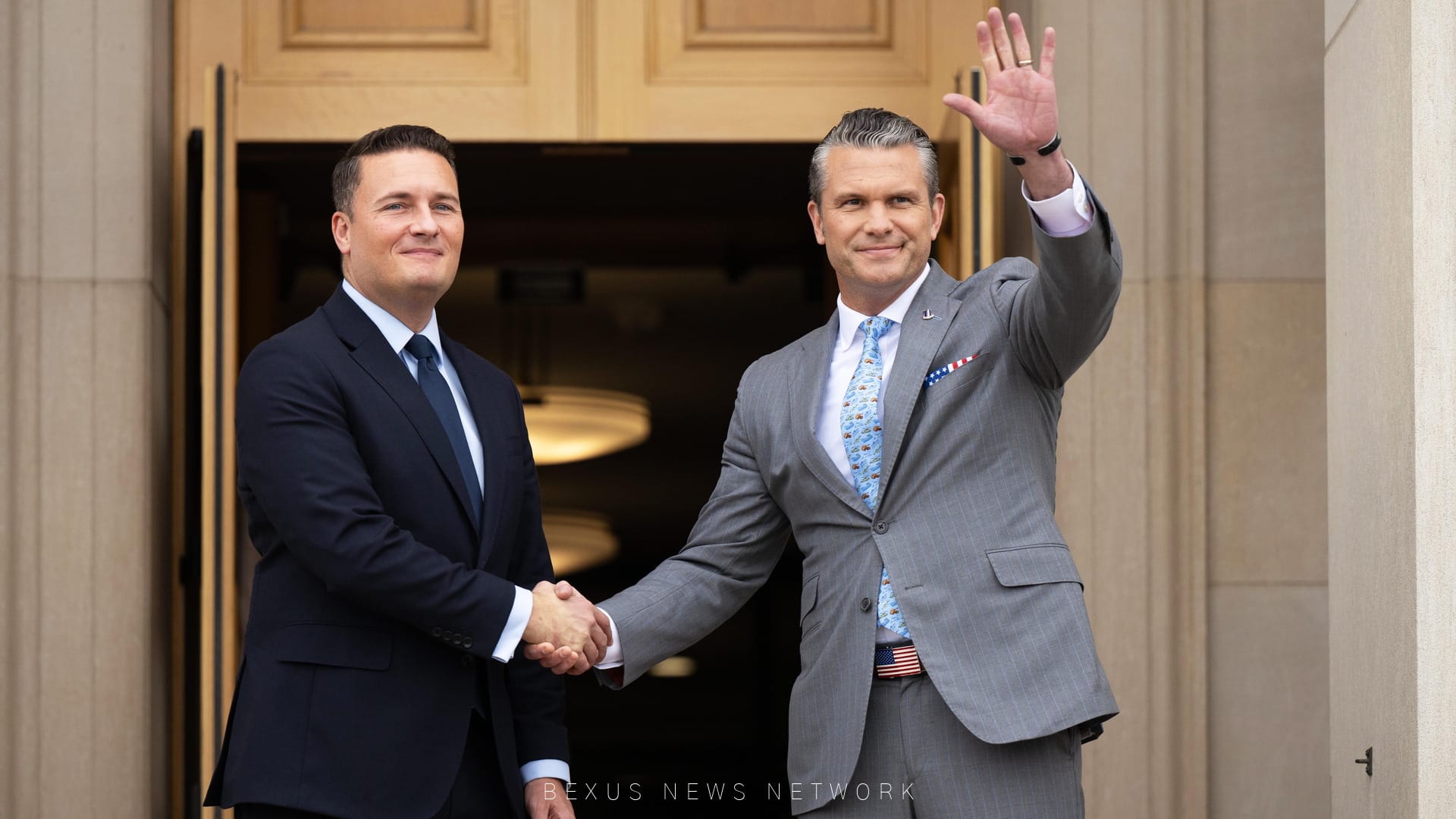
U.S. Secretary of War Pete Hegseth hosted UK Defence Secretary Wes Streeting for a bilateral meeting at the Pentagon on October 15 (local time). According to the Department of War, Streeting's visit to Washington was his first since taking office in July this year. During the meeting, Secretary Hegseth drew a line, stating that the alliance between the two countries is not a relationship leaning on nostalgia. He said that the friendship and partnership shared by the two nations is about "an ongoing partnership that has to be actively operationalized in a dangerous world, in a dynamic world."
The concept Secretary Hegseth brought up at this meeting was 'NATO 3.0.' The Department of War described this concept as a strategic rebalancing of the North Atlantic Treaty Organization (NATO) alliance. It is an initiative under which European nations take primary responsibility for their own conventional defense, allowing the United States to reduce its troop presence on the European continent and shift its focus to other regions, such as the Pacific. It is not that the U.S. military will pull out of Europe entirely. The core is a re-division of roles, where Europe leads Europe's conventional defense and the U.S. military pivot turns toward other regions.
Secretary Hegseth said it was very encouraging to watch NATO stepping up under President Trump's leadership, and stated that he highly appreciated the UK's forward-looking commitment to doing just that. Sean Parnell, the Department of War's public affairs official, also disclosed the same day that the two secretaries discussed the need for greater European—especially British—leadership within NATO and the urgency for allies to further increase defense spending. The secretary's own remarks and the public affairs official's public explanation point in the same direction.
The Concept of Producing Weapons and Ammunition Together with Partners
Secretary Hegseth tied the issue of military rebuilding to joint efforts with allies. Citing what is referred to in the United States as an "arsenal of freedom," he said domestic manufacturing, industry, and production lines would be built with speed and scale within the U.S. and built together with partner countries. He added that confidence in supply chains is critical and assessed that the UK is actively leaning into that effort. This remark elevated not just the size of defense spending, but the industrial base that actually produces weapons and ammunition, to a shared task for the entire alliance.
Secretary Streeting responded that the UK also prioritizes strengthening its military capabilities. He stated that Britain is sustaining the largest increase in defense spending since the end of the Cold War. However, he also noted that it is not merely a matter of the amount of money. Secretary Streeting said, "It is not just about investing more, it is about investing in the right places, pushing the frontiers of defense innovation, and converting that innovation into capability much more quickly." He added that Britain must strengthen its defense industrial base and accelerate the pace of turning innovation into military capability.
Both secretaries stated that after increasing defense spending, the key challenges are the speed of converting that money into actual combat capability and the industrial base. Secretary Hegseth's discussion of supply chains and Secretary Streeting's talk of innovation point in the same direction. What the two secretaries articulated was a direction. No joint document, communique, or scheduled timetable was released.
The UK Agreed That Europe Must Become More Self-Reliant
Secretary Streeting also agreed that European NATO member states need to be more self-reliant in defense. Saying, "The United Kingdom is stepping up, and willing to step up," he expressed gratitude to President Trump for pushing Europe to take the defense of its own continent and its own interests more seriously. It was a response framed as the UK accepting by its own choice the expanded European role that the U.S. has demanded.
He also emphasized the importance of the U.S.-UK alliance. Secretary Streeting remarked that at this stage, it is not yet clear whether freedom or tyranny will define the 21st century. He continued, "What is clear is that Britain and America will not be bystanders in that struggle, and are resolved to see freedom win." This statement expanded the role of the alliance beyond discussions of defense burden-sharing into a joint determination regarding the direction of the international order.
Secretary Hegseth also expressed gratitude for Secretary Streeting's communication regarding recent threats targeting U.S. forces in the UK. The Department of War mentioned a suspected Iranian-backed terror plot and security incident that occurred last month at RAF Fairford in the UK. Following that incident, the U.S. military withdrew its bombers and returned them to the United States. As this incident was raised during the meeting, the safety of U.S. troops stationed on British soil is also tied into the alliance discussions. However, the Department of War did not provide further details on the investigation or follow-up actions regarding the incident.
Europe Leads Conventional Defense While the U.S. Focuses on the Pacific
NATO 3.0 is not a treaty text. The concept explained by the Department of War in this report represents a direction for the division of roles within the alliance. It envisions Europe taking the lead in conventional defense of its own region, while the U.S. reduces its troop presence in Europe and shifts its military focus to other areas, such as the Pacific. For this concept to lead to actual troop movements, it must be followed by national defense plans, budgets, and NATO-wide decisions. There are no specific reduction figures or timelines in this report. It must be made clear that this is a statement of direction without numbers or dates.
Yet this remark is not mere empty rhetoric. The Secretary of War personally explained this concept during an official meeting with an allied defense minister, and the Department of War's public affairs official reiterated in a public post on the same day the necessity for expanded European and British leadership and further defense spending increases. As both the secretary's remarks and the department's public explanation went out together, NATO 3.0 is seen as entering a phase of becoming the official designation for the role re-division that the United States demands of its allies. The real test will lie in whether European nations, including the UK, respond with concrete defense plans and spending increase timetables.
That the Pacific was directly named as the region to which the U.S. focus would shift is also a key point in this report. The rationale is that if Europe shoulders Europe's conventional defense, the U.S. can redirect resources to deterrence in other regions commensurate with the eased burden. It is presented not as the dissolution of the alliance or a U.S. abandonment of European defense, but as a realignment of priorities regarding which region receives limited military resources first. This distinction is the starting point for interpreting NATO 3.0.
South Korea Was Not Directly Mentioned, but Connects to the Pacific Focus
South Korea was not directly mentioned in this meeting or announcement. However, the statement that the U.S. military focus is shifting to the Pacific is not irrelevant to South Korea in the Indo-Pacific. The more European allies take on their own regional defense, the more operational latitude the U.S. may have toward Asia. Conversely, if European countries' defense spending and industrial base fail to keep pace in practice, the U.S. reallocation plan could also be delayed. What has emerged is solely a direction. There was no mention of United States Forces Korea or Korean Peninsula forces in this report.