Five months after missing rebar found at GTX-A Samseong Station, land ministry weighs indemnity claim against Seoul with no reinforcement plan decided
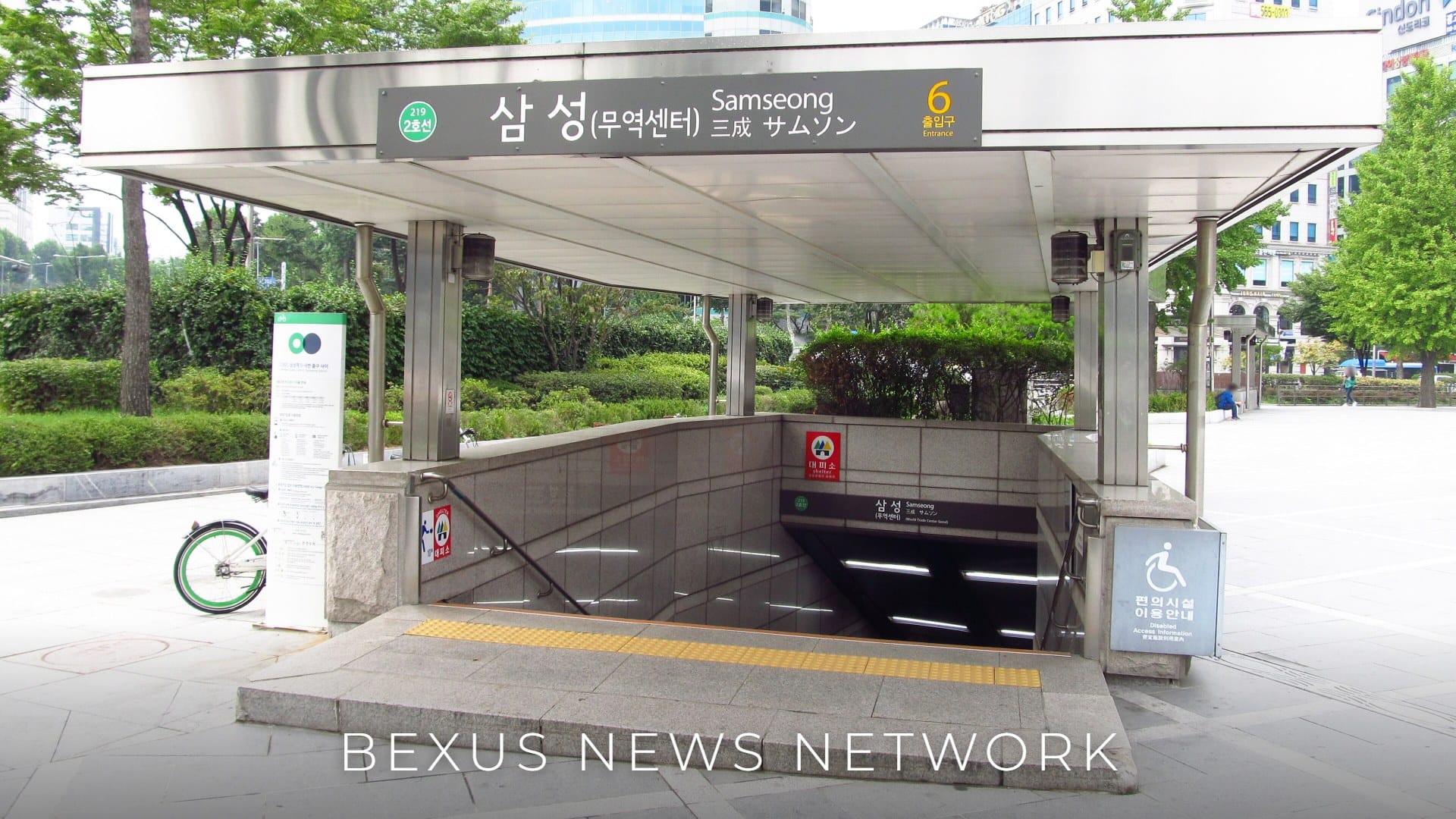
SEOUL
South Korea's Ministry of Land, Infrastructure and Transport on Oct. 20 issued an explanatory press release rebutting the Seoul Metropolitan Government's claim, raised during a parliamentary audit, that the ministry was "wasting six months" over missing rebar in the Samseong Station section of the Great Train eXpress (GTX) Line A, the metropolitan express railway. In the same release, the ministry said it is considering filing an indemnity claim against Seoul within the year over fiscal losses caused by construction delays and construction errors. More than five months have passed since Seoul first reported the construction error to the ministry on April 29, but how to reinforce the columns has yet to be decided. The timing of nonstop service between Seoul Station and Suseo Station, which the ministry said in April it would pursue this year, was pushed back on May 15 to "to be determined later."
Ministry rejects Seoul's 'six months wasted' claim as untrue
According to the ministry's release, Seoul argued at the parliamentary audit that even if results come out at the end of December there will be no measure other than the existing steel plate reinforcement method, and that the ministry is "needlessly wasting six months." The ministry's release also summarized Seoul as arguing that the ministry, having deliberately delayed its decision, should bear liability for damages to SG Rail, the private operator of GTX-A.
The ministry said "thorough verification of the reinforcement plan is an essential procedure for public safety" and that the claim of "wasting six months" is untrue. It said the interim results of the precision safety inspection and the May on-site inspection cited by Seoul were "judgments on the condition of the structure at the construction stage at the time of inspection" and therefore cannot substitute for verification of a reinforcement plan that takes into account passengers and disaster situations after completion.
The ministry said it is conducting a comprehensive review through the Korea Concrete Institute of structural performance, stability in special situations such as earthquakes, and the impact on train operations. It said it is narrowing down all alternatives, including 12 different reinforcement options and reconstruction, based on reinforcement performance, durability and constructability. "We are keeping all options open, including demolition and reconstruction, and are working to find the optimal alternative within the year," the ministry said. It described the timing of a final decision only as "within the year" and "as soon as possible," without giving a specific date.
50 of 80 columns on fifth basement level platform fall short of standards
The problem lies in a construction section of the Yeongdong-daero underground space integrated development project ordered by the Seoul Metropolitan Government. According to the ministry's May 15 release, the 1-km Samseong Station section of the GTX line is being built by Seoul under a commission from the Korea National Railway. The ministry said the main reinforcing bars in 80 columns of the GTX platform on the fifth basement level of the transit center were mistakenly installed in one row instead of two. It said 50 of the 80 fail to meet standards based on the completed structure.
The ministry said it was confirmed that Seoul first received a report of the construction error from the contractor in November 2025. Seoul reported it to the ministry on April 29, 2026. Judging that there were problems in project management, including the fact that the error was reported long after it was recognized, the ministry on May 15 launched audits of the Seoul Metropolitan Government and the Korea National Railway. The ministry said that day it would thoroughly verify the reinforcement plan proposed by Seoul through certified institutions and others to ensure there would be no safety problems. That verification had not been completed as of Oct. 20.
The ministry's May 25 release described how construction continued even after the error was confirmed. The ministry said work on the fourth and third basement levels continued from November 2025 through April 2026. It said a May expert consultation confirmed that, because upper-level construction continued while the rebar was missing from the columns on the lowest fifth basement level, interim measures were needed, such as additional safety reviews for each construction stage, reinforcement of the fifth basement level structure and strengthened monitoring.
The facility will not remain Seoul's property. The ministry said in its May 28 release that ownership of the facility will be transferred to the state, with SG Rail operating it and Korail maintaining it. In its May 25 release, the ministry also said the facilities in the section are national railway facilities built with state funds and to be handed over to state ownership, making it difficult for Seoul to devise a reinforcement method on its own.
Missing rebar report came two days after minister spoke of 'nonstop service this year'
Kim Yun-duk, then minister of land, infrastructure and transport, reviewed progress on GTX Lines A, B and C at the Government Complex Sejong on the afternoon of April 27. Kim received reports from the heads of major construction companies for each project, including Daewoo E&C, Lotte E&C, POSCO E&C, Hyundai E&C and DL E&C. In its release that day, the ministry listed as a task for this year "'nonstop passage through Samseong Station,' connecting the currently disconnected Seoul Station-Suseo Station section of Line A in about 10 minutes, this year."
Kim urged regarding Line A to "thoroughly verify the installation status and performance of facilities in preparation for nonstop passage on the Seoul Station-Suseo Station section this year." According to the same release, Line A's Suseo-Dongtan section opened in March 2024 and the Unjeong Jungang-Seoul Station section at the end of 2024. As of April 12, average weekday daily ridership was 70,000 on Unjeong-Seoul Station and 20,000 on Suseo-Dongtan, with cumulative ridership of 33 million.
Seoul's report of the construction error reached the ministry two days later, on April 29. The ministry conducted an emergency inspection that night. In its May 15 release, the ministry said "the timing of nonstop passage through Samseong Station will be determined later after a comprehensive review of the results of the verification of reinforcement plans and other matters." The Oct. 20 release gave the timing of a reinforcement plan decision as "within the year."
Seoul and ministry at odds over reporting responsibility for five months
The two bodies have been trading blame over reporting responsibility since May. According to the ministry's May 25 explanatory release, Seoul said at a briefing that day that it first notified the missing rebar on Nov. 13, 2025, in an official letter submitting a construction project management report. The ministry's release summarized Seoul as claiming it subsequently gave notification six times in all. Seoul explained that it initially regarded the matter as a technical issue, but that it grew into one requiring a policy decision during discussions with the ministry.
The ministry countered that the construction project management reports Seoul submits by official letter once a month under the commission agreement run about 2,000 to 3,000 pages, and that the relevant content was only partly included in the work logs of construction project management engineers. It said there was no separate emergency report or summary report, making it difficult to immediately recognize it as a serious construction error. The ministry said there was also no mention of it at about 17 on-site inspections and meetings involving the ministry, the Korea National Railway and Seoul since November 2025.
The ministry claimed that during an interim inspection on Nov. 25-27, 2025, under the "Railway Construction Project Implementation Guidelines," Seoul, a member of the joint inspection team, pointed out other items needing correction such as ceiling cracks and wall leaks but did not disclose the missing rebar in the fifth basement level columns. The ministry said Seoul's reinforcement plan was reviewed only among the contractor, the supervision team and Seoul, without consultation with railway facility agencies. Taking issue with Seoul's initial response, the ministry said "it would have been appropriate to immediately hear the opinions of relevant agencies, specialized institutions and experts at the time the construction error was recognized and prepare comprehensive measures."
Seoul's position was that the ministry's emergency safety inspection also confirmed there was nothing wrong with the current condition of the structure. The ministry countered that the inspection was a simple review such as a visual inspection. The ministry said an external expert consultation on May 6-8 produced the view that the steel plate epoxy reinforcement method proposed by Seoul needed careful verification by a credible institution, and that the Korea National Railway began verification by a specialized institution on May 20.
Joint government inspection set for two months extended to six
The government's inspection system expanded at each stage. Following the overnight emergency inspection on April 29, the ministry from May 6 to 8 had 20 external experts conduct an emergency review of the structural design of the column areas, the rebar arrangement and the adequacy of the reinforcement plan. After discussions with relevant agencies on May 14, the ministry formed a special on-site inspection team covering all construction zones of the Yeongdong-daero integrated development, which began inspections on May 18.
The special on-site inspection team was based on Articles 53 and 54 of the Construction Technology Promotion Act. The ministry said it would run the team for about one month, extending it if necessary, and would impose sanctions such as penalty points, corrective orders and fines on contractors and supervisors depending on the results. In its May 18 release, the ministry distinguished between the two, saying the audits of Seoul and the Korea National Railway were to determine responsibility for the reporting delay, while the special on-site inspection was to examine whether the parties to the construction project properly carried out their duties and roles under relevant laws.
The land ministry and the Ministry of the Interior and Safety expanded the team into a joint government inspection team under the Framework Act on the Management of Disasters and Safety from May 21. The team was organized into two fields, construction site safety and construction, with three groups and 40 members, and was headed by a private-sector expert. The two ministries said the purpose was to assess safety management in each field and investigate the cause of the construction error in order to prevent major safety accidents. Participants included the Korea Occupational Safety and Health Agency, the Korea Electrical Safety Corporation, the Korea Gas Safety Corporation, the Korea Authority of Land and Infrastructure Safety, the Korea Railroad Research Institute and the Korea National Railway. The two ministries said they would inspect all facilities under construction across the entire Yeongdong-daero site, beyond the fifth basement level of Yeongdong-daero Zone 3 where the construction error occurred. They said at the time that the construction field inspection, responsible for cause analysis, was expected to run "for about two months (extendable if necessary)."
On July 20, the two ministries extended the team's operating period by four months to Nov. 20. The operating period changed from the original two months, May 21 to July 20, to six months through Nov. 20. The two ministries said that during the extension they would analyze the safety of the entire structure through tests checking rebar splice conditions and three-dimensional structural analysis, review sanctions against contractors and others, and draw up measures to prevent recurrence. They said that by then they had conducted on-site investigations, interviewed those involved and reviewed documents submitted by designers, contractors and supervisors, and were conducting inspections of construction site facility safety, worker safety, fire protection, electricity and gas. They added that the extension of the inspection period was unrelated to the schedule of the Yeongdong-daero underground space integrated development project.
A separate study on reinforcement methods is also under way. The ministry, the Seoul Metropolitan Government and the Korea National Railway on May 28 held a kickoff meeting for a study on the adequacy of reinforcement plans undertaken by the Korea Concrete Institute. The tasks are verification of structural performance, review of structural stability in special situations such as earthquakes, derivation of the optimal column reinforcement method and preparation of maintenance plans. The three bodies said they would first review, early in the study, whether reinforcement work and train operations can proceed simultaneously and how train vibration affects reinforcement performance. SG Rail, Korail and the construction companies are also participating in the review. The three bodies said they would use the kickoff meeting to form a consultative body involving all relevant agencies. The release at the time did not give a completion date for the study. The joint government inspection team's operating period runs through Nov. 20. According to the ministry's release, Seoul made its remarks at the parliamentary audit on the premise that the results of the reinforcement plan review would come out at the end of December. The agency heads named in the May 28 release were Land Minister Kim Yun-duk, Acting Seoul Mayor Kim Sung-bo and Acting Korea National Railway Chairman Lee An-ho. The same release also included a plan for Seoul to separately conduct a precision safety inspection, including structural analysis, for about three months from June.
President orders strict accountability 'regardless of rank'
President Lee Jae-myung referred to the Seosomun accident and the missing GTX rebar at a meeting of senior secretaries he chaired at Cheong Wa Dae on the afternoon of May 28. "Relevant agencies must quickly get to the bottom of the facts and, based on the results, hold those responsible strictly accountable regardless of rank," Lee said. Minister Kim Yun-duk also visited the site on May 22 and said, "The occurrence of missing rebar on a GTX line that residents of the capital region will use daily is a very grave matter directly linked to public safety." Kim ordered that day to "keep open and review all necessary reinforcement options according to the inspection results." The land minister has since been replaced by Minister Hong Ji-sun, and on Oct. 20, five months later, the ministry said to the same effect that it is "keeping all options open."
The ministry said on May 18 that the audits of Seoul and the Korea National Railway it launched on May 15 were to determine responsibility for the reporting delay. The Oct. 20 release did not include the results of the audits.
On Sept. 2, the ministry issued an explanatory release in response to reports on liability for compensation over the opening delay. In that release, the ministry said it regards the missing rebar as "a serious problem directly linked to public safety" and would review measures based on the results of objective safety analysis. It said it is carefully reviewing the optimal measures through credible specialized institutions together with relevant agencies. The ministry did not disclose the amount of compensation or who would bear it in that release, and did not mention an indemnity claim.
Ministry says it pays loss compensation every quarter, weighs indemnity claim against Seoul
The second item in the Oct. 20 release was the issue of costs. The ministry said "attributing responsibility for loss compensation payments due to the delay to the Ministry of Land, Infrastructure and Transport is untrue." It explained that under the commission agreement signed by Seoul and the Korea National Railway in July 2021, Seoul must time the opening of the Samseong Station section to coincide with the opening of GTX-A's Samseong-Dongtan section.
"Due to Seoul's construction delay, the state is paying loss compensation every quarter, and additional delays caused by construction errors are leading to additional losses to state finances," the ministry said. The ministry argued that the losses stem from construction delays and construction errors by project parties including Seoul and cannot be attributed to the safety verification procedure. "We are considering measures including filing an indemnity claim against Seoul within the year," the ministry said.
The ministry did not disclose the total loss compensation paid so far, quarterly payment amounts, recipients or the size of the indemnity claim under consideration. Regarding Seoul's attribution of liability for SG Rail damages to the ministry at the parliamentary audit, the ministry also rebutted only who bears responsibility, without giving any amounts.
Sources (KST)
- Ministry of Land, Infrastructure and Transport explanatory press release · 2026-10-20 · '6개월 낭비' 주장은 사실과 다르며, 안전 검증 후 조속히 결정할 계획입니다 · https://www.korea.kr/briefing/actuallyView.do?newsId=148973951
- Ministry of Land, Infrastructure and Transport press reference material · 2026-04-27 · 김윤덕 장관, 도심지 통과하는 GTX 사업 "안전 관리에 한 치의 소홀함 없어야" · https://www.korea.kr/briefing/pressReleaseView.do?newsId=156758215
- Ministry of Land, Infrastructure and Transport press reference material · 2026-05-15 · GTX 삼성역 구간 시공오류 확인, 긴급 조치 착수 · https://www.korea.kr/briefing/pressReleaseView.do?newsId=156761932
- Ministry of Land, Infrastructure and Transport press reference material · 2026-05-18 · 국토부, 5.18일 GTX 삼성역 구간 특별 현장점검 착수 · https://www.korea.kr/briefing/pressReleaseView.do?newsId=156762138
- Ministry of Land, Infrastructure and Transport and Ministry of the Interior and Safety press reference material · 2026-05-21 · 국토부 및 행안부, GTX 삼성역 구간 정부합동 안전점검 실시 · https://www.korea.kr/briefing/pressReleaseView.do?newsId=156763061
- Ministry of Land, Infrastructure and Transport activity release · 2026-05-22 · 김윤덕 장관, "GTX 삼성역 구간, 안전문제 없도록 철저한 점검·검증 시행" · https://www.korea.kr/briefing/pressReleaseView.do?newsId=156763162
- Ministry of Land, Infrastructure and Transport explanatory press release · 2026-05-25 · 국토부는 삼성역 구간 안전성 확보에 철저를 기하겠습니다 · https://www.korea.kr/briefing/actuallyView.do?newsId=148973866
- Ministry of Land, Infrastructure and Transport, Seoul Metropolitan Government and Korea National Railway press reference material · 2026-05-28 · 5.28일 GTX 삼성역 보강방안 적정성 용역 착수보고회 개최 · https://www.korea.kr/briefing/pressReleaseView.do?newsId=156763968
- Korea Policy Briefing · 2026-05-28 · 이 대통령 "서소문 사고·GTX 철근누락 진상규명…엄정 책임 물어야" · https://www.korea.kr/news/policyNewsView.do?newsId=148965334
- Ministry of Land, Infrastructure and Transport activity release · 2026-10-15 · 홍지선 장관, 3대 메가프로젝트 이행을 위한 호남권 반도체 첨단 국가산단 현장점검 · https://www.korea.kr/briefing/pressReleaseView.do?newsId=156785349
- Ministry of Land, Infrastructure and Transport and Ministry of the Interior and Safety press reference material · 2026-07-20 · GTX 삼성역 구간, 안전성 확인 위한 정부합동점검 4개월 연장 · https://www.korea.kr/briefing/pressReleaseView.do?newsId=156771427
- Ministry of Land, Infrastructure and Transport explanatory press release · 2026-09-02 · 국토부는 삼성역 구간 시공 오류에 대해 국민 안전을 최우선으로 조치하겠습니다 · https://www.korea.kr/briefing/actuallyView.do?newsId=148973891