IDF releases Hamas document on planting bombs near displacement camps, says it killed at least 25 militants in 11 days during ceasefire
ISRAEL · GAZA
The Israel Defense Forces (IDF) on Oct. 19 (local time) released for the first time an internal Hamas document containing a plan to bury explosives around displacement camps in the Gaza Strip and detonate them when IDF forces approached. The IDF Intelligence Directorate said the document was written in April 2024. The IDF announced the same day that it had killed three Hamas operatives in airstrikes in the northern Gaza Strip over the weekend. The IDF said the operatives had systematically violated the ceasefire and prepared attacks targeting Israeli forces and civilians. According to the IDF war diary, the IDF named at least 25 Hamas and Palestinian Islamic Jihad (PIJ) operatives it said it killed in the Gaza Strip from Oct. 9 to Oct. 19.
Hamas engineering department proposed burying explosives around displacement camps
The IDF Intelligence Directorate on Oct. 19 posted an article on the IDF website titled "Exposure of an internal Hamas document on planting explosives near displacement camps in the Strip." The headline of the article carried a phrase in double quotation marks. The Hebrew original reads "פוצצו אותם באוויר על מנת לבלבל את מאמצי האויב" (blow them up in the air in order to confuse the enemy's efforts). The phrase does not appear again in the body of the article. The IDF also posted the article in the noon (6 p.m. Korea time) entry of its war diary the same day.
According to the IDF, Hamas planned in the document to bury explosives in displacement camp areas in the Gaza Strip. The IDF said Hamas presented this as a way to protect its leadership and operatives and to extract them from areas where the IDF would operate. The IDF said the plan endangered and exploited civilians.
Hamas's engineering department was identified as the author of the document. The IDF said Hamas's engineering department proposed burying explosives around the displacement camps and detonating them when IDF forces approached. The Hebrew original of the passage reads "מחלקת ההנדסה של חמאס הציעה להטמין מטעני חבלה סביב מחנות העקורים ולפוצץ אותם כאשר כוחות צה"ל יתקרבו." According to the IDF, the aim of the explosions was to create panic in the camps and use the resulting chaos as a smokescreen for militants to escape. The IDF said, "המסמך, שנכתב באפריל 2024, ונחשף עתה לראשונה" (the document, written in April 2024, is now being exposed for the first time).
Document also proposed mining residents' routes and firing sound bombs into camps
The contents of the document released by the IDF were not limited to planting explosives around the camps. According to the IDF, Hamas also set out in the document ways to bury explosives on passages and roads that Gaza residents were using or could use. The IDF said the plan was intended to slow the IDF's advance.
The document also contained a proposal to fire sound bombs into the camps. The IDF said Hamas sought to fire sound bombs into the camps to create chaos and fear, allowing Hamas operatives hiding in the area to flee in the confusion. At the end of the article, the IDF stressed that the document was further evidence that Hamas is prepared to endanger the lives of civilians in the Gaza Strip for its terrorist activity. The original begins "זוהי עדות נוספת לכך שחמאס מוכן לסכן את חייהם של האוכלוסייה האזרחית."
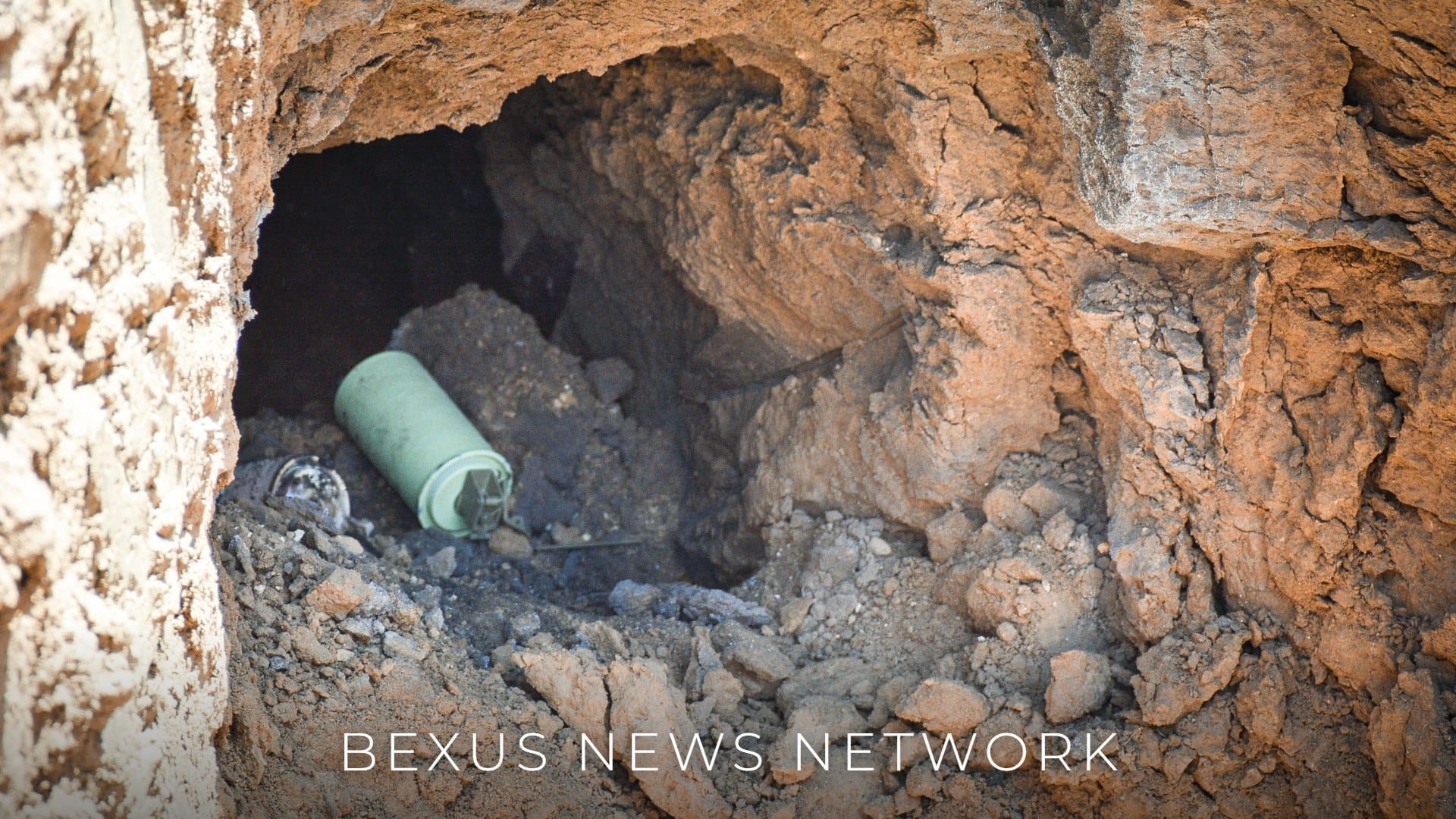
The body of the article carried a single image. The IDF did not disclose the full text of the document, the names or locations of the camps concerned, or whether the plan was actually carried out.
The IDF had raised Hamas's use of civilian areas earlier this month as well. On Oct. 1, the IDF issued a press release rebutting the film "NAZA," which deals with the target selection process in the Gaza Strip. The IDF argued that the film omitted the context of the Oct. 7 attack and Hamas's use of civilian areas. The IDF said its intelligence database "Lavender" is not a target list and that artificial intelligence (AI) does not select targets. The IDF cited advance warnings, cancelled strikes, aid support and investigations of misconduct as evidence of its efforts to protect civilians.
IDF says weekend airstrikes killed three Hamas operatives
The IDF posted the results of the weekend airstrikes in its war diary at 8:35 a.m. on Oct. 19 (2:35 p.m. Korea time). The IDF said it struck the Daraj Tuffah area of the northern Gaza Strip over the weekend, killing Abdullah Muhammad Hamis Jaber, an operative of Hamas's military wing. The IDF said Jaber helped manufacture various weapons and played an important role in running a Hamas production headquarters. The IDF said Jaber was also involved in Hamas's reconstruction efforts.
In the same Daraj Tuffah area, Majed Ahmad Mustafa Sabbagh, a squad commander in Hamas's military wing, was killed. In an airstrike in the Jabalia area of the northern Gaza Strip, Amer Bashir Muhammad Hourani of the engineering battalion of Hamas's military wing was killed. The IDF said the three had recently advanced terror plots targeting IDF forces and Israeli civilians and sought to restore Hamas's military capabilities. The IDF said their activity took place amid a "systematic violation of the ceasefire (הפרה שיטתית של הפסקת האש)" and that it struck them from the air to remove the threat.
The IDF also posted the same information on its official X account. The post begins with the sentence "צה"ל חיסל ראש חולייה ושני מחבלים מהזרוע הצבאית של ארגון הטרור חמאס" (The IDF eliminated a squad commander and two terrorists from the military wing of the Hamas terrorist organization).
*צה"ל חיסל ראש חולייה ושני מחבלים מהזרוע הצבאית של ארגון הטרור חמאס*
— צבא ההגנה לישראל (@idfonline) October 19, 2026
צה"ל תקף במהלך סוף השבוע, במרחב דארג' תופאח שבצפון רצועת עזה וחיסל את עבדאללה מוחמד חמיס ג׳אבר, מחבל בזרוע הצבאית של ארגון הטרור חמאס.
במסגרת תפקידו, ג׳אבר סייע ליצירת אמצעי לחימה שונים, היווה גורם משמעותי… pic.twitter.com/ZgiFwrKV7M
Oct. 17 announcement says four killed, including operative who infiltrated Israel on Oct. 7
At 7:07 p.m. on Oct. 17 (1:07 a.m. Oct. 18 Korea time), the IDF also announced that it had killed four operatives of Hamas's military wing in airstrikes in the Gaza Strip. According to the IDF, an Oct. 15 strike killed Mahmoud Khaled Muhammad Madhoun, a Hamas Nukhba operative. The IDF said Madhoun took part in combat and fired anti-tank missiles at IDF forces.
On Oct. 16, Ubaida Suhail Hamad Martaja, a sniper in Hamas's military wing, was killed, and Adham Khalil Muhammad Maarouf was also killed the same day. The IDF said Maarouf was a Hamas operative who infiltrated Israeli territory during the Oct. 7, 2023, massacre. On Oct. 17 itself, Abd al-Jawad Guda, an operative of Hamas's military wing, was killed. The IDF said they too had systematically violated the ceasefire and advanced terror plots targeting Israeli forces and civilians.
The Oct. 16 announcement included two participants in the Oct. 7 attack. According to the IDF, an Oct. 14 airstrike in the southern Gaza Strip killed Maher Walid Omar al-Hasini, a Nukhba squad commander in Hamas's military wing. The IDF said al-Hasini infiltrated the Re'im base during the Oct. 7 massacre. In an Oct. 15 airstrike in the northern Gaza Strip, Muhammad Muhammad Abd al-Khaliq Hala, a commander in Hamas's weapons production headquarters, was killed. The IDF said Hala infiltrated Israeli territory during the Oct. 7 massacre. The same day in Khan Younis, Ahmad Gibrin Tawfiq Dalhan, an operative of PIJ's military wing, was killed.
Over 11 days, IDF repeatedly cites "ceasefire violations" in disclosing killings
According to the IDF war diary, the IDF named at least 25 militants it said it killed in airstrikes in the Gaza Strip from Oct. 9 to Oct. 19. Of these, 17 were Hamas operatives and eight were PIJ operatives. In almost every announcement, the IDF cited systematic violation of the ceasefire and advancing terror plots as the reasons for the killings.
The Oct. 9 announcement listed three people killed in Oct. 8 strikes, including Hussam Walid Hassan Abu al-Ata, a commander in PIJ's rocket unit. On Oct. 10, five were announced: two Nukhba operatives who were meeting in Gaza City, a commander of PIJ's anti-tank unit in the Daraj Tuffah area and two people in Khan Younis. The IDF said it took steps to reduce harm to civilians before that day's strikes, including precision-guided munitions and aerial surveillance. The IDF added that Southern Command forces were deployed in accordance with the ceasefire agreement.
On Oct. 11, the IDF and the Israel Security Agency (Shin Bet) said they had killed Hisham Jamal Muhammad Abu Galala, a Hamas Nukhba platoon commander, in an airstrike in Khan Younis last Monday. The two agencies said Abu Galala was one of those who led the raid on the Kissufim base and took part in the abduction of Israelis during the Oct. 7 massacre. On Oct. 13, the announcement covered three people, including a PIJ engineering operative, a deputy squad commander and a rocket unit operative, who had gathered in Khan Younis on Oct. 11 to discuss terror plots targeting IDF forces, and two Nukhba operatives of Hamas's Rafah Brigade who were killed in the southern Gaza Strip on Oct. 12. On Oct. 14, the killing of a Hamas commander who was involved in holding hostages in Gaza City and served as an aide in the command of Hamas's Gaza Brigade was announced.