Macron: "Those who destroyed must pay, those who looted must repay"; Lyon and Bordeaux impose curfews after violence in France
PARIS
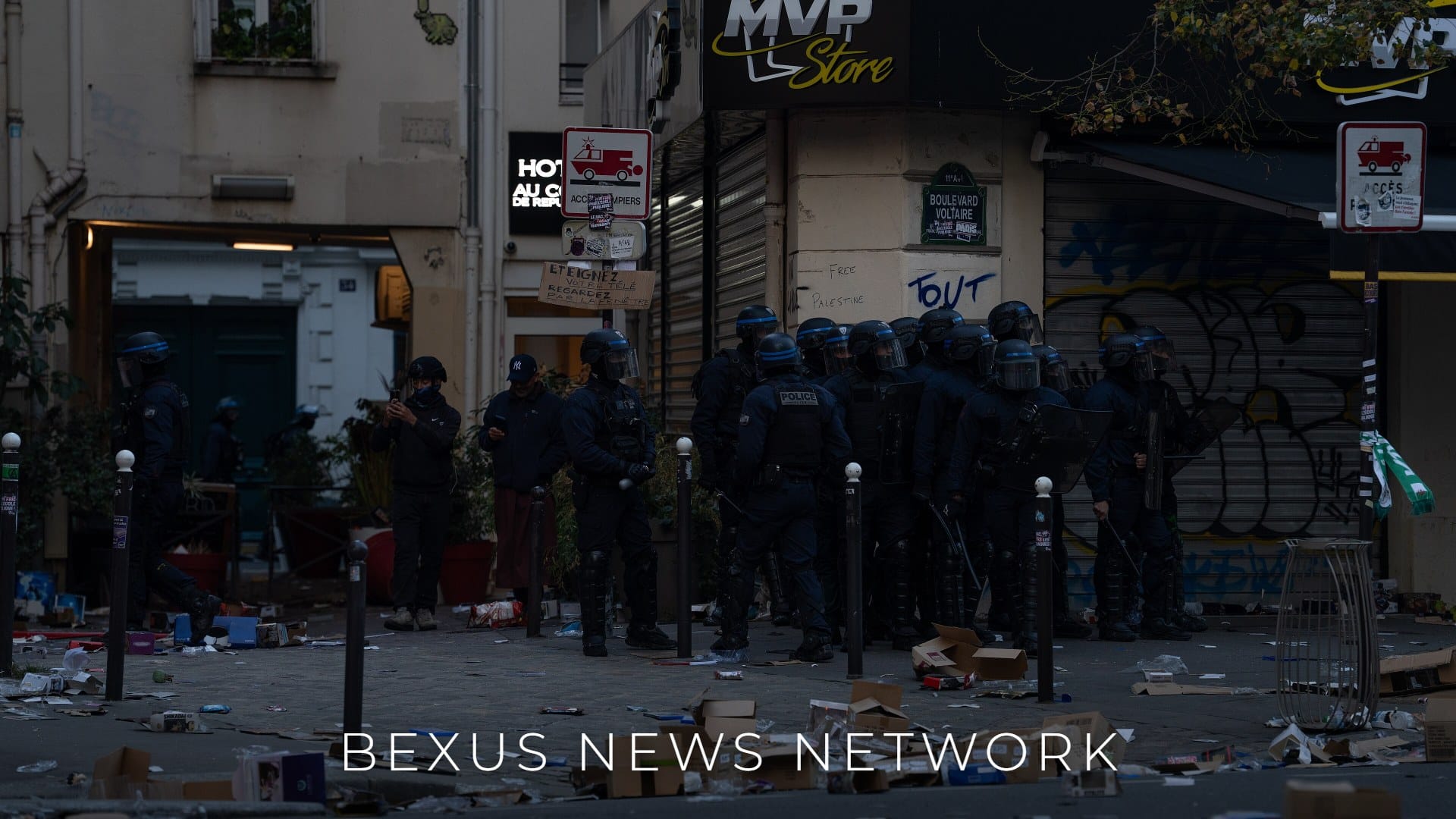
French President Emmanuel Macron delivered an address to the nation at 8 p.m. on Oct. 18 (local time), strongly condemning the arson and looting that took place during nationwide protests the previous day. Macron identified those who committed the violence as "agitators from ultra-left groupuscules, joined by numerous delinquents," and said, "Those who destroyed must pay. Those who looted must repay." In Limoges on Oct. 17, the city hall was set on fire. The president also cited the arson of the tourist office in Lyon, the storming of Marseille city hall and the attack on the prefect's residence in Bordeaux. The prefectures of Lyon and Bordeaux imposed or announced curfews in parts of their city centers. Prime Minister Sébastien Lecornu announced on Oct. 19, after a meeting of the interministerial crisis cell, that partial-activity pay for employees of damaged shops would be compensated at 100%.
Macron names ultra-left groupuscules and delinquents as perpetrators of violence
Macron gave the address after holding a meeting attended by the prime minister and the ministers concerned. According to the presidency's public schedule, the meeting was at 5:30 p.m. on Oct. 18 and the address at 8 p.m. At the opening of the address, Macron said, "Yesterday, Saturday, October 17, agitators from ultra-left groupuscules, joined by numerous delinquents, engaged in unbridled violence in our cities" (des factieux, issus de groupuscules d'ultra-gauche, rejoints par de nombreux délinquants, se sont livrés à une violence débridée dans nos villes).
The president himself listed the extent of the damage. Macron said, "Shops were looted, public buildings, stores and city halls were attacked, and some were destroyed." The president said the violence took place not only in mainland France but also in the overseas territories. Macron said, "Plusieurs centaines de policiers et de gendarmes ont été blessés" (Several hundred police officers and gendarmes were injured).
Macron went through the targets one by one and asked a question. The president said, "Why burn Limoges city hall and the Lyon tourist office, storm Marseille city hall, attack the prefect's residence in Bordeaux?" The president said that, on behalf of the nation, he extended the state's support to the security forces, including police and gendarmes. He also extended support to the injured and their families, mayors and local elected officials, and the affected shopkeepers and artisans.
The president made clear the principle of punishment. Macron said, "Ceux qui ont détruit doivent payer. Ceux qui ont pillé doivent rembourser" (Those who destroyed must pay. Those who looted must repay). The president said investigations would proceed as quickly as possible and that the justice minister had asked the prosecutor to respond as firmly as possible. He instructed the government to "draw all the lessons in terms of intelligence and anticipation."
In Limoges, city hall burned and riot forces ran out of ammunition
The hardest-hit place was Limoges, the capital of the Haute-Vienne department. The Haute-Vienne prefecture said in a timeline released on Oct. 18 that not a single protest had been declared in advance in Limoges on Oct. 17 under Article L211-1 of the Internal Security Code. Security forces had been deployed since the morning.
According to the prefecture's account, at around 2:45 p.m. about 3,000 people tried to break through to the "Casseaux" access ramp of the A20 highway, attacked drivers and damaged several vehicles. Another press release issued by the prefecture the same day said that of about 2,000 people gathered around Casseaux at around 2 p.m., more than 500 attacked riot forces seeking confrontation. Police called in additional personnel and gendarmes were also deployed. The prefecture said riot forces used up all of their less-lethal weapons and ammunition within a few hours. Between 4 p.m. and 4:30 p.m., about 2,000 people broke through the cordon, entered the highway and damaged five police vehicles. The prefect closed the section of the A20 highway between exits 28 and 36 and requested emergency ammunition resupply. The supplies came from emergency stocks at the Corrèze prefecture, about an hour away by car, and a National Police logistics center, and officers received new equipment only shortly after 6 p.m.
In the meantime, some of the protesters turned toward the city center. According to the prefecture's timeline, protesters smashed the windows of the city hall while staff were inside, and city hall employees received death threats. They entered the building and set it on fire at 5:56 p.m. The prefecture said they set the fire "en dépit de la présence manifeste de personnes dans celui-ci" (despite the manifest presence of people inside it). Police dispersed about 800 people from the square in front of the city hall in about 15 minutes. They then surged toward the prefecture before being pushed back by police and gendarmes. The prefecture said the city hall was largely destroyed.
According to the timeline, 32 police officers were hit by projectiles, four of them seriously injured. Four marked police cars and one unmarked vehicle were also destroyed. Several shops on Rue Jean-Jaurès in the city center were looted. A department store and banks were also targeted but were not breached. Mobile phone stores and high-end clothing shops were smashed and ransacked. Police used about 1,000 riot-control grenades (grenade) during the day and fired 410 rounds from rubber-bullet launchers (LBD). The security operation ended at around 2 a.m. on Oct. 18. Haute-Vienne Prefect Maurice Barate said 19 people were in police custody as of Oct. 18 and that participants were being actively tracked down.
Bordeaux and Lyon respond with city-center curfews
The Gironde prefecture, which includes Bordeaux, said in a press release on Oct. 18 that "several thousand" people took part in the main march organized by the General Confederation of Labour (CGT). The march set off from Place de la Bourse at 2 p.m. The prefecture said "several hundred violent individuals" vandalized and looted the city center, targeting the prefect's residence and "a very large number of shops." That day, 260 police officers and 60 gendarmes were deployed. According to a provisional count on Oct. 18, 55 people were arrested and 23 were injured, including 15 members of the security forces and eight protesters. The prefecture said the march was held as an extension of the high school protest movement.
Gironde Prefect Sophie Brocas announced on Oct. 20, after consulting Bordeaux Mayor Thomas Cazenave, the Chamber of Commerce and Industry and the Chamber of Trades and Crafts, that a curfew would be imposed in six areas of central Bordeaux. It applies to minors not accompanied by a legal guardian. The areas covered are Rue Sainte-Catherine, Rue de la Porte-Dijeaux, Cours de l'Intendance, Promenade Sainte-Catherine, Place Saint-Projet and Place du Général-Sarrail, where looting was concentrated on Oct. 17. The hours are from 10 p.m. to 7 a.m. the next day, and the period runs from Oct. 20 to the morning of Oct. 26. The prefecture said in the release that day that it deployed 400 police and gendarmes, two water cannon trucks and two gendarmerie armored vehicles on Oct. 17 and arrested about 120 people between midday on Oct. 17 and early Oct. 18. Brocas said, "What Bordeaux shopkeepers went through on Saturday is unacceptable," adding, "Freedom to demonstrate will never be a license to loot."
Rhône Prefect Étienne Guyot, whose department includes Lyon, banned all protests, marches and gatherings in part of the Presqu'île from 4 p.m. to 9 p.m. on Oct. 20. He then imposed a curfew in the same area from 9 p.m. on Oct. 20 to 6 a.m. on Oct. 21. The prefecture said there had been no disturbance of public order the previous night and thanked the forces mobilized. The area is bounded by Rue Constantine to the north, Cours de Condé to the south, the right-bank quays of the Rhône to the east and the left-bank quays of the Saône to the west. Place des Terreaux and the bridges over the two rivers were excluded from the area. Bars, restaurants, cinemas and performance venues were allowed to open, and public transport and vehicle traffic were maintained. Exceptions were made for returning home, medical care, family emergencies, performance of public duties, journalists on assignment and elected officials carrying out their duties.
In Lyon, local governments also provided separate support. According to the Rhône prefecture, the Lyon Metropolis allocated 10 million euros for emergency aid, securing damaged shops and replacing equipment. The Chamber of Commerce and Industry will add 3,000 euros per affected shopkeeper, and the Chamber of Trades and Crafts will pay 1,500 euros to affected artisans. The social security contributions collection agency (URSSAF) will provide emergency aid of up to 2,000 euros on reasoned applications. The Lyon Chamber of Commerce and Industry will help shopkeepers file complaints together with security authorities on Oct. 21. URSSAF said processing applications would take two to three weeks at most, and the tax authorities will review deferrals of tax payments on a case-by-case basis.
Prime Minister Lecornu cites 80% prosecution rate and 100% compensation of partial-activity pay
Lecornu spoke to reporters on Oct. 19 after chairing a meeting of the interministerial crisis cell. The prime minister said, "The first is a very serious and large-scale criminal response." The prime minister said the prosecution rate for arrests that led to police custody reached "nearly 80%." Of those arrested, "two-thirds are adults, and almost all are men," the prime minister said. The prime minister said about 200 investigators at the Paris Police Prefecture alone were analyzing videos and photos. The prime minister signaled follow-up investigations to identify on video looters who did not wear hoods or masks.
The prime minister said individuals would also be held liable for damages. He said a government bill coming before parliament would make it possible to seize social security benefits. Under guidelines issued by the justice minister, those convicted can also be held civilly liable, the prime minister explained. Referring to the mayor of Limoges, the prime minister said, "It is only natural to hold each of those who destroyed individually responsible."
Support measures for shopkeepers were also announced. Trade Minister Serge Papin estimated that "probably at least 3,000" shops had suffered looting or damage. On partial-activity pay for damaged shops, the prime minister said, "Not 70%, but straight away 100%." The measure takes effect from the following day, Oct. 20, by ministerial instruction. The government also decided to release a support fund dedicated to shops. The prime minister said it was still being discussed whether to opt for reductions in social security contributions and taxes or for fund support. He added that many shopkeepers had stocked up in advance of the Christmas season, making working capital urgent. The government has been working with insurers since the weekend to speed up loss assessments and push for advance payment of insurance claims.