Chinese attack-capable drone TB-001 flies between Yonaguni and Taiwan to waters off Amami; Japan scrambles jets three days running during Keen Sword
TOKYO
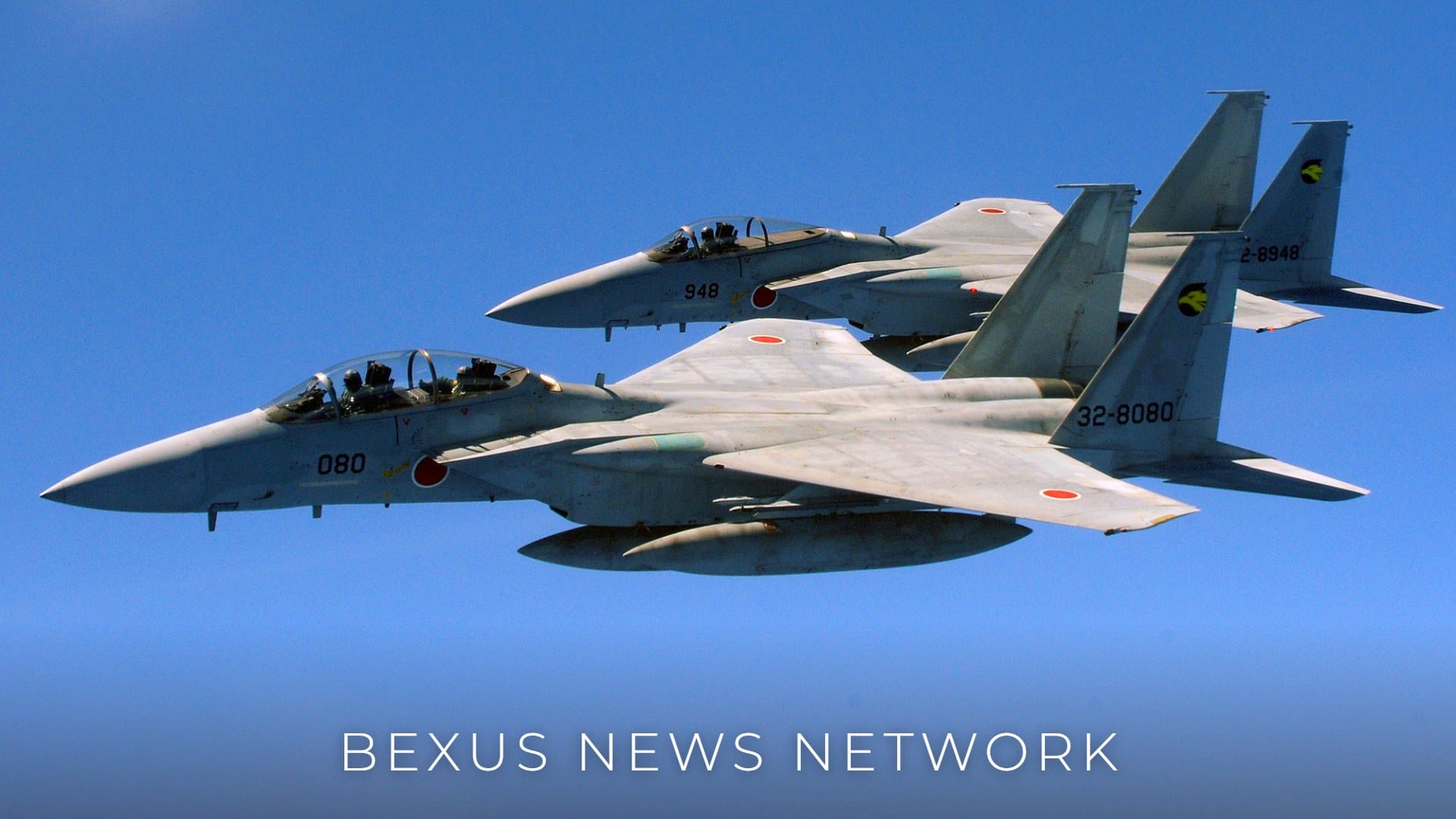
A Chinese military TB-001 reconnaissance/attack drone flew from the East China Sea between Yonaguni Island and Taiwan into the Pacific on the 19th and then on to waters off Amami Oshima. Japan's Joint Staff Office announced the same day that it had confirmed the flight. The drone turned around off Amami Oshima and returned toward the mainland, passing between Okinawa's main island and Miyako Island. The U.S.-Japan joint integrated exercise Keen Sword 27 began the same day. From that day through the 21st, the Air Self-Defense Force scrambled fighters on three consecutive days in response to Chinese military drones and Y-9 intelligence-gathering aircraft, among others.
Two drones and an intelligence aircraft enter the Pacific by two routes on the same day
According to the "Movements of Chinese Military Aircraft" release issued by the Joint Staff Office on the 19th, three Chinese military aircraft were covered in the announcement. The TB-001 flew in from the East China Sea and passed between Yonaguni Island and Taiwan to reach the Pacific. It then flew as far as waters off Amami Oshima before turning back and heading toward the mainland between Okinawa's main island and Miyako Island.
The other two took a different route. One BZK-005 reconnaissance drone and one Y-9 intelligence-gathering aircraft flew in from the East China Sea and passed between Okinawa's main island and Miyako Island into the Pacific. The two aircraft turned around over the Pacific and returned toward the mainland, again passing between Okinawa's main island and Miyako Island. All three aircraft flew between the morning and afternoon of the 19th. The Joint Staff Office released photos of all three aircraft. All the photos were taken by the Air Self-Defense Force.
The Air Self-Defense Force responded by scrambling fighters of the Southwestern Air Defense Force. The number and type of fighters scrambled, and the altitude and speed of the Chinese aircraft, were not included in the release. The Joint Staff Office categorized the TB-001 as a "偵察/攻撃型無人機" (reconnaissance/attack drone) and the BZK-005 as a "偵察型無人機" (reconnaissance drone).
Defense Minister Koizumi says "drone activity is intensifying," discloses announcement counts by fiscal year
Defense Minister Koizumi addressed the flight directly at a news conference held from 9:33 to 9:49 a.m. on the 20th in the Ministry of Defense's government waiting room on the third floor of the House of Councillors annex. In opening remarks, Koizumi said the ministry had confirmed and announced that the TB-001 flew in from the East China Sea, "与那国島と台湾の間を通過して太平洋に至り" (passing between Yonaguni Island and Taiwan to reach the Pacific).
Koizumi said that around Japan recently, "無人機の活動が活発化しています" (drone activity is intensifying).
Koizumi cited figures. Koizumi said the number of announcements of Chinese military drone activity in fiscal 2024 was 23, about three times the 8 of the previous fiscal year, and that 16 were announced in fiscal 2025. Koizumi said these changes in the security environment would be "丁寧にお伝えをして" (carefully conveyed) to the public to gain its understanding.
Minister declines to characterize intent when asked whether flights were a response to Keen Sword, says it will be analyzed
At the same news conference, a reporter said that Keen Sword, in which "NMESIS" and other systems have been deployed to the Sakishima Islands, "過去最大規模の演習となっています" (has become the largest-ever exercise). The reporter asked whether the flights by Chinese drones and intelligence-gathering aircraft could be seen as "「キーン・ソード」に対する対抗措置" (countermeasures against Keen Sword).
Koizumi did not characterize the intent. Koizumi replied to the effect that "普通の相手ではなかった場合は" (in cases where it is not an ordinary counterpart), calm analysis and assessment are needed. Koizumi said Japan must have defense capabilities "いかなる事態にも対応できる" (able to respond to any situation), and said that "意図などについては" (as for intent and the like) it would be analyzed.
Koizumi also explained the significance of the exercise. Koizumi said the exercise demonstrates "日米同盟の強固さ" (the strength of the Japan-U.S. alliance) and the United States' "揺るぎないコミットメント" (unwavering commitment) to the defense of Japan. Koizumi said the exercise would improve Japan-U.S. interoperability and strengthen deterrence and response capabilities.
Earlier TB-001 flights in Joint Staff Office records stayed within the East China Sea
Compared with this year's TB-001 flights recorded in Joint Staff Office materials, this route was different. The Joint Staff Office's report on scrambles in the first half of fiscal 2026 (April-September), released on the 16th, listed two cases in which a TB-001 flew in together with a Y-9 intelligence-gathering aircraft: June 12 and August 18. In both cases the flight area was recorded as "東シナ海(男女群島南方と沖縄本島沖の間)" (East China Sea, between south of the Danjo Islands in Nagasaki Prefecture and off Okinawa's main island).
On the afternoon of Friday the 9th of this month, a TB-001 also appeared over the East China Sea. The drone changed course off Okinawa's main island in the East China Sea and headed northeast, then turned again off the Danjo Islands and returned to the mainland. Southwestern Air Defense Force fighters were scrambled that time as well. In all three cases the TB-001 operated within the East China Sea. This time it passed through the gap near Taiwan into the Pacific and went as far north as Amami Oshima.
The same gap was used five days earlier. According to a Joint Staff Office announcement, on the morning of the 14th one "推定中国無人機" (aircraft presumed to be a Chinese drone), whose type could not be identified, passed from the East China Sea between Yonaguni Island and Taiwan to reach the Pacific. On the afternoon of the same day, one Y-9 intelligence-gathering aircraft made a round trip between southwest of the Danjo Islands and northwest of Okinawa's main island, and one WZ-7 reconnaissance drone also flew over the East China Sea. The Air Self-Defense Force scrambled fighters of the Southwestern Air Defense Force and others.
Y-9 aircraft return on the 20th and 21st, extending scrambles to a third day
The Chinese military flights did not stop the next day. According to the Joint Staff Office, between the morning and afternoon of the 20th, one Chinese military Y-9 patrol aircraft flew from the East China Sea between Okinawa's main island and Miyako Island into the Pacific, flew as far as waters off Amami Oshima and returned by the same route. On the afternoon of the same day, one Y-9 intelligence-gathering aircraft flew in from the mainland and made a round trip between south of the Danjo Islands and northwest of Okinawa's main island. The Air Self-Defense Force scrambled fighters of the Southwestern Air Defense Force and others.
On the 21st, one Y-9 intelligence-gathering aircraft appeared again. Between the morning and afternoon, the aircraft flew from the East China Sea between Okinawa's main island and Miyako Island into the Pacific, flew as far as waters off Amami Oshima, then turned back and passed through the same waters again toward the mainland. The Joint Staff Office said it "航空自衛隊の南西航空方面隊の戦闘機を緊急発進させ対応した" (responded by scrambling fighters of the Air Self-Defense Force's Southwestern Air Defense Force). The TB-001 on the 19th, the Y-9 patrol aircraft on the 20th and the Y-9 intelligence-gathering aircraft on the 21st all came up as far as waters off Amami Oshima before turning back.
Chinese military aircraft announcements issued on 6 of 9 days from the 13th to the 21st
Placing the Joint Staff Office's announcements this month in date order shows that Chinese military flights continued even before the exercise opened. On the afternoon of the 13th, one Y-9 intelligence-gathering aircraft flew in from the mainland and made a round trip over the East China Sea between southwest of the Danjo Islands and northwest of Okinawa's main island. On that occasion fighters of the Western Air Defense Force and others were scrambled. On the 14th, the presumed Chinese drone mentioned above, a Y-9 and a WZ-7 flew in one after another, and on the same day there was also a scramble in response to takeoffs and landings by fighters on the carrier Liaoning.
On the afternoon of the 15th, one Y-9 intelligence-gathering aircraft again made a round trip between south of the Danjo Islands and northwest of Okinawa's main island before returning to the mainland. The Air Self-Defense Force scrambled fighters of the Western Air Defense Force and others. The Joint Staff Office's list of press releases contains no announcements concerning Chinese military aircraft for the three days from the 16th to the 18th. On the 16th, eight other announcements were issued, including first-half scramble results, and there were no announcements at all on the 17th and 18th. From the 19th, when Keen Sword 27 began, through the 21st, announcements were again issued every day.
The range of the flights also changed. The Y-9 flights on the 13th and 15th made round trips within the East China Sea. From the 19th onward, the TB-001 and Y-9 aircraft passed through waters between the Nansei Islands and went out to waters off Amami Oshima on the Pacific side. The units responding were also announced as the Western Air Defense Force and others on the 13th and 15th, and the Southwestern Air Defense Force on the 19th and 21st.
At sea, Chinese warships pass through the Osumi Strait one after another
Chinese naval movements also continued at sea during the same period. The Joint Staff Office announced on the 20th that at about 4 p.m. on the 19th the Maritime Self-Defense Force had confirmed one Chinese navy Jiangkai II-class frigate (hull number 532) sailing east in waters about 100 km west of Kuchinoerabu Island in Kagoshima Prefecture. The frigate passed east through the Osumi Strait on the 19th-20th and headed for the Pacific. The Maritime Self-Defense Force conducted surveillance and intelligence gathering with the destroyer Teruzuki of the 9th Surface Division based in Yokosuka and a P-1 patrol aircraft of Fleet Air Wing 4 at Atsugi base.
Chinese warships also moved around the Nansei Islands just before the exercise opened. According to the Joint Staff Office's announcement on the 19th, three ships sailing northeast in waters about 220 km south of Miyako Island at about 4 p.m. on the 16th, a Luyang III-class destroyer (122), a Jiangkai II-class frigate (576) and a Fuchi-class replenishment ship (889), passed between Okinawa's main island and Miyako Island on the 17th and entered the East China Sea. The Maritime Self-Defense Force monitored them with P-1 patrol aircraft from Kanoya and Naha bases. A Luyang III-class destroyer (121) and a Fuyu-class fast combat support ship (901), confirmed at about 11 p.m. on the 16th in waters about 140 km west of Kuchinoerabu Island, passed east through the Osumi Strait on the 17th and went out into the Pacific. These two ships were watched by the Sasebo-based destroyer Mikuma and a P-1 from Kanoya base. At about 11 a.m. on the 17th, a Dongdiao-class intelligence-gathering ship (796) was confirmed sailing south in waters about 80 km northwest of Okinawa's Kume Island. The ship passed south between Okinawa's main island and Miyako Island and headed for the Pacific, monitored by a P-1 patrol aircraft from Naha base.
Before that, China's Kuznetsov-class aircraft carrier Liaoning (16) also passed through these waters. According to the Joint Staff Office, four ships, the Liaoning, two Renhai-class destroyers (103 and 104) and a Luyang III-class destroyer (123), were first confirmed sailing south at about 11 a.m. on the 13th in waters about 390 km southwest of the Danjo Islands, and passed southeast between Okinawa's main island and Miyako Island on the 14th. On the same day, about 10 takeoffs and landings by carrier-based fighters and helicopters were confirmed in waters about 250 km south of Ishigaki Island, and the Air Self-Defense Force scrambled fighters in response to the carrier-based fighters. The four ships headed for the South China Sea on the 15th. The Maritime Self-Defense Force monitored the group with the destroyer Yugiri of the 1st Surface Division based in Yokosuka, a P-1 from Atsugi base and a P-3C patrol aircraft from Naha base.
Keen Sword 27 runs through the 29th; first-half scrambles already reach 442
According to a plan announced by the Joint Staff Office on September 29, Keen Sword 27 runs from Monday, October 19, to Thursday, October 29. Its purpose is to exercise and verify Japan-U.S. joint responses and integrated Self-Defense Force operations in various contingencies, "日米の共同統合運用能力の維持・向上を図る" (to maintain and improve Japan-U.S. joint integrated operational capabilities). The Self-Defense Forces are taking part with about 45,000 personnel, about 6,100 vehicles, about 40 vessels and about 260 aircraft. From the United States, six commands and units are participating, including U.S. Army Pacific, the U.S. Pacific Fleet, Pacific Air Forces, Marine Forces Pacific and U.S. Forces Japan. Seven countries, Australia, Canada, France, Germany, the Netherlands, New Zealand and the Philippines, are also taking part. The 15 main training items are integrated air and missile defense, integrated anti-surface warfare, ground operations, maritime operations, air operations, amphibious operations, response to cyberattacks, information warfare, integrated communications, space situational awareness, integrated electromagnetic warfare, integrated logistics support, distributed maneuver operations, protection of critical facilities and demonstration experiments. The exercise locations were announced as Self-Defense Force facilities, U.S. Forces Japan facilities and areas, civilian airports and ports, public and private land, and the sea and airspace around Japan. Keen Sword began in fiscal 1985 (Showa 60) and has generally been held every year, alternating between field training and command post exercises; this field training exercise is the 18th.
The pressure from Chinese aircraft is also piling up in the numbers. By the Joint Staff Office's count (including estimates), the Air Self-Defense Force scrambled 442 times in the first half of fiscal 2026, 177 more than the 265 in the same period a year earlier. Of these, 285 were against Chinese aircraft, up 87 from 198 in the same period a year earlier, accounting for about 65% of the total. The Southwestern Air Defense Force's scrambles rose from 189 in the same period a year earlier to 201, the most of the four air defense forces. Scrambles against Russian aircraft numbered 152, more than 2.5 times the 59 in the same period a year earlier. By air defense force, the Western Air Defense Force rose from 14 to 102, the Northern Air Defense Force from 53 to 112 and the Central Air Defense Force from 9 to 27. Citing flights by Russian IL-20 aircraft over the Sea of Japan and the Pacific and by Chinese Y-9 aircraft over the East China Sea, the report said that in the first half "中国機及びロシア機による活発な活動を示す事例がみられました" (there were cases showing active operations by Chinese and Russian aircraft). The report included a case in which Y-9 flights were confirmed and announced on five consecutive days from September 3 to 7, and a long-range joint flight by Chinese H-6 bombers and Russian Tu-95 bombers on June 27. The Chinese bombers flew to the Sea of Japan, joined up with Russian bombers and returned to the East China Sea; then Russian bombers coming from the Sea of Japan joined up with Chinese bombers over the East China Sea, and they flew together between Okinawa's main island and Miyako Island to the Pacific off Shikoku. On September 9 there was also a case of a Y-9 making a round trip off southwest of the Danjo Islands. In September alone there were 95 scrambles, of which 70 were against Chinese aircraft and 24 against Russian aircraft. The Joint Staff Office said the September figures are preliminary and may change.
Sources (KST)
- Japan Joint Staff Office · 2026-10-19 · 中国軍機の動向について(BZK-005・Y-9・TB-001) · https://www.mod.go.jp/js/pdf/2026/p20261019_06.pdf
- Japan Joint Staff Office · 2026-10-20 · 中国軍機の動向について(Y-9) · https://www.mod.go.jp/js/pdf/2026/p20261020_02.pdf
- Japan Joint Staff Office · 2026-10-21 · 中国軍機の動向について(Y-9) · https://www.mod.go.jp/js/pdf/2026/p20261021_01.pdf
- Japan Joint Staff Office · 2026-10-20 · 中国海軍艦艇の動向について(ジャンカイⅡ/大隅海峡東進) · https://www.mod.go.jp/js/pdf/2026/p20261020_01.pdf
- Japan Joint Staff Office · 2026-10-19 · 中国海軍艦艇の動向について(ルーヤンⅢ、ジャンカイⅡ/沖縄本島ー宮古島間北西進) · https://www.mod.go.jp/js/pdf/2026/p20261019_02.pdf
- Japan Joint Staff Office · 2026-10-19 · 中国海軍艦艇の動向について(ルーヤンⅢ/大隅海峡南東進) · https://www.mod.go.jp/js/pdf/2026/p20261019_03.pdf
- Japan Joint Staff Office · 2026-10-19 · 中国海軍艦艇の動向について(ドンディアオ/沖縄本島ー宮古島間南進) · https://www.mod.go.jp/js/pdf/2026/p20261019_04.pdf
- Japan Joint Staff Office · 2026-10-14 · 中国海軍艦艇の動向について(空母「遼寧」ほか3隻/沖縄本島-宮古島間南東進/発着艦) · https://www.mod.go.jp/js/pdf/2026/p20261014_01.pdf
- Japan Joint Staff Office · 2026-10-15 · 中国海軍艦艇の動向について(空母「遼寧」ほか3隻/発着艦実績/南シナ海へ) · https://www.mod.go.jp/js/pdf/2026/p20261015_02.pdf
- Japan Ministry of Defense · 2026-10-20 09:33 · 防衛大臣記者会見 · https://www.mod.go.jp/j/press/kisha/2026/1020a.html
- Japan Joint Staff Office · 2026-10-09 · 中国軍機の動向について(TB-001) · https://www.mod.go.jp/js/pdf/2026/p20261009_02.pdf
- Japan Joint Staff Office · 2026-10-14 · 中国軍機の動向について(UAV, Y-9, WZ-7) · https://www.mod.go.jp/js/pdf/2026/p20261014_02.pdf
- Japan Joint Staff Office · 2026-10-13 · 中国軍機の動向について(Y-9) · https://www.mod.go.jp/js/pdf/2026/p20261013_01.pdf
- Japan Joint Staff Office · 2026-10-15 · 中国軍機の動向について(Y-9) · https://www.mod.go.jp/js/pdf/2026/p20261015_03.pdf
- Japan Joint Staff Office · 2026-10-16 · 2026年度上半期までの緊急発進実施状況について · https://www.mod.go.jp/js/pdf/2026/p20261016_07.pdf
- Japan Joint Staff Office · 2026-10-16 · 月間緊急発進状況について(令和8年9月) · https://www.mod.go.jp/js/pdf/2026/p20261016_05.pdf
- Japan Joint Staff Office · 2026-09-29 · 令和8年度日米共同統合演習「Keen Sword 27」について · https://www.mod.go.jp/js/pdf/2026/p20260929_01.pdf