Rubio says Saudi Arabia also wants interceptors; Hormuz oil at 70-80% of pre-conflict level most nights, but now Saudi pipelines targeted by Houthis too
MUMBAI, INDIA
U.S. Secretary of State Marco Rubio told reporters at the Taj Mahal Palace Hotel in Mumbai, India, on the 20th (local time), "I also talked to Saudi Arabia today; they'd like interceptors." Rubio said interceptor missiles are probably the most in-demand product in the defense sector right now, and that the United States has never been in a position to meet every country's requests. At the same news conference, he said that most nights at least 70-80% of pre-conflict oil volumes pass through the Strait of Hormuz, but added, "But it's not just the Straits of Hormuz anymore; it's pipelines in Saudi Arabia that have been targeted by the Houthis," saying these pipelines and the Russia-Ukraine war are putting pressure on global energy markets. The State Department released a transcript of the news conference that day.
Rubio says Saudi Arabia, Israel and U.S. all want interceptors, calling them "the most in-demand product"
The interceptor remarks came in response to a question about support for Ukraine. Rubio said he knows and understands that President Zelensky has been saying he has been trying to buy interceptors, and that the same is true of every other country in the world. He then singled out Saudi Arabia, saying, "I also talked to Saudi Arabia today; they'd like interceptors."
Rubio said Israel and the United States are in the same position. He said Israel wants interceptors, the United States wants interceptors, every country in the world wants them, and many parts of the world are asking for them. He went on to say, "It's probably the most in-demand product right now in the defense field."
Rubio stressed that even if some countries have not received interceptors from the United States, it does not mean the United States has refused them. He said the United States has its own needs too, explaining that there are minimum standards the United States must maintain at its bases around the world. Rubio cited bases in Europe as an example, saying the Department of War requires minimum standards to protect these facilities, and that the same of course applies to the Middle East. He said, in effect, that one should not look at Ukraine or any other issue as if through a straw, fixating on just one thing. Rubio said the United States has facilities around the world that need air defense, and that nothing is being deliberately denied to Ukraine. He added that it is a matter of balancing obligations to other partners against the standards for U.S. facilities themselves.
Rubio says interceptors are expensive and take time to make, cites Saudi defense of U.S. airfield
A reporter, picking up on the remark that Saudi Arabia had requested interceptors, asked whether the United States could supply interceptors to every country that needs them. Rubio replied that no, the United States has never been in that position. He said, "These interceptors are expensive to make," adding that they are the best in the world and work remarkably well, but are expensive. He went on to say they take time to make.
Rubio cited the rapidly increasing pace of production as good news. He said he is very satisfied with stockpiles of various munitions, including interceptors. But he added that building up such things takes time, and that because they are highly sophisticated equipment, they are as hard to make as they are capable. He did not say how much the production pace has increased or how large the stockpiles are.
On Saudi Arabia, Rubio directly mentioned the U.S. military presence. Rubio said that in the case of Saudi Arabia in particular, the United States has an airfield presence there and defends that presence. He said the United States is also doing other things to help them, and is helping other countries as well. Rubio drew a line, saying he was not singling out Saudi Arabia as a weak point. He said almost all of his conversations that day with counterparts around the world came down to one of two things: first, demands for air defense interceptors, and second, trade. He went on to say that he can help a little with interceptors, but trade is not his area.
Even interceptors Europe bought through PURL are weighed daily on "whether they are needed elsewhere"
The issue of interceptor allocation came back with a question on Ukraine. A reporter asked whether it was not true, as Zelensky had said and some reports had claimed, that a batch of interceptors purchased by European countries through the Prioritized Ukraine Requirements List (PURL) had not gone to Ukraine because it had not received final sign-off from Secretary of War Hegseth. Earlier, Rubio had said nothing has changed with PURL, explaining that it is a structure in which Europe passes to Ukraine materiel that the United States can sell or has sold to Europe.
Rubio did not deny a possible delay in sign-off. He said that could be the case, because such items are always reviewed for whether they are needed elsewhere or should remain in Europe. He then noted that the United States and its allies have bases in Europe, mentioning a recent threat against an airfield in Britain. He said the United States also has other large air force presences in the region and minimum requirements it must maintain as part of its NATO presence, adding that all of this is balanced every day.
Rubio said there was no separate political directive to harm Ukraine. Responding to claims by Ukrainian government officials that undetected air strikes in Ukraine on the 13th and 18th occurred because the United States had not provided information, he countered that it was disgraceful, absurd and simply not true. He said there may have been problems in Ukraine processing the information handed over internally, and that the United States views it as a technical problem.
Rubio said he spoke with Zelensky by phone for 45 minutes that day. The Ukrainian Presidential Office said in a post at 10:06 a.m. (Kyiv time) on the 20th that Zelensky thanked Rubio for his clear position on ballistic missile interceptors, early warning of Russian ballistic missile attacks and the Starlink and Starshield issues. The two agreed to be in touch again soon.
Rubio says at least 70-80% of pre-conflict Hormuz oil flows pass through on most nights
The Strait of Hormuz remarks came in response to a question about whether Ukraine's attacks on Russian energy facilities were a source of friction with the United States. Rubio said the United States has publicly expressed its displeasure for months over Ukraine's energy attacks, such as those targeting Black Sea shipping. He asked what the United States is supposed to do when American companies contact it to say their cargo has been attacked several times, and said it has clearly been a point of friction.
He then explained that the cause does not lie in one place alone. Rubio said, "The Straits of Hormuz, there are nights where as much oil gets through there as pre-conflict, and most nights it's at least 70 or 80 percent of it." Rubio did not present the source data for these figures.
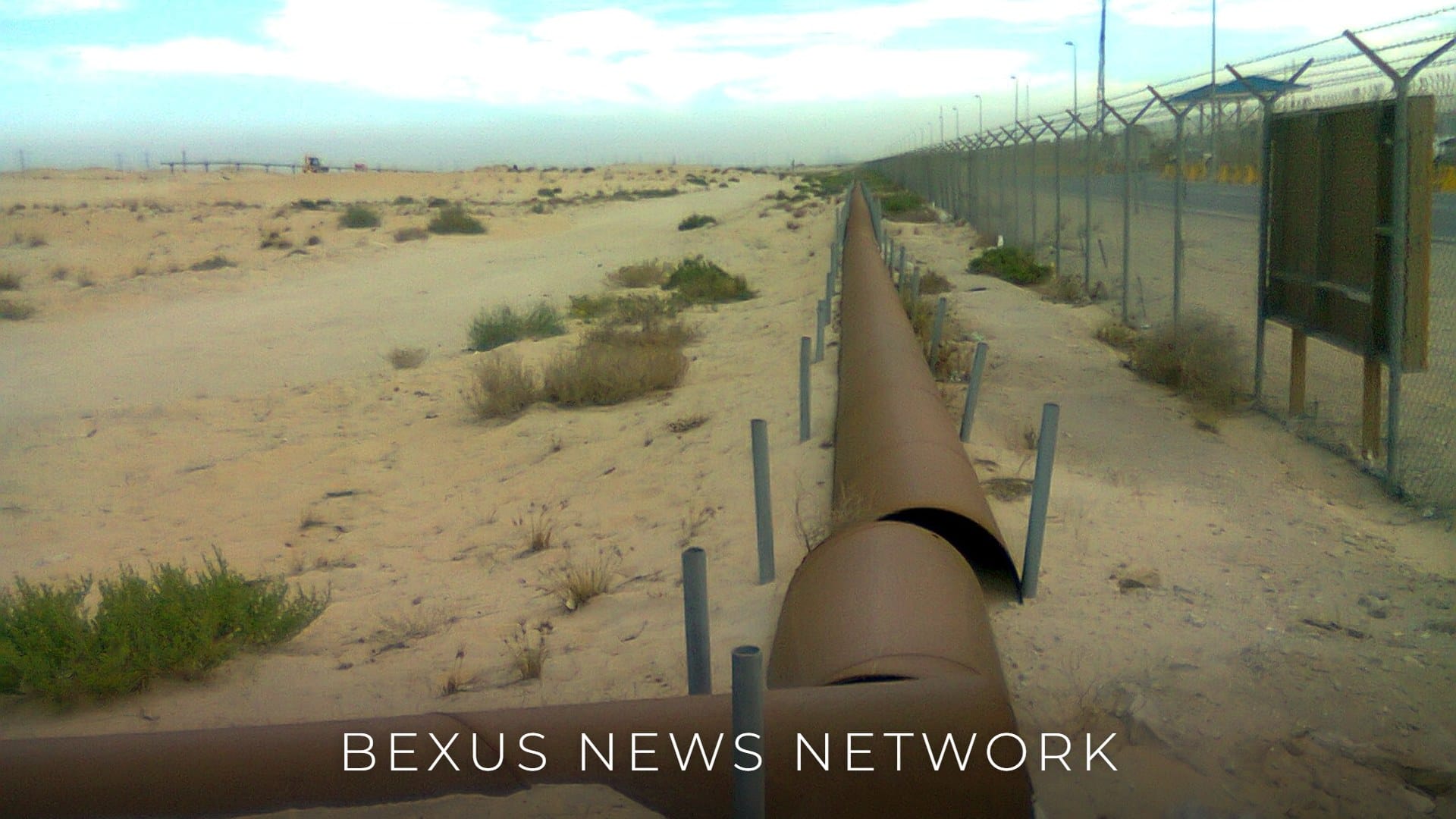
Rubio immediately pointed to another risk. He said, "But it's not just the Straits of Hormuz anymore; it's pipelines in Saudi Arabia that have been targeted by the Houthis." He went on to say that the Russia-Ukraine war and attacks on refining facilities are putting pressure not only on the United States but on the world. He said that whichever country you go to, they will tell you they are having diesel problems, and that many countries are having difficulty obtaining diesel, which drives much of their economies, at a reasonable price.
Rubio said this is another reason the war must end. He said too many people are dying, Ukraine's power grid is collapsing, and 20,000 to 25,000 Russian troops die every month advancing in Ukraine. Rubio said he is doing his best to bring both sides to a place where the war can be ended through negotiations, warning that as things stand, not only will more people die, but there is a risk of escalation spreading elsewhere.
Attack on Saudi East-West pipeline briefly halts bypass route that carried over 5 million barrels a day
The risk to Saudi pipelines that Rubio mentioned also shows up in U.S. government statistics. In its October Short-Term Energy Outlook (STEO), released on the 6th, the U.S. Energy Information Administration (EIA) said attacks on Saudi Arabia's East-West pipeline temporarily halted flows on a key bypass route. The EIA estimated that before the attacks the pipeline was carrying more than 5 million barrels a day of crude for export through the Red Sea port of Yanbu. After repairs, the pipeline had partially resumed operations as of September 22.
Citing ship-tracking data, the EIA said volumes through the Strait of Hormuz rose slightly in September. The EIA explained that part of the decline in Red Sea exports shifted back to routes through the Strait of Hormuz. By the EIA's count, Middle East crude production shut-ins peaked at 10.9 million barrels a day in May and fell to 5.8 million barrels in August and 4.8 million barrels in September. The EIA forecast an average of 4.5 million barrels a day in the fourth quarter and 2.7 million barrels in the first quarter of 2027.
Prices rose sharply. According to the EIA, the Brent crude spot price averaged $114 a barrel in September, up $23 from August, and jumped to as high as $131 on September 15. The EIA raised its fourth-quarter average forecast to $105 a barrel, up $14 from a month earlier. It forecast an annual average of $96 for 2026 and $84 for 2027. U.S. retail diesel prices averaged $6.29 a gallon in September, and the EIA forecast they would stay above $6 in October as well. EIA Administrator Tristan Abbey said that heading into winter, relatively high natural gas inventories provide a buffer for heating demand. The EIA forecast that U.S. households heating with heating oil would pay about 21% more for fuel than last winter. The EIA expected mild weather in the Northeast to offset part of a price increase of more than 30%.