UK sends RAF Typhoons to Saudi Arabia over Houthi attacks to help defend Saudi cities and infrastructure
LONDON · RIYADH
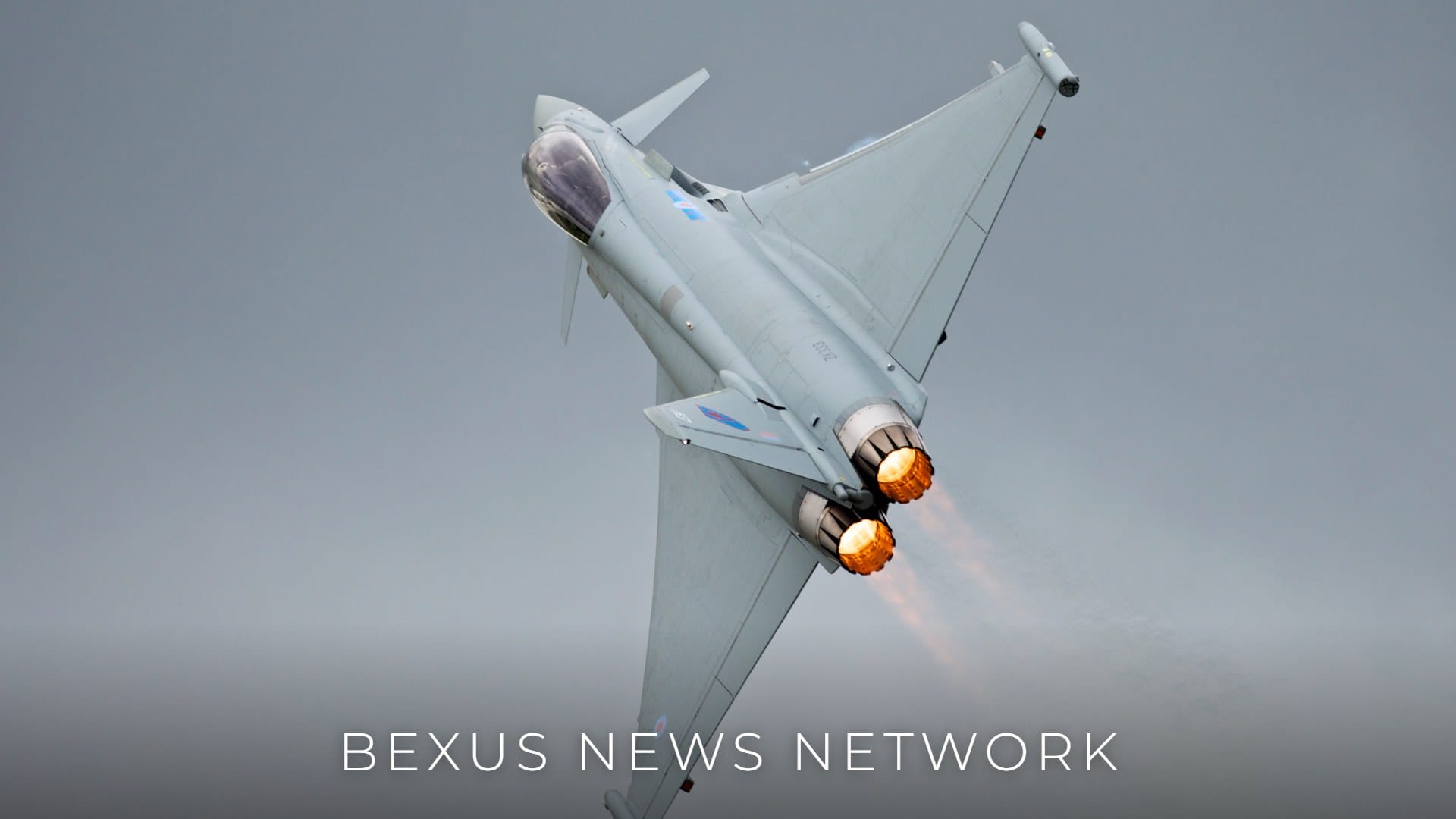
Britain's Ministry of Defence announced on the 20th (local time) that it will deploy Royal Air Force (RAF) Typhoon fighter jets to Saudi Arabia as Houthi attacks escalate in the region. The Typhoons will fly defensive counter air missions to protect Saudi cities and critical national infrastructure from aerial attack. The ministry said it will send an additional A400M transport aircraft and military advisers, and will maintain the air defence equipment already deployed and continue air-to-air refuelling support for Saudi air operations. Defence Secretary Wes Streeting singled out the Houthi attack on Riyadh's airport for condemnation and said he had approved additional military support that day.
Ministry of Defence deploys Typhoons on defensive counter air missions over Saudi Arabia
The ministry issued a press release titled "Operational update 20 October – UK military support to the Kingdom of Saudi Arabia" at 11:59 a.m. British Summer Time (7:59 p.m. Korea time) that day. The first sentence of the press release read, "The UK will provide additional defensive military support to the Kingdom of Saudi Arabia, given escalating Houthi attacks in the region."
The ministry explained that the UK will fly defensive counter air missions with RAF Typhoon fighter jets to help protect Saudi cities and critical national infrastructure from aerial attack. It drew a line on the nature of the mission. The ministry said, "These aircraft will operate in a defensive role and will not conduct offensive strikes against the Houthis."
The ministry did not disclose the number of Typhoons to be deployed, the bases they will fly from, the length of the deployment or the size of the military adviser team.
Streeting singles out attack on Riyadh airport for condemnation
In remarks carried in the press release, Streeting said, "The continuing attacks from the Houthis on our ally Saudi Arabia are absolutely despicable." He said, "The targeting of the airport in Riyadh in particular shows the lengths the Houthis are going to escalate the situation in the region."
The secretary then said, "That's why today I have approved further UK military support." He said RAF Typhoons will fly defensive missions to help protect Saudi airspace from drones and missiles, adding that this comes on top of British equipment and personnel already in the country to counter Houthi aerial attacks.
The press release described the Riyadh airport as a civilian target. The ministry said it clearly condemns Houthi attacks on civilian targets such as King Khalid International Airport and makes clear that Saudi Arabia and the Republic of Yemen have the right to defend themselves.
Streeting became defence secretary on July 20. According to his GOV.UK profile, he served as secretary of state for health and social care from July 5, 2024, to May 14, 2026, and is the member of Parliament for Ilford North. Prime Minister Andy Burnham took office the same day.
A400M transport and military advisers to support Saudi staff officers
Beyond the fighter jets, transport and staff support will also increase. The ministry said the UK will provide an RAF A400M to support the movement of defence materiel within Saudi Arabia, together with a team of British military advisers to support Saudi staff officers.
The ministry explained that the support builds on existing contributions. According to the ministry, the existing contributions include the deployment of air defence equipment to counter missile and drone attacks.
UK refuelling also supports Saudi air operations against Houthi targets in Yemen
The ministry said the existing support includes "an extension of air-to-air refuelling support for Saudi defensive air operations including to degrade Houthi military targets in Yemen that threaten the Saudi and Yemeni people." While the Typhoons will not strike the Houthis, the scope of Britain's air-to-air refuelling support includes Saudi air operations to degrade Houthi military targets inside Yemen.
In a press release issued a month earlier, on Sept. 22 (9:56 a.m. British Summer Time), the ministry said Houthi attacks had resumed and that, at the request of the Saudi government, the UK had decided to provide an RAF Voyager refuelling aircraft to help Saudi defensive activity in support of Yemen's legitimate government. That press release did not contain the phrase "Houthi military targets in Yemen." The September announcement was issued in the ministry's name only, without remarks from a minister, while in the latest announcement the defence secretary himself disclosed the approval.
The September press release also referred to existing contributions. The ministry said at the time that the support builds on the UK's existing military contribution to Saudi air defence, including the deployment of air defence equipment and British personnel to help counter missile and drone attacks.
UK government says Gulf escalation threatens cost of living and energy supplies
The ministry cited Britain's domestic economy and security as reasons for the support. The press release said escalating violence in the Gulf could have serious consequences at home in Britain, driving up the cost of living and disrupting energy supplies and costs for British businesses. It went on to say that Houthi attempts to destabilize the region and undermine security and stability in the Middle East are unacceptable, that this reckless behavior deepens Yemen's already devastating humanitarian crisis, and that it is in Britain's national economic and security interest that they do not succeed. The press release added that the escalation is also causing devastation for Yemeni civilians.
The September announcement contained the same reasoning. The ministry said at the time that rising tension in the Gulf could have serious consequences at home in Britain in the form of higher prices, disruption to energy supplies and additional costs for British businesses, and that the Houthis are a dangerous threat to stability in the Middle East. The ministry also said Saudi Arabia and Yemen are longstanding partners of Britain and play a key role in regional stability. The September press release ended with a sentence saying it is in Britain's interest to safeguard regional stability, protect key trade and energy supplies and promote a diplomatic resolution of the conflict in Yemen.
On the same day, Sept. 22, Group of Seven (G7) foreign ministers also issued a statement. In the statement, posted by the Foreign, Commonwealth and Development Office, the foreign ministers of Canada, France, Germany, Italy, Japan, the United Kingdom and the United States and the European Union's High Representative for Foreign Affairs and Security Policy condemned in the strongest terms the Houthis' unacceptable continued attacks inside Yemen and against the Kingdom of Saudi Arabia, including attacks that affected civilians and civilian infrastructure and deepened humanitarian suffering. The G7 called on Iran to end its arming of and support for the Houthis in violation of U.N. Security Council resolutions 1747, 2140 and 2216. The G7 foreign ministers described the situation in Yemen as an unacceptable threat to regional stability and security, global energy security, navigational rights and freedoms, and maritime security in the Red Sea and the Bab al-Mandab Strait. They urged the Houthis to immediately cease all military action and all threats and attacks on civilian shipping and to return to the political process in good faith. The statement called the Houthis' actions a dangerous pattern of escalation that risks worsening the conflict further, noting that it undermines international trade and creates global economic instability. The G7 warned that prolonged disruption of energy, fertilizer and food supply chains would cause great harm to economies within and beyond the region and to vulnerable populations. The statement expressed full solidarity with Yemen's legitimate government and the Kingdom of Saudi Arabia and reiterated support for Yemen's unity, sovereignty, independence and territorial integrity. The G7 also said it supports the efforts of U.N. Special Envoy for Yemen Hans Grundberg toward a Yemeni-led negotiated settlement.