Zelensky meets leadership of NASAMS maker Kongsberg; European anti-ballistic 'FREYJA' aims for testing by year-end
OSLO, NORWAY
Ukrainian President Volodymyr Zelensky met Norwegian Prime Minister Jonas Gahr Støre, Defense Minister Tore O. Sandvik and Eirik Lie, chief executive officer (CEO) of Kongsberg, maker of the NASAMS air defense system, in Oslo, Norway, on the 21st (local time). Ukraine's presidential office said the meeting discussed areas where work could be accelerated to bring 'FREYJA,' a European anti-ballistic missile program in which Norway takes part, to the testing stage by the end of this year. The presidential office said Ukraine expects additional defense support packages next month. A day earlier, on the 20th, after a meeting with the U.S. side, Ukraine expressed gratitude that an early warning system alerting it in advance to Russian ballistic missile attacks is now working.
Zelensky discusses further NASAMS cooperation with Kongsberg leadership
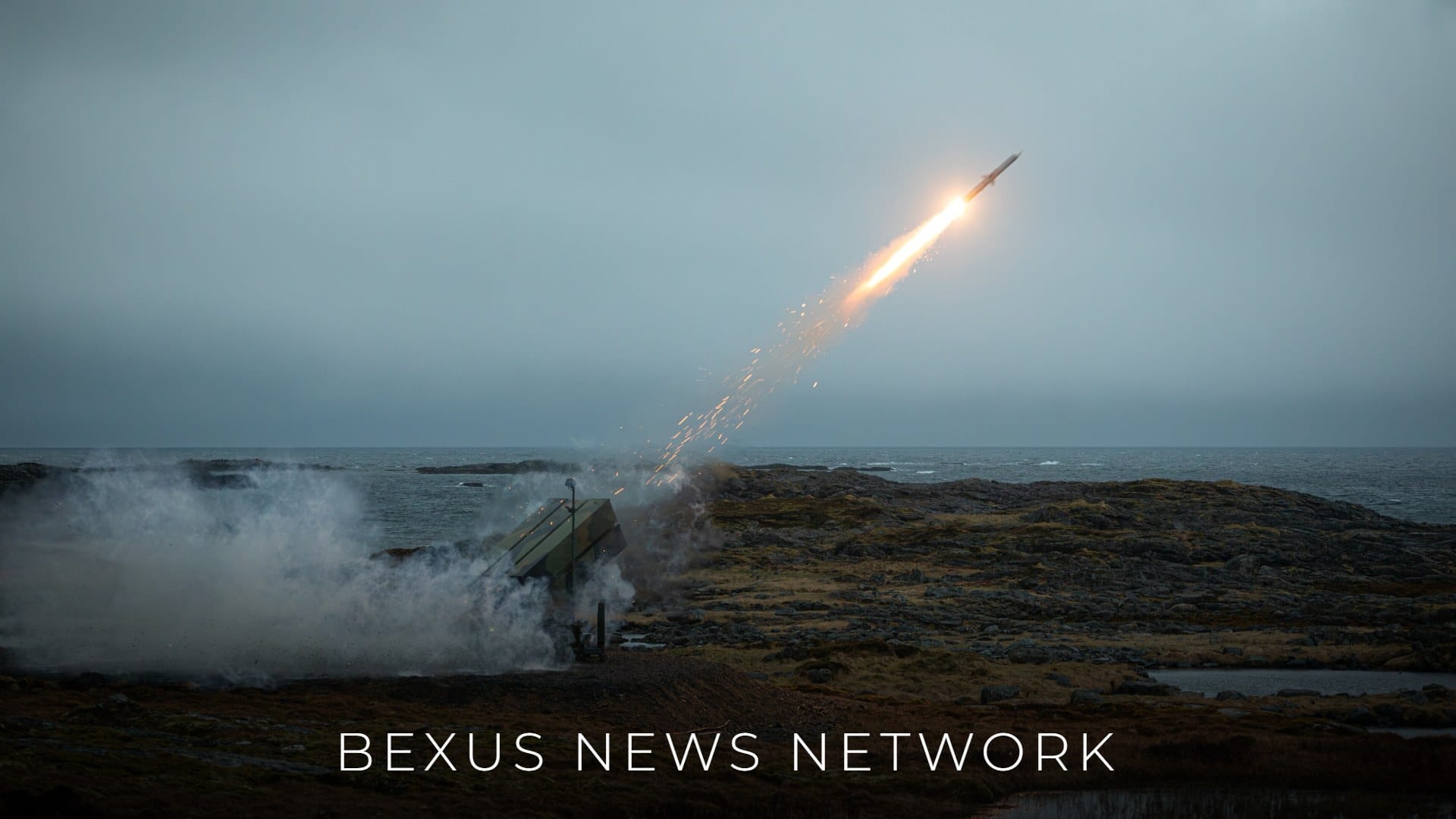
A Kongsberg company delegation also joined the meeting on the 21st. The presidential office said the two sides discussed future cooperation on the NASAMS air defense system. Of NASAMS, the presidential office said, "ці системи фактично щодня ефективно захищають наших людей і критичну інфраструктуру" (these systems effectively protect our people and critical infrastructure virtually every day).
A support timeline was also given. The presidential office said, "Україна розраховує, що наступного місяця будуть додаткові пакети оборонної підтримки" (Ukraine expects that there will be additional defense support packages next month). The value and contents of the packages were not disclosed.
Zelensky discussed the next steps toward a just peace with Støre. Zelensky thanked Norway for its leadership in supporting Ukraine in the defense, economic and diplomatic spheres.
New communications cooperation for the Ukrainian military will also begin. The presidential office said particular attention was paid to "початку роботи над новими спроможностями супутникового зв'язку для українських воїнів" (the start of work on new satellite communications capabilities for Ukrainian soldiers). The presidential office added that partner countries with the capacity to support this would also take part.
The same day, Zelensky met Masud Gharahkhani, president of the Norwegian parliament (Storting), and the leaders of all parliamentary parties to discuss financial support and the "дефіцит бюджету України на оборону" (deficit in Ukraine's defense budget). The presidential office stressed the importance of support from countries that are not members of the European Union (EU) and help bilaterally. The presidential office said Norway is ready to help Ukraine. At the meeting, Zelensky said, "Ми дуже вдячні за вашу рішучу підтримку нашої країни, нашого народу та наших воїнів" (We are very grateful for your resolute support for our country, our people and our soldiers). On the decision on energy support, he said, "Ми також вдячні за рішення щодо енергетичної підтримки" (We are also grateful for the decision on energy support). Gharahkhani said, "Ми в цьому парламенті не залишаємо в біді наших друзів і союзників" (We in this parliament do not abandon our friends and allies in trouble).
Norway-backed FREYJA aims to enter testing phase by year-end
FREYJA was the central item on the agenda. The presidential office said, "Норвегія також активно бере участь у європейській антибалістичній програмі FREYJA" (Norway is also actively participating in the European anti-ballistic program FREYJA). On progress, it said, "Вже є перші результати у створенні окремих елементів системи" (There are already first results in creating individual elements of the system).
The two sides pinpointed where the schedule could be brought forward. According to the presidential office, they discussed areas that could be accelerated "щоб вийти на випробування до кінця цього року" (in order to reach testing by the end of this year). The test site, the elements to be tested and the cost of testing were not disclosed.
The timeline took shape over three months. At the first meeting in Paris in July, Zelensky said he hoped FREYJA would be operational within 12 months. In its announcement on the September meeting in Oslo, the presidential office said Zelensky had set a goal in August of producing concrete results by the end of 2026 or early 2027. This time, starting tests by the end of this year was presented as the goal.
FREYJA launched in Paris in July as a 10-nation anti-ballistic defense coalition
The first FREYJA meeting was held in Paris, France, on July 13. According to the presidential office, leaders signed a joint declaration that day establishing an integrated ballistic missile defense coalition. The founding members are 10 countries: Ukraine, Denmark, France, Germany, Italy, the Netherlands, Norway, Spain, Sweden and the United Kingdom. The presidential office said the coalition is open to other countries that share its principles and goals.
Companies listed included Kongsberg Defence & Aerospace (Kongsberg D&A), Thales, Safran, MBDA, Saab, Diehl Defence, Hensoldt, Leonardo and Ukraine's Fire Point. Zelensky said at the time, "Others have radars and other critical components. So it is important that we truly join forces." He went on, "Europeans themselves will be able to decide how many systems Europe needs and where they should be deployed." Zelensky also said, "Russia is making its final bet on ballistic missile strikes against cities and villages."
The Norwegian government announced its participation the same day. The Norwegian prime minister's office and defense ministry said the coalition would pool members' expertise, industry and technology to develop a European ballistic missile defense that complements existing defense systems members already have or will acquire. Norway contributes through technology transfer, capability sharing and the provision of information. Sandvik said "det norske selskapet KDA med stor erfaring fra NASAMS-systemet" (the Norwegian company KDA, with extensive experience from the NASAMS system) would take part in development. Sandvik said, "Dette er ikke rettet mot noen, men handler om å beskytte vår egen befolkning" (This is not directed at anyone, but is about protecting our own population). Støre said, "Vi skal arbeide målrettet og raskt for å utvikle en kapasitet for forsvar mot ballistiske missiler" (We will work purposefully and quickly to develop a capability for defense against ballistic missiles).
FREYJA refined through August-September diplomatic priorities and Oslo industry meeting
On Aug. 3, setting out this year's diplomatic priorities to heads of Ukraine's foreign missions, Zelensky separately called for expanding FREYJA. Zelensky said, "Our FREYJA can become a shared European system providing integrated protection." He also pointed out that some key Russian companies involved in ballistic missile production are still not under sanctions by countries including the United States, the United Kingdom, Japan and Switzerland.
Three days later, on Aug. 6, Zelensky spoke by phone with Støre and briefed him on the implementation of FREYJA and the schedule for next steps. Zelensky said Norwegian representatives were taking part in the work and praised their contribution. On the call, Zelensky said, "We are trying to accelerate all processes as much as possible."
An industry meeting was held in Oslo in September. The Norwegian prime minister's office said that on Sept. 8, Støre and Zelensky met representatives of European defense companies to discuss anti-ballistic defense development. Støre said, "Antiballistisk luftforsvar er heilt sentralt for å få dette til" (Anti-ballistic air defense is absolutely central to achieving this). In a Sept. 9 announcement, Ukraine's presidential office listed executives from Fire Point, Kongsberg, Weibel, Saab, Diehl Defence, Hensoldt, Thales, Safran, Sener and Leonardo as meeting participants. The presidential office said Zelensky stated that Ukraine can develop and produce interceptor missiles and launchers and that partner countries should also be ready to contribute.
I had a good meeting with the Prime Minister of Norway, Jonas Gahr Støre @jonasgahrstore. I expressed my condolences on the passing of His Majesty King Harald V. Ukraine greatly values all the support from the royal family and the Norwegian people.
— Volodymyr Zelenskyy / Володимир Зеленський (@ZelenskyyUa) September 8, 2026
Jonas and I discussed… pic.twitter.com/TIoWvzFtMf
Norway pledges 3 billion kroner for air defense in July and joins Patriot purchases
Six days before FREYJA's launch, Norway unveiled new air defense support. The Norwegian prime minister's office and defense ministry announced on July 7 that Norway would provide 3 billion kroner for Ukraine's air defense. After meeting Zelensky at the NATO summit in Ankara, Støre said ballistic missile defense is one of Ukraine's most important needs and said, "Derfor bidrar vi nå med tre milliarder kroner til luftvern" (That is why we are now contributing three billion kroner to air defense).
According to the Norwegian government, Norway plans to order new Patriot interceptor missiles directly from the U.S. manufacturer together with Germany and Canada. The Norwegian government initially listed Denmark as a co-ordering country in its announcement but removed Denmark in a correction on July 9. Because some Patriot missiles have long delivery times, Norway is also pursuing a plan to buy missiles from countries that already have them and quickly donate them to Ukraine. It also decided to continue supporting NATO's PURL (Prioritized Ukraine Requirements List), which coordinates funding and donations for purchases of U.S. military equipment. Sandvik said, "Patriot er et svært effektivt luftvernsystem" (Patriot is a very effective air defense system).
The Norwegian government said it provided more than 30 billion kroner in air defense support to Ukraine in 2023-2025. In an announcement on the 20th on Zelensky's meeting with Norway's King Haakon VIII, Ukraine's presidential office said total support provided by Norway in the nearly five years since Russia's full-scale invasion had reached $22.5 billion.