29 Chinese military aircraft operate around Taiwan in one day, 23 cross Strait median line… '0' the next day
TAIPEI
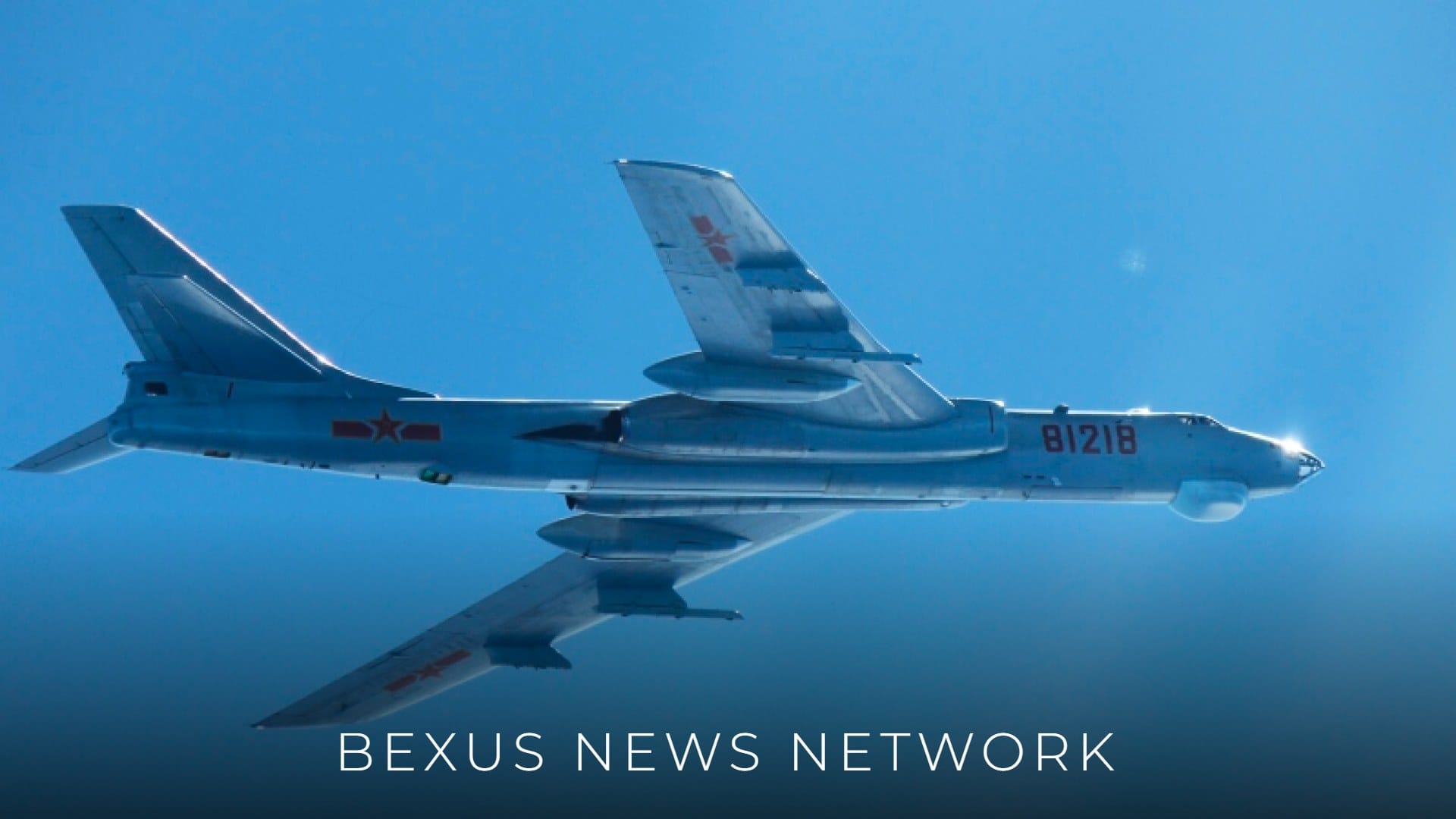
Twenty-nine Chinese military aircraft operated around Taiwan during a 24-hour period from Oct. 20 to Oct. 21, and 23 of them crossed the median line of the Taiwan Strait into airspace on Taiwan's side. Taiwan's Ministry of National Defense announced the figures on Oct. 21 in its "PLA activities in the waters and airspace around the Taiwan Strait" report posted on the Air Force Command website, giving the counting period as 6 a.m. Tuesday, Oct. 20, to 6 a.m. Wednesday, Oct. 21 (Taiwan time). Six Chinese navy vessels and nine official ships (公務船) also remained around Taiwan during the same period. In the report issued a day later, on Oct. 22, no military aircraft were detected.
Taiwan's defense ministry says 23 of 29 aircraft crossed median line into four sectors of airspace
In its Oct. 21 report, Taiwan's defense ministry said, "偵獲共機29架次(逾越中線進入北部、中部、西南及東部空域計23架次)、共艦6艘及公務船9艘,持續在臺海周邊活動". The statement means that 29 Chinese military aircraft (sorties) were detected, 23 of which crossed the median line and entered northern, central, southwestern and eastern airspace, and that six Chinese warships and nine official ships continued operating around the Taiwan Strait. The English-language release of the defense ministry's Air Force Command rendered the same content as "23 out of 29 sorties crossed the median line of the Taiwan Strait and entered Taiwan's northern, central, southwestern, and eastern ADIZ". The Chinese version used the term "airspace (空域)," while the English version used "air defense identification zone (ADIZ)."
The share of the 29 aircraft that crossed the median line reached 79%. Taiwan's defense ministry described its response as "國軍運用任務機、艦及岸置飛彈系統嚴密監控與應處". Taiwan's military mobilized mission aircraft, vessels and coast-based missile systems to closely monitor and respond to the Chinese military activity. The English version rendered these means as combat air patrol (CAP) aircraft, navy vessels and land-based missile systems. Taiwan's defense ministry did not state in the body of the release the types of Chinese aircraft deployed, their breakdown by number, or the reason for the increase. The flight tracks were posted separately as an image file titled "Schematic diagram (示意圖) of activities in the waters and airspace around the Taiwan Strait."
Aircraft count rises from 2 three days earlier to 5, 14 and then 29
The number of Chinese military aircraft rose sharply over three days. In the Oct. 18 report (6 a.m. Oct. 17 to 6 a.m. Oct. 18), two military aircraft were detected, and both crossed the median line into northern and central airspace. The Oct. 19 report showed the number rising to five, three of which entered northern, central and southwestern airspace. In the Oct. 20 report, 14 aircraft were detected and eight crossed the median line. From that point, eastern airspace again appeared among the sectors entered. The 29 aircraft in the Oct. 21 report were 14.5 times the number in the Oct. 18 report.
Counting only aircraft that crossed the median line, the numbers rose from 2 to 3, 8 and 23. Across the same four reports, the number of Chinese navy vessels around Taiwan showed little change at 5, 6, 7 and 6. Official ships numbered 9, 9, 7 and 9. Only air activity grew while maritime forces stayed at a similar scale.
The English and Chinese versions of the Oct. 19 report give conflicting figures. The English version said "8 sorties of PLA aircraft" were detected and immediately afterward stated "3 out of 5 sorties crossed the median line." The Chinese original reads "偵獲共機5架次(逾越中線進入北部、中部及西南空域計3架次)", putting the number of aircraft detected at five. The figures of six warships and nine official ships are the same in both versions.
No military aircraft detected in next day's report
The picture changed in the Oct. 22 report. Taiwan's defense ministry said that from 6 a.m. Wednesday, Oct. 21, to 6 a.m. Thursday, Oct. 22, "偵獲共艦6艘及公務船7艘,持續在臺海周邊活動". Six Chinese warships and seven official ships continued operating around the Taiwan Strait. The ministry added, "上述期間未偵獲共機,故無提供航跡圖", saying that no Chinese military aircraft were detected during the period and therefore no flight track map was provided.
Although military aircraft dropped from 29 to zero in a single day, maritime forces remained in place. The six warships matched the Oct. 21 report, while official ships fell by two, from nine to seven. Taiwan's defense ministry said in the Oct. 22 report as well that Taiwan's military was continuing to monitor and respond with mission aircraft, vessels and coast-based missile systems. The English version stated that no flight path illustration was included because no Chinese military aircraft operating around Taiwan were detected during the period. Taiwan's defense ministry did not explain why no military aircraft were detected.
29 aircraft the highest in 13 days of reports
In the 13 reports issued daily by the Air Force Command of Taiwan's defense ministry from Oct. 10 to Oct. 22, the daily number of military aircraft was 21 (Oct. 10), 12 (Oct. 11), 4 (Oct. 12), 5 (Oct. 13), 9 (Oct. 14), 15 (Oct. 15), 8 (Oct. 16), 9 (Oct. 17), 2 (Oct. 18), 5 (Oct. 19), 14 (Oct. 20), 29 (Oct. 21) and 0 (Oct. 22). The 29 aircraft in the Oct. 21 report were the most among the 13 reports, eight more than the 21 in the Oct. 10 report, the second-highest. The 13 reports add up to 133 aircraft.
During the same period, the list of spokesperson statements on the website of China's Ministry of National Defense included, on Oct. 11, an item titled "国防部新闻发言人陈曦就赖清德发表所谓"双十"讲话答记者问 (Defense ministry spokesperson Chen Xi answers reporters' questions on the so-called 'Double Ten' speech delivered by Lai Ching-te)." The Oct. 16 list included "2026年10月中旬国防部例行新闻发布 (Regular press conference of the Ministry of National Defense, mid-October 2026)" along with an item titled "日方唯有真诚悔罪 才能真正面向未来 (Only by sincerely repenting can Japan truly face the future)."
The number of aircraft reported as crossing the median line was also highest in the Oct. 21 report, at 23. The Oct. 10 and Oct. 15 reports came next with 13 each. In the Oct. 14 report (9 of 9), the Oct. 16 report (8 of 8) and the Oct. 18 report (2 of 2), all detected aircraft crossed the median line. The Oct. 11 and Oct. 12 reports used different wording. Without the phrase "crossed the median line (逾越中線)," the two reports stated only that five and four aircraft, respectively, "entered ... airspace (進入…空域)."
Chinese navy vessels ranged between five and 10 across the 13 reports. The highest was 10 in the Oct. 15 report, followed by nine in the Oct. 16 report. Most of the remaining reports showed around six.
Official ships rise from 2 to 9 and stay around Taiwan
Official ships increased steadily from the Oct. 10 report through the Oct. 18 report. The number of official ships in Taiwan's defense ministry reports was 2 on Oct. 10, 3 each on Oct. 11 and Oct. 12, 4 on Oct. 13, 6 on Oct. 14, 7 each on Oct. 15 and Oct. 16, and 8 on Oct. 17. The Oct. 18 and Oct. 19 reports showed nine. The number then held at 7 to 9, with seven on Oct. 20, nine on Oct. 21 and seven on Oct. 22.
Compared with the Oct. 10 report, the number of official ships in the Oct. 22 report was 3.5 times as many. Taiwan's defense ministry wrote in each report that these official ships "continued operating around the Taiwan Strait (持續在臺海周邊活動)," but did not disclose the agencies they belonged to, their ship types or their locations.
Taiwan's Coast Guard Administration (海巡署) issued a press release on Oct. 20 titled "中國海警船關閉AIS侵擾東沙水域 海巡台中艦併航驅離 強勢廣播回擊統戰言論 (Chinese coast guard ship turns off AIS and intrudes into Dongsha waters; CGA vessel Taichung sails alongside and drives it away, hitting back at united front remarks with forceful broadcasts)." On the same day it also issued a press release titled "颱風前夕中國漁船越界捕魚 澎湖海巡依法扣押帶回 (Chinese fishing boat fishes across the boundary on eve of typhoon; Penghu coast guard seizes it and brings it back in accordance with the law)." On Oct. 21 and Oct. 22, the Coast Guard Administration issued a series of press releases on preparations for Typhoon "薔琵." The title of the Oct. 21 press release was "強烈颱風「薔琵」逼近海象惡劣 海巡全面啟動防颱整備 闖岸際警戒區最高罰25萬", and one of the Oct. 22 press release titles was "強颱薔琵逼近北臺灣 海巡加強岸際巡查".
Chinese Foreign Ministry spokesperson Mao Ning, asked at a regular press briefing on Oct. 19 to comment on Taiwanese authorities' statement that they had driven away 16 Chinese coast guard ships, scientific research vessels and fishing boats near Taiwan's main island and the Dongsha waters the previous day, replied, "这不是外交问题 (This is not a diplomatic issue)."
Airspace sectors entered widen from north, center and southwest to the east
The directions from which Chinese military aircraft entered also differed from report to report. Of the 10 reports issued from Oct. 10 to Oct. 19, two, those of Oct. 14 and Oct. 15, included eastern airspace. The remaining eight listed some of the northern, central and southwestern sectors. The Oct. 10, Oct. 12, Oct. 17 and Oct. 19 reports cited the three sectors of north, center and southwest, while the Oct. 11 report listed only the southwest. The Oct. 13 report listed the center and southwest, the Oct. 16 report the north and southwest, and the Oct. 18 report the north and center.
In the Oct. 20 and Oct. 21 reports, all four sectors, north, center, southwest and east, were named on two consecutive days. Taiwan's defense ministry did not disclose in the Oct. 21 report how the 23 aircraft were divided among the four sectors.
U.S.-Japan joint exercise Keen Sword 27 held around Japan in same period
The period in which Chinese military aircraft sharply increased overlapped with the schedule of a joint U.S.-Japan exercise. According to material released on Sept. 29 by the Joint Staff Office of Japan's Ministry of Defense, "Keen Sword 27" runs from Monday, Oct. 19, to Thursday, Oct. 29. Training locations include Self-Defense Forces facilities, facilities and areas of U.S. Forces Japan, civilian airports and ports, public and private land in Japan, and the waters and airspace around Japan. The Self-Defense Forces are committing about 45,000 personnel, 6,100 vehicles, 40 vessels and 260 aircraft. Besides Japan and the United States, seven countries are named in the material: Australia, Canada, France, Germany, the Netherlands, New Zealand and the Philippines. Participating U.S. units listed are "U.S. Pacific Command," U.S. Army Pacific, the U.S. Pacific Fleet, Pacific Air Forces, Marine Forces Pacific and U.S. Forces Japan, and Australian participants include Joint Operations Command, among others. The exercise controllers are Tateki Tawara, commander of the JSDF Joint Operations Command (vice admiral), on the Self-Defense Forces side, and Stephen Koehler, commander of the U.S. Pacific Fleet (admiral), on the U.S. side. The Joint Staff Office said the Japan-U.S. joint and combined exercise began in fiscal 1985 and has been held almost every year, with this year's field training exercise the 18th.
The Joint Staff Office described the purpose of the exercise as "To train and verify Japan-U.S. joint responses in various contingencies and the JSDF's joint operations". The explanation is that the exercise will train and verify Japan-U.S. joint responses and Self-Defense Forces joint operations in various contingencies to maintain and enhance Japan-U.S. joint operational capabilities. There are 15 main training items. Integrated air and missile defense training and Japan-U.S. joint anti-ship attack operations training come first, followed by ground, maritime and air operations, amphibious operations, response to cyberattacks, information warfare, integrated communications, space domain awareness, electronic warfare, logistics, distributed operations, critical infrastructure protection training and experimental activities.
Five days before Keen Sword opened, U.S. and Japanese fighter jets also flew together over the East China Sea. The Joint Staff Office said in an Oct. 15 announcement that a U.S.-Japan joint exercise was held on Wednesday, Oct. 14, over the East China Sea northwest of Okinawa's main island. Two F-15 fighters from the Air Self-Defense Force's 9th Air Wing and one E-767 airborne warning and control aircraft from the Airborne Warning and Control Wing, along with four U.S. F-22 fighters, took part in various tactical drills. The Joint Staff Office said the exercise confirmed "力による一方的な現状変更を起こさせないとの日米の強い意志 (the strong will of Japan and the United States not to allow unilateral changes to the status quo by force)" as well as the readiness of the Self-Defense Forces and U.S. forces, and further strengthened the deterrence and response capabilities of the Japan-U.S. alliance.
On Oct. 21, the third day of the exercise, a Chinese military reconnaissance aircraft again appeared in the skies southwest of Japan. The Joint Staff Office announced that from the morning to the afternoon of the same day, one Chinese military Y-9 intelligence-gathering aircraft flew from the East China Sea, passed between Okinawa's main island and Miyako Island, and went out into the Pacific. The aircraft flew as far as off Amami Oshima before passing again between Okinawa's main island and Miyako Island and returning toward the mainland. The Air Self-Defense Force's Southwestern Air Defense Force scrambled fighter jets in response.
A day earlier, on Oct. 20, two Chinese military Y-9 aircraft flew in separately. According to the Joint Staff Office, from the morning to the afternoon one Y-9 patrol aircraft passed from the East China Sea between Okinawa's main island and Miyako Island into the Pacific, flew as far as off Amami Oshima, then turned back and returned along the same route. In the afternoon, one Y-9 intelligence-gathering aircraft came out from the mainland into the East China Sea and flew back and forth between waters south of the Danjo Islands in Nagasaki Prefecture and waters northwest of Okinawa's main island. The Air Self-Defense Force scrambled fighter jets from the Southwestern Air Defense Force and other units. The daytime hours of Oct. 20, when Japan scrambled fighters against the two Y-9s, fall within the period (6 a.m. Oct. 20 to 6 a.m. Oct. 21) in which Taiwan's defense ministry counted 29 Chinese military aircraft.
Three Chinese vessels head north from south of Miyako Island into East China Sea just before Keen Sword opened
At sea, Chinese navy vessels also moved through waters southwest of Japan just before the exercise opened. The Joint Staff Office said in an Oct. 19 announcement that at around 4 p.m. on Friday, Oct. 16, the Maritime Self-Defense Force confirmed three Chinese navy vessels in waters about 220 km south of Miyako Island in Okinawa Prefecture. They were a Luyang III-class guided-missile destroyer (hull number 122), a Jiangkai II-class frigate (576) and a Fuchi-class replenishment ship (889). The three vessels sailed northeast through those waters and, on Saturday, Oct. 17, passed northwest through the waters between Okinawa's main island and Miyako Island toward the East China Sea. Two P-1 patrol aircraft from Fleet Air Wing 1 at Kanoya and Fleet Air Wing 5 at Naha carried out warning, surveillance and intelligence gathering.
On the same day, another group moved in the opposite direction. The Joint Staff Office said that at around 11 p.m. on Oct. 16 it confirmed a Luyang III-class guided-missile destroyer (121) and a Fuyu-class fast combat support ship (901) sailing southeast in waters about 140 km west of Kuchinoerabu Island in Kagoshima Prefecture. The two vessels passed east through the Osumi Strait on Oct. 17 and went out into the Pacific. The destroyer Mikuma of the 3rd Patrol and Defense Unit at Sasebo and a P-1 patrol aircraft from Fleet Air Wing 1 at Kanoya conducted surveillance. In Taiwan's defense ministry reports of Oct. 17 and Oct. 18, covering 6 a.m. Oct. 16 to 6 a.m. Oct. 18, Chinese warships around Taiwan numbered six and five, respectively.
Sources (KST)
- Air Force Command, Taiwan Ministry of National Defense · 2026-10-21 · 中共解放軍臺海周邊海、空域動態(115年10月21日) · https://air.mnd.gov.tw/TW/News/News_Detail.aspx?CID=213&ID=59337
- Air Force Command, Taiwan Ministry of National Defense (English) · 2026-10-21 · PLA activities in the waters and airspace around Taiwan Oct. 21, 2026 · https://air.mnd.gov.tw/EN/News/News_Detail.aspx?CID=214&ID=59338
- Air Force Command, Taiwan Ministry of National Defense · 2026-10-22 · 中共解放軍臺海周邊海、空域動態(115年10月22日) · https://air.mnd.gov.tw/TW/News/News_Detail.aspx?CID=213&ID=59339
- Air Force Command, Taiwan Ministry of National Defense · 2026-10-20 · 中共解放軍臺海周邊海、空域動態(115年10月20日) · https://air.mnd.gov.tw/TW/News/News_Detail.aspx?CID=213&ID=59335
- Air Force Command, Taiwan Ministry of National Defense · 2026-10-19 · 中共解放軍臺海周邊海、空域動態(115年10月19日) · https://air.mnd.gov.tw/TW/News/News_Detail.aspx?CID=213&ID=59318
- Air Force Command, Taiwan Ministry of National Defense (English) · 2026-10-19 · PLA activities in the waters and airspace around Taiwan Oct. 19 2026 · https://air.mnd.gov.tw/EN/News/News_Detail.aspx?CID=214&ID=59319
- Air Force Command, Taiwan Ministry of National Defense · 2026-10-18 · 中共解放軍臺海周邊海、空域動態(115年10月18日) · https://air.mnd.gov.tw/TW/News/News_Detail.aspx?CID=213&ID=59316
- Air Force Command, Taiwan Ministry of National Defense · 2026-10-17 · 中共解放軍臺海周邊海、空域動態(115年10月17日) · https://air.mnd.gov.tw/TW/News/News_Detail.aspx?CID=213&ID=59314
- Air Force Command, Taiwan Ministry of National Defense · 2026-10-16 · 中共解放軍臺海周邊海、空域動態(115年10月16日) · https://air.mnd.gov.tw/TW/News/News_Detail.aspx?CID=213&ID=59312
- Air Force Command, Taiwan Ministry of National Defense · 2026-10-15 · 中共解放軍臺海周邊海、空域動態(115年10月15日) · https://air.mnd.gov.tw/TW/News/News_Detail.aspx?CID=213&ID=59310
- Air Force Command, Taiwan Ministry of National Defense · 2026-10-14 · 中共解放軍臺海周邊海、空域動態(115年10月14日) · https://air.mnd.gov.tw/TW/News/News_Detail.aspx?CID=213&ID=59308
- Air Force Command, Taiwan Ministry of National Defense · 2026-10-13 · 中共解放軍臺海周邊海、空域動態(115年10月13日) · https://air.mnd.gov.tw/TW/News/News_Detail.aspx?CID=213&ID=59306
- Air Force Command, Taiwan Ministry of National Defense · 2026-10-12 · 中共解放軍臺海周邊海、空域動態(115年10月12日) · https://air.mnd.gov.tw/TW/News/News_Detail.aspx?CID=213&ID=59303
- Air Force Command, Taiwan Ministry of National Defense · 2026-10-11 · 中共解放軍臺海周邊海、空域動態(115年10月11日) · https://air.mnd.gov.tw/TW/News/News_Detail.aspx?CID=213&ID=59301
- Air Force Command, Taiwan Ministry of National Defense · 2026-10-10 · 中共解放軍臺海周邊海、空域動態(115年10月10日) · https://air.mnd.gov.tw/TW/News/News_Detail.aspx?CID=213&ID=59299
- Joint Staff Office, Japan Ministry of Defense · 2026-09-29 · FY2026 Japan-U.S. Bilateral Joint Exercise "Keen Sword 27" · https://www.mod.go.jp/js/pdf/2026/p20260929_01e.pdf
- Joint Staff Office, Japan Ministry of Defense · 2026-10-21 · 中国軍機の動向について(Y-9 沖宮) · https://www.mod.go.jp/js/pdf/2026/p20261021_01.pdf
- Joint Staff Office, Japan Ministry of Defense · 2026-10-20 · 中国軍機の動向について(Y-9 沖宮・東シナ) · https://www.mod.go.jp/js/pdf/2026/p20261020_02.pdf
- Joint Staff Office, Japan Ministry of Defense · 2026-10-19 · 中国海軍艦艇の動向について(ルーヤンⅢ、ジャンカイⅡ/沖縄本島ー宮古島間北西進) · https://www.mod.go.jp/js/pdf/2026/p20261019_02.pdf
- Joint Staff Office, Japan Ministry of Defense · 2026-10-19 · 中国海軍艦艇の動向について(ルーヤンⅢ/大隅海峡南東進) · https://www.mod.go.jp/js/pdf/2026/p20261019_03.pdf
- Taiwan Coast Guard Administration · 2026-10-20~10-22 · 新聞稿 list ("中國海警船關閉AIS侵擾東沙水域 海巡台中艦併航驅離 強勢廣播回擊統戰言論" and others) · https://www.cga.gov.tw/GipOpen/wSite/lp?ctNode=650&mp=999
- China Ministry of Foreign Affairs · 2026-10-19 · 2026年10月19日外交部发言人毛宁主持例行记者会 · https://www.mfa.gov.cn/web/wjdt_674879/fyrbt_674889/202610/t20261019_12042878.shtml
- China Ministry of National Defense · 2026-10-11~10-16 · 国防部新闻发言人 statement list ("国防部新闻发言人陈曦就赖清德发表所谓"双十"讲话答记者问" and others) · http://www.mod.gov.cn/gfbw/xwfyr/index.html
- Joint Staff Office, Japan Ministry of Defense · 2026-10-15 · 日米共同訓練の実施について · https://www.mod.go.jp/js/pdf/2026/p20261015_01.pdf
- Air Force Command, Taiwan Ministry of National Defense (English) · 2026-10-22 · PLA activities in the waters and airspace around Taiwan Oct.22 2026 · https://air.mnd.gov.tw/EN/News/News_Detail.aspx?CID=214&ID=59340