Department of War Completes Research Security Reviews of 30 Universities That Severed Ties with Foreign Entities of Concern; Section 1286 List Ties Corrected, Termination Actions Exceed 80
WASHINGTON
The U.S. Department of War announced on the 19th (local time) the results of research security audits of 30 universities that resolved relationships with foreign entities of concern. All 30 institutions fully mitigated problematic ties with entities listed on the Fiscal Year 2019 National Defense Authorization Act (NDAA) Section 1286 list. The Department of War stated that actions related to terminating relationships totaled more than 80 across the 30 universities.
All 30 Universities Fully Mitigated Problematic Ties with Section 1286 List Entities
In the announcement, the Department of War stated that it "successfully received mitigation results from its mandated research security audits of 30 universities." All 30 audited institutions fully mitigated their identified relationships with "foreign entities of concern" on the most recent Section 1286 list, meaning not a single institution was left out. The Department of War termed these results an "initial" audit. The first round of 30 institutions was concluded, with subsequent reviews set to follow. Among the 30 institutions, seven were specifically singled out by name, a detail covered in more depth later. All of the named institutions are U.S. universities. The Department of War CTO account (@DoWCTO) posted the same information on X on the 19th, when the results were released.
The @DeptofWar successfully received mitigation results from its mandated research security audits of 30 universities. Each university has now fully mitigated its identified relationships with foreign entities of concern listed on the most recent NDAA Section 1286 list, resulting… pic.twitter.com/YtDfQCFc0X
— Department of War CTO (@DoWCTO) 2026년 10월 19일
The "most recent list" cited by the Department of War is the one published in July of this year. Universities completed their mitigations in under three months following the release of this list.
Termination actions exceeded 80 across the 30 universities. These include severing ties with entities named on the Section 1286 list, as well as "precautionary terminations" to proactively reduce risk with entities not on the list. In short, some universities preemptively drew lines with entities beyond those formally listed.
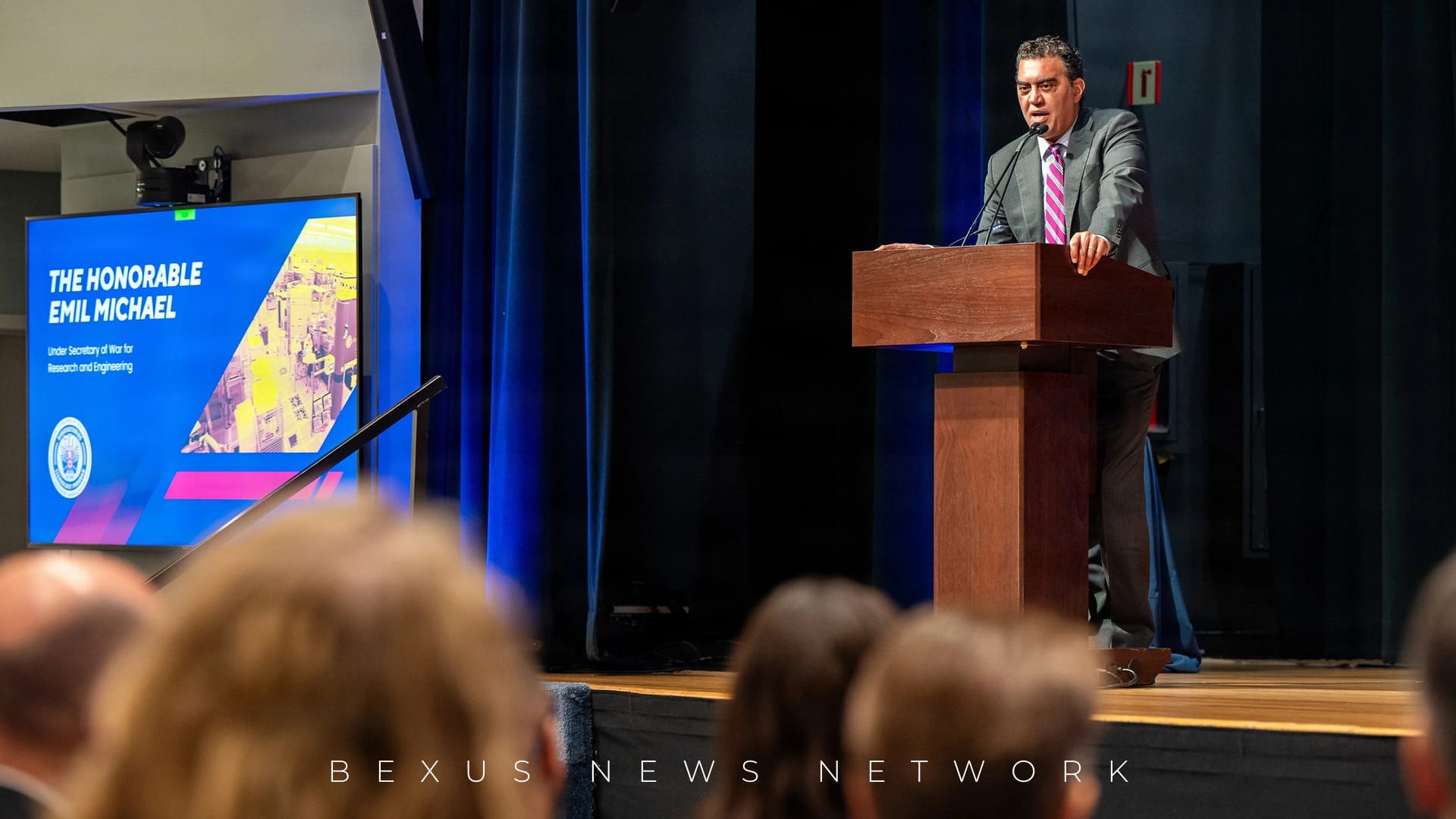
Emil Michael, Under Secretary of War for Research and Engineering, summarized the outcome as "30 for 30." He remarked that he was proud of the Department of War working alongside premier research universities to sever ties with malign foreign entities. The Department of War explained that it collaborated with all 30 universities to mitigate problematic relationships, noting that instead of penalizing universities, it worked together with them to resolve the issues.
The audits did not happen overnight. The Department of War sent formal notifications to the subject universities two months prior, clearly outlining the scope and deadlines of the audits.
Department of War Issued Notice on August 17 and Received Results in 63 Days
On August 17, the Department of War sent formal notifications to 30 U.S. academic institutions, instructing them to conduct an immediate, comprehensive review of collaborations with foreign entities of concern across academic, financial, and research areas. The purpose of this measure is to safeguard U.S. taxpayer-funded research against unauthorized technology transfer, intellectual property theft, and exploitation by adversaries. Targets of the review included foreign entities designated under Section 1286 and entities linked to rebranded Confucius Institutes. This initiative was led by the Office of the Under Secretary of War for Research and Engineering.
Universities receiving the notice were required to perform three tasks: identify and audit all confirmed foreign collaborations, assess exposure in sensitive or export-controlled research, and implement rigorous mitigation plans up to and including terminating problematic collaborations. The Department of War made clear that adherence to this process was required to maintain future eligibility for federal research funding.
The review findings and mitigation actions had to be reported directly to the Department of War by August 31, allowing 14 days from the date of notification. The October 19 announcement came 63 days after the initial notice was issued.
At the time, Under Secretary Michael stated that "the Department of War has zero tolerance for academic collaborations that undermine national security." He emphasized that institutions receiving American taxpayer dollars must uphold the highest standards of research security, and that mandated audits would enforce accountability. Joseph Jewell, Assistant Secretary of War for Science and Technology, also stated that because universities are vital partners executing Department of War research programs, it is critical to ensure research investments are thoroughly protected against foreign exploitation.
The Department of War also stated at the time that it was conducting these audits in coordination with Congress. The benchmark for the audits was the Section 1286 list. Understanding what this list is and which entities are on it clarifies the relationships targeted by this mitigation effort.
Section 1286 List Contains 130 Research Institutions in China, Russia, and Iran
Section 1286 is a provision in the Fiscal Year 2019 NDAA titled "Initiative to protect national security academic researchers from undue influence and other security threats." As mandated by this provision, the Department of War develops and updates a list of foreign entities engaged in problematic activities.
On July 23, the Department of War released the Fiscal Year 2025 updated list, which officially includes 130 academic and research institutions across China, Russia, and Iran. The Department of War explained that these institutions have been confirmed to engage in activities that increase the likelihood of improper acquisition of U.S. government-funded research and development outcomes. The department assessed that such improper acquisition enables adversarial foreign government interference and poses a direct threat to U.S. national security and the integrity of American science.
Upon publishing the list, the Department of War advised domestic researchers, universities, and industry partners to exercise extreme caution when collaborating, exchanging research funds, or sharing data with listed entities. The department explained that this update is a vital element in its ongoing mission to uncover and block unauthorized technology transfers, aligning with stricter research protection guidance recently issued by Under Secretary Michael. The list is updated at least once a year or as needed based on new intelligence and threat assessments. Michael remarked at the time, "The Department of War is strengthening its commitment to protecting taxpayer-funded research and preserving the integrity of the American scientific enterprise."
The entities targeted for mitigation by universities this time were those on this latest list. While who appears on the list is critical, a memorandum from January of this year also revamped the process for nominating candidate entities.
January Memorandum Preemptively Established Review Safeguards for Funding and Listing Processes
In January, Under Secretary Michael issued the "Fundamental Research Security Initiative and Implementation Memorandum," an action aimed at preventing Department of War research funding from leaking through malign foreign influence, intellectual property theft, and other exploitation. The memorandum sought to strengthen the risk-based security review policy for fundamental research established in June 2023. It noted that because adversaries continually adapt their methods, a more comprehensive and enforceable department-wide approach was necessary.
The most prominent provision concerns the NDAA Section 1260H list identifying Chinese military companies. The memorandum barred component heads from awarding fundamental research funding not only to entities on this list, but also to institutions with documented histories of patent or intellectual property theft. Updates to the risk review matrix by the Office of the Under Secretary of War for Research and Engineering must be implemented within 60 days.
The memorandum also set audit frequencies. It mandated annual sample reviews of 100 percent of fundamental research projects with mitigation measures and at least 25 percent of other projects, with implementation results reported semiannually to the Office of the Under Secretary. It also reaffirmed that researchers must report all current and pending support for students and postdoctoral researchers, including funding originating from outside their home institutions.
Risk review data scattered across various components is to be centralized. The memorandum directed that disclosure forms, risk review documents, mitigation plans, and compliance records be submitted to the Office of the Under Secretary to establish a "Fundamental Research Risk Review Repository." The office aimed to deploy a prototype in the second quarter of Fiscal Year 2026 and achieve full operational capability in the fourth quarter.
The memorandum also established procedures for components to nominate entities for the Section 1286 list to the Office of the Under Secretary, requiring an emphasis on whether nominations meet statutory criteria and possess high evidentiary quality. Additionally, it initiated a one-year "damage assessment" of select incidents, including cases highlighted in a recent report by the House Select Committee on Strategic Competition between the United States and the Chinese Communist Party.
Components must also report annually to the Office of the Under Secretary on research security personnel staffing, software utilized, number of proposals reviewed, and number of applications requiring mitigation. The Defense Department's Chief Digital and Artificial Intelligence Office (CDAO) was directed to identify automated screening and continuous monitoring tools and report findings within 180 days. Requirements for annual research security personnel training and instructions to include award numbers in public releases were also included in the memorandum.
The award number guidance aims to enhance transparency and accountability in research funding. Existing statutory provisions (10 U.S.C. § 4027) already require recipients of research and development funding to acknowledge Department of War support in related public releases, with exceptions limited to communications under 280 characters or cases granted a waiver by the Department of War. The memorandum ordered implementation of this guidance within 45 days and directed the preparation of requirements and cost estimates for a common research grant database.
The memorandum concluded that these measures represent a crucial step toward identifying vulnerabilities sooner, protecting Department of War fundamental research, and maintaining the U.S. military's research and technological edge. It added that it would foster a culture of vigilance and collaboration across all components.
While the January memorandum tightened oversight over funding grantors and listing procedures, the August notification and October results reined in the universities receiving research funds. Among these results, the Department of War specifically singled out and commended seven universities that acted with particular speed.
Department of War Specifically Commends 7 Early-Moving Universities by Name
These seven universities are located in seven different states: Oklahoma, Pennsylvania, North Carolina, South Carolina, California, Texas, and Virginia. The proactive institutions emerged across diverse geographic areas rather than being concentrated in any single region.
The universities named by the Department of War are Oklahoma State University, Pennsylvania State University, the University of North Carolina at Chapel Hill, the University of South Carolina, the University of Southern California, the University of Texas at Austin, and Virginia Tech. The Department of War praised these institutions for going "above and beyond" by swiftly terminating problematic relationships and implementing substantial mitigation measures.
Assistant Secretary Jewell stated that these seven institutions "have set the standard for research security across the nation" and "deserve immense credit." He noted that they did not stop at meeting bare minimum requirements, but took bold, voluntary steps to protect their laboratories, faculty, and intellectual property from foreign exploitation.
Jewell explained that thanks to these proactive measures, breakthrough research directly supports American warfighters and reinforces the nation's technological dominance. What the Department of War commended in these seven institutions was the speed of termination and their institution-initiated actions.
Praise was paired with continued pressure. Following his remarks on the seven institutions, Under Secretary Michael issued a clear warning to entities failing to meet standards.
Institutions Failing to Meet Standards Put on Notice
Under Secretary Michael stated, "Our work continues." He added that institutions failing to meet research security standards "are on notice," stressing that "taxpayer dollars will not support institutions that maintain partnerships endangering our warfighters or our technological edge." On the same day, the Department of War CTO account posted a separate message warning that American academic institutions failing to meet research security standards "are on notice."
American academic institutions failing to meet research security standards are on notice.
— Department of War CTO (@DoWCTO) 2026년 10월 19일
The @DeptofWar will ensure taxpayer-funded research remains secure. pic.twitter.com/FjGXDFJmp9
The Department of War announced that it will continue updating the Section 1286 list as necessary and evaluating whether universities maintain problematic ties with listed entities. The 30 institutions concluded in this round represented the "initial" audit cohort.
Consequences for universities failing to meet standards had already been outlined in the August notice, specifically establishing that auditing and implementing mitigation plans are mandatory to maintain eligibility for future federal research funding.
The Department of War affirmed that it will carry forward this work alongside Congress, specifically naming as partners the House and Senate Armed Services Committees, the House and Senate Appropriations Committees, and the House Select Committee on the CCP (formally the House Select Committee on Strategic Competition between the United States and the Chinese Communist Party). The August notice and January memorandum also listed these same committees as partners. On the 21st, the Department of War CTO account posted that the department worked collaboratively with the 30 universities to mitigate relationships of concern on the Section 1286 list, protecting critical research that supports the warfighter, and will continue working with Congress and academia.
The @DeptofWar worked collaboratively with the 30 universities to mitigate foreign relationships of concern on the Section 1286 List, protecting critical research that supports the American warfighter.
— Department of War CTO (@DoWCTO) 2026년 10월 21일
The Department will continue working with Congress and academia to ensure… pic.twitter.com/6IrUD6GFvP
The scope of this audit is underscored by the numbers: 30 academic institutions received audit notices, and all 30 had mitigated their relationships by October 19. Actions related to terminations numbered over 80, with seven universities singled out by name. The counterparts in the relationships mitigated by the universities were foreign entities on the Section 1286 list, with the July 23 updated list containing 130 academic and research institutions across China, Russia, and Iran. The process took 63 days from notice to results, delivered by 30 U.S. universities. The Department of War stated that it will continue updating the list and assessing universities that maintain problematic relationships with listed entities. The milestone achieved with these 30 institutions represents the first outcome of that ongoing evaluation.
Sources (KST)
- U.S. Department of War · https://www.war.gov/News/Releases/Release/Article/4628392/department-of-war-announces-research-security-mitigation-results-from-academic/
- X @DoWCTO · https://x.com/DoWCTO/status/2112230532922642580
- X @DoWCTO · https://x.com/DoWCTO/status/2112286389572452407
- X @DoWCTO · https://x.com/DoWCTO/status/2112918364678946984