White House Announces More Than $6 Billion in Investment at "Golden Age of Science" Summit…Nuclear Spacecraft to Mars Aims for 2028 Launch
The White House announced more than $6 billion (about 8.056 trillion won) in science investment on Oct. 8 at its "Science: A New Golden Age" summit, combining commitments from the federal government, industry, academia and philanthropy. The figure is a White House tally across multiple programs, not $6 billion in new federal spending. The White House called the package the "most ambitious set of science initiatives in decades" in its fact sheet.
The official White House account @WhiteHouse posted the same day that the total was "$6B+ across government, industry, academia, & philanthropy."
https://x.com/WhiteHouse/status/2108255757615738934
The largest single item is $2.4 billion (about 3.2226 trillion won) in research superintelligence (SI) tools and computing credits for the Genesis Mission Consortium. Eleven industry partners made the commitments, the White House said, to support the National Science and Technology Challenges of more than 15 federal agencies.
Nvidia committed $1 billion (about 1.3427 trillion won) and AMD $500 million (about 671.4 billion won), according to the fact sheet. OpenAI committed $200 million (about 268.5 billion won), while Anthropic and Google committed $150 million each (about 201.4 billion won each). AMP and Emerald AI committed $100 million each (about 134.3 billion won each), and AWS, Armada, Crusoe and Micron committed $50 million each (about 67.1 billion won each).
The fact sheet said the commitments follow a July expansion of the Genesis Mission and an earlier $5 billion federal commitment (about 6.7137 trillion won). Georgia and university and industry partners separately committed $1 billion to scientific computing and workforce training, and more than 14 universities across 10 states launched the Southeastern Regional SI Computing Consortium, the White House said.
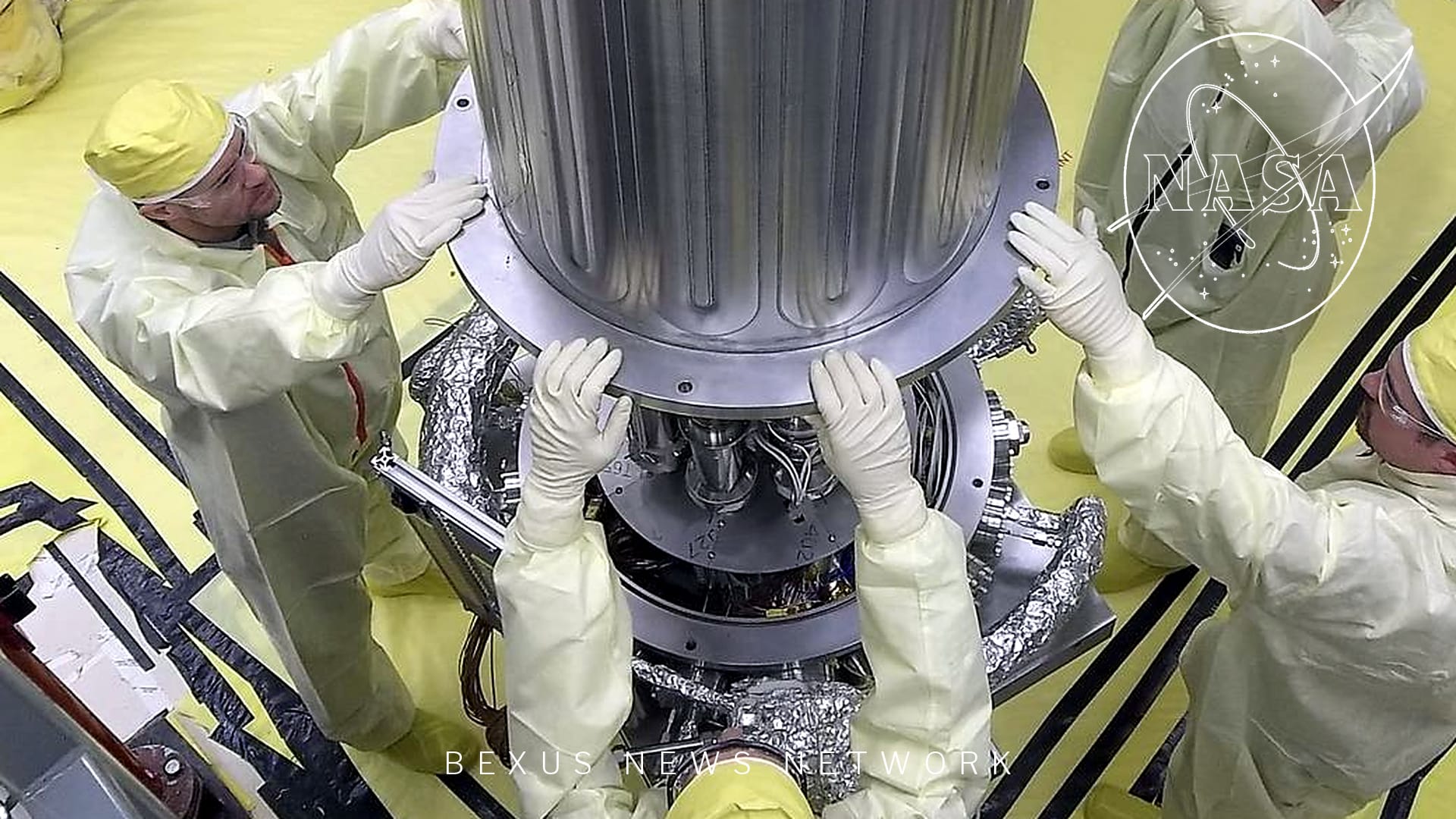
In space, NASA and the Department of Energy signed a memorandum of understanding on space nuclear power and space nuclear fuel development, according to the fact sheet. The agencies will jointly design, build and deploy Space Reactor-1, a nuclear spacecraft expected to launch to Mars in 2028, and Luna Reactor-1, the first fission reactor on the lunar surface. The MOU is an interagency cooperation document, not a treaty or statute. NASA Administrator Jared Isaacman said on X that "NASA signed an agreement with @ENERGY."
https://x.com/NASAAdmin/status/2108349204569473383
In quantum computing, the Energy Department announced eight core problems to guide a $215 million (about 288.7 billion won) Quantum Genesis Q Competition. The fact sheet said the program will support teams demonstrating "the world's first fault-tolerant scientific quantum computer." The National Science Foundation launched two $33 million (about 44.3 billion won) Grand Research Challenge prize competitions, in Quantum+X applications and synthetic multicellularity. NSF said on X that bp America, Citi, Mastercard, Moderna, SLB and Visa are participating as industry partners.
https://x.com/NSF/status/2108623889743946239
In biotechnology, the National Institutes of Health, the Energy Department and Biohub launched a $1.8 billion (about 2.4169 trillion won) Virtual Biology initiative to build the data foundation for SI models that predict how cells and biological systems respond to disease. The White House said it supports the Bio Genesis mission to double the pace of biomedical innovation within the next five to ten years — a White House goal, not a result already achieved.
For talent, the fact sheet announced a $100 million (about 134.3 billion won) Genesis Mission Fellowship supporting an accelerated four-year doctoral program in which students study superintelligence alongside other science and engineering fields and gain research experience in industry and at Energy Department national laboratories. NSF created a six-year combined bachelor's and doctoral program, NIH launched Generation Discovery to bring 100 early-career scientists into its intramural research program, and NSF revived its Young Scholars program, discontinued in 1996, for students in grades 3 through 12 selected on mathematical ability, the White House said.
Industry and philanthropy also committed more than $310 million (about 416.3 billion won) to launch the X-Labs Consortium, building on the $1.5 billion (about 2.0141 trillion won) NSF X-Labs program announced in May.
Michael Kratsios, director of the White House Office of Science and Technology Policy, who led the summit, said in the fact sheet that it was the biggest day of change for American science since the federal research ecosystem was reshaped after World War II. "Under President Trump's leadership," he said, the United States is opening "a new golden age of science" driven by superintelligence, a return to meritocracy and bold national missions. Kratsios posted the text of his summit remarks on X the next day.
https://x.com/mkratsios47/status/2108630771179344208
The programs build on the Genesis Mission, launched last year. President Trump created the mission by executive order on Nov. 24, 2025, according to the Energy Department, which leads the national effort to use artificial intelligence and advanced computing to double the productivity and impact of American science and engineering within a decade, spanning energy dominance, scientific discovery and national security. Dario Gil, the undersecretary for science named by Energy Secretary Chris Wright, leads the mission.