UN Human Rights Monitoring Mission in Ukraine: "328 Civilians Killed, 2,105 Injured in Ukraine in September"… Highest for September Since Full-Scale Invasion, Kyiv Saw Casualties on 22 of 30 Days
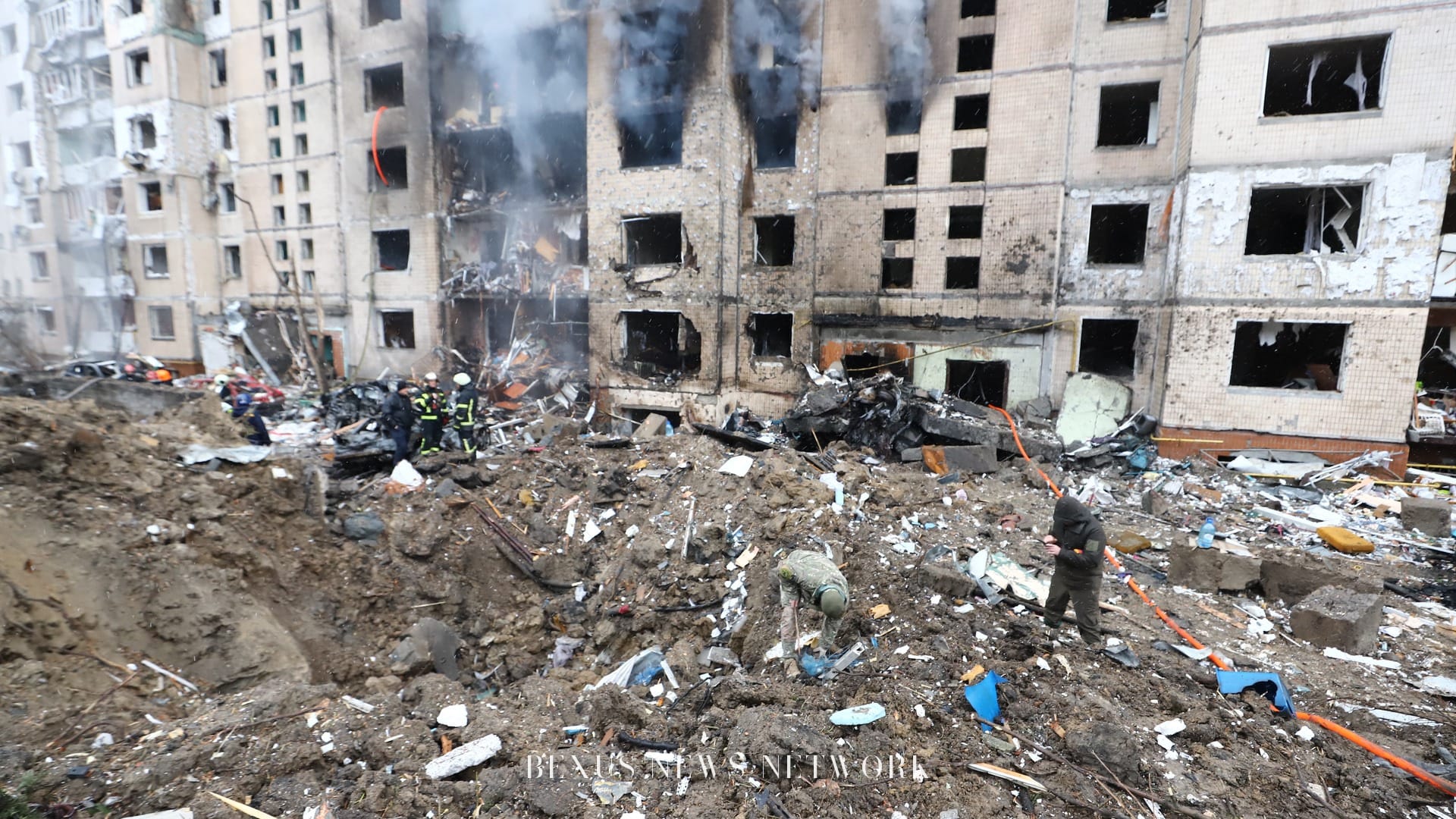
Kyiv, Ukraine
The UN Human Rights Monitoring Mission in Ukraine (HRMMU), operating under the Office of the UN High Commissioner for Human Rights (OHCHR), stated in its September monthly update released on October 15 that civilian casualties in Ukraine last month were the highest for any September since the 2022 full-scale invasion. The mission verified at least 328 civilians killed and 2,105 injured in September, totaling 2,433 casualties. This represents an 85% increase compared to September of last year (249 killed, 1,068 injured). The HRMMU is a UN body that tallies civilian casualties across Ukraine by compiling interviews with victims, open-source materials such as videos and photographs, and medical records. Because this tally includes figures as "verified" only when there are "reasonable grounds to believe that the death or injury occurred as described," the mission itself noted that the actual toll could be higher.
The cumulative figures for this year are even steeper. Between January and September, 2,570 civilians were killed and 15,211 injured, which the mission stated is 59% more than during the same period last year and more than double that of the same period in 2024. Comparative figures were 1,607 killed and 6,764 injured from January to September 2024, and 1,943 killed and 9,233 injured from January to September 2025. Cumulatively since the full-scale invasion on February 24, 2022, 17,605 deaths and 55,846 injuries have been verified, totaling 73,451 casualties. By month, fatalities rose from 167 in January to 448 in July before declining to 389 in August and 328 in September. Injuries rose from 767 in January to a peak of 2,695 in July, followed by 2,366 in August and 2,105 in September.
The leading cause of casualties in September was long-range weapons. The mission calculated that long-range weapons, such as missiles and loitering munitions, accounted for 53% of all casualties (165 killed, 1,119 injured). The second largest cause was short-range drones at 23% (87 killed, 475 injured). This was followed by aerial-delivered bombs (aviation bombs) at 15% (44 killed, 331 injured), artillery and multiple launch rocket systems at 7% (19 killed, 143 injured), and mines and unexploded remnants of war at 2% (13 killed, 37 injured). By sex and age, fatalities included 218 men, 95 women, 10 boys, and 5 girls, while the injured included 1,141 men, 841 women, 63 boys, and 60 girls.
By region, the capital, Kyiv, suffered the heaviest toll. The mission verified 32 deaths and 340 injuries in Kyiv, noting that civilian casualties occurred on 22 out of 30 days during the month. The mission stated that casualties occurred more frequently than in any month since the full-scale invasion. The next most affected cities were Kherson (16 killed, 202 injured), Sumy (11 killed, 131 injured), and Zaporizhzhia (7 killed, 127 injured). Civilian casualties were documented across 22 Ukrainian oblasts and the city of Kyiv. Posting this summary on its X account the following day, the mission pointed out that as winter approaches, Russia has resumed large-scale attacks on Ukraine's energy infrastructure.
At least 328 civilians were killed, 2,105 injured in Ukraine in September – 85% more than in September 2025. In Kyiv, civilian casualties were recorded on 22 of 30 days.
— Human Rights Monitoring Mission in Ukraine (HRMMU) (@UNHumanRightsUA) 2026년 10월 16일
As winter approaches, Russia resumed large-scale attacks on Ukraine’s energy infrastructure.… pic.twitter.com/1tBOMJAXJy
On September 1, a missile and drone strike on Kyiv killed nine civilians, seven of whom were railway workers, and injured at least six. On September 10, a drone attack struck a shopping center in Pavlohrad, Dnipropetrovsk Oblast, killing five civilian men and injuring 68. On September 23, an airstrike in Oleksandrivka, Donetsk Oblast, killed at least six people and injured six, while a September 24 drone attack on an agricultural facility in Stara Hnylytsya, Kharkiv Oblast, claimed six lives and injured 10. On September 25, multiple jet-propelled drones struck residential areas in Kyiv, killing seven people and injuring 64. A woman in her 60s told the mission that an aerial bomb attack on September 22 in Izium, Kharkiv Oblast, injured both legs, the chest, and the head of her 81-year-old mother. The daughter told the mission that while they were fortunate an ambulance arrived immediately to rush her to the hospital, her mother’s injuries were severe and recovery would take a long time.
Casualties in Russian-occupied territories are tallied separately. Figures verified by the mission include 18 civilian deaths and 44 injuries in Russian-occupied areas. Separately, Russian authorities claimed in public statements regarding individual incidents in September that at least 87 people were killed and 436 injured in occupied territories, and at least 53 people were killed and 462 injured within Russian territory. The mission stated that it was unable to verify most of these claims due to a lack of access to the ground and the absence of independent information sources.
The mission stated that Russian forces resumed large-scale, systematic attacks on electricity and heating infrastructure. Attacks on September 30 damaged electricity generation, transmission, and distribution facilities across three oblasts and the city of Kyiv, causing emergency power outages. The mission also stated that Ukrainian forces struck power facilities in Russian-occupied territory. The mission also reported on X regarding an incident that occurred in Zaporizhzhia on October 10. Citing local authorities, the mission stated that glide bombs struck a residential area, killing at least 17 people (including three children) and injuring 16. Glide bombs are munitions dropped from aircraft that glide long distances using wings or guidance kits to hit their targets. The mission noted that the attack came at the end of what was the deadliest week for civilians in months, adding that Volker Türk, the UN High Commissioner for Human Rights, had expressed alarm earlier that same week over the surge in deadly attacks.
Over the past week, aerial glide bombs launched by Russian armed forces have resulted in high numbers of civilian casualties. Today, in Zaporizhzhia, at least 17 civilians were killed, including 3 children, and 16 others were injured, according to local authorities, when aerial… pic.twitter.com/kUtZXt0fg1
— Human Rights Monitoring Mission in Ukraine (HRMMU) (@UNHumanRightsUA) 2026년 10월 10일
Casualties continued into October. In a post published on October 20, the mission stated that a drone launched by Russian forces struck a park in Nova Vodolaha, Kharkiv Oblast, the previous day, killing six civilians, including two girls, and injuring 15, including seven children. These figures were provided by Ukrainian authorities, and the attack occurred in the afternoon when many families were visiting. The mission reported that Ukrainian authorities stated a Russian attack the previous night in Irpin, Kyiv Oblast, killed a mother of two and injured 21 people, including eight children. The mission verified that conflict-related violence killed at least 52 children and injured 407 over the three-month period from July to September, representing the highest number of child fatalities in any three-month period since late 2022.
Several children were killed and injured in Ukraine yesterday. In Nova Vodolaha in the Kharkiv region, a drone launched by Russian armed forces struck a park, killing 6 civilians, including 2 girls, and injuring 15, including 7 children, according to Ukrainian authorities. The… pic.twitter.com/bQhfv4r2Rg
— Human Rights Monitoring Mission in Ukraine (HRMMU) (@UNHumanRightsUA) 2026년 10월 20일
The mission noted that figures may be updated later as some incidents require additional time for verification. It also explained that the increase in the cumulative total in this update reflects not only casualties that occurred during the reporting period, but also incidents from earlier periods that the mission subsequently verified. The mission clarified that casualties that have not yet been verified or reported as individual cases are not necessarily combatants, and that the inability to categorize them as civilians is usually due to a lack of information. Casualties are particularly likely to be undercounted in Mariupol, Lysychansk, Popasna, and Sievierodonetsk, where intense fighting took place in early 2022, the mission stated.
Sources (KST)
- UN Human Rights Monitoring Mission in Ukraine (HRMMU), 「Protection of Civilians in Armed Conflict — September 2026」(2026-10-15) https://ukraine.ohchr.org/en/Protection-of-Civilians-in-Armed-Conflict-September-2026
- UN Human Rights Monitoring Mission in Ukraine (HRMMU), 「Ukraine – protection of civilians in armed conflict (September 2026 update)」 PDF https://ukraine.ohchr.org/sites/default/files/2026-10/Ukraine%20-%20protection%20of%20civilians%20in%20armed%20conflict%20%28September%202026%29_ENG.pdf
- UN Human Rights Monitoring Mission in Ukraine (HRMMU) X (@UNHumanRightsUA) posts on 2026-10-10, 2026-10-16, and 2026-10-20
- X @UNHumanRightsUA · https://x.com/UNHumanRightsUA/status/2111111454493442202
- X @UNHumanRightsUA · https://x.com/UNHumanRightsUA/status/2108910112496554372
- X @UNHumanRightsUA · https://x.com/UNHumanRightsUA/status/2112497737644085475