The U.S. Department of State Updates China Travel Advisory on October 19… Level 2 Maintained, "China Wrongfully Detains Some U.S. Citizens," 'Wrongful Detention (D)' on Risk Indicators
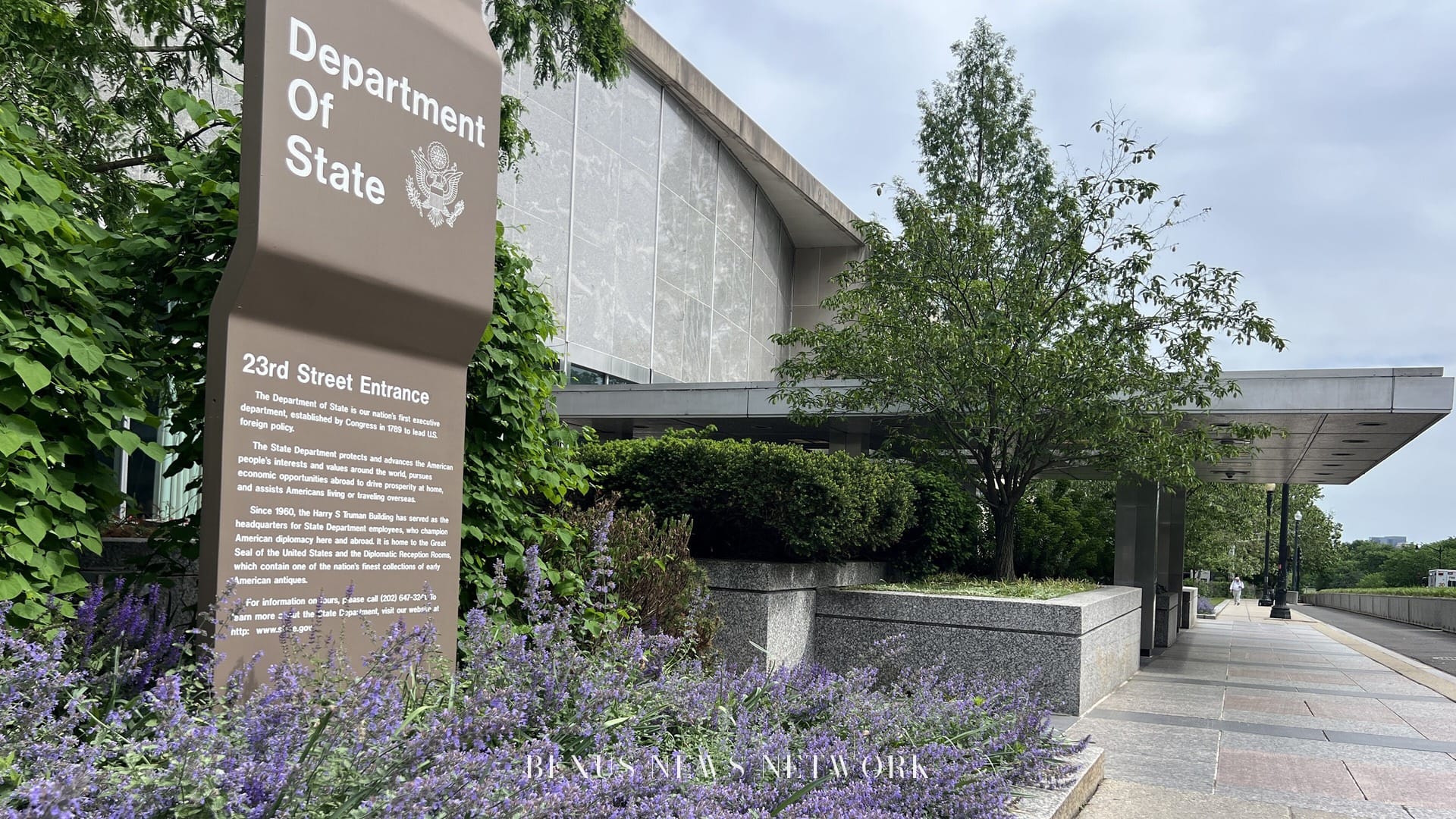
United States
The U.S. Department of State updated its travel advisory for China on October 19. Level 2, "Exercise Increased Caution," was maintained among four levels, and the risk indicators 'Wrongful Detention (D)' and 'Other (O)' were attached. The advisory stated, "The Department of State has determined that U.S. nationals are at serious risk of wrongful detention by the Chinese government." The same document also contains the sentence, "The Department has determined that China is wrongfully detaining certain U.S. citizens."
Advisory Levels
The Department of State maintained Level 2 for mainland China. It cited the arbitrary enforcement of local laws, exit bans without fair and transparent procedures under the law, and the risk of wrongful detention as reasons. The previous advisory was Level 2 issued on November 27, 2024, with only one risk indicator, 'Other (O)'.
The Xinjiang Uyghur Autonomous Region and Tibetan Autonomous Prefectures are under separate Level 2 advisories. It stated that security screenings, increased police presence, and surveillance are common, and authorities may impose curfews and travel restrictions on short notice. For the Tibet Autonomous Region, emergency consular services are heavily restricted as China severely limits visits by U.S. consular officials.
National Security Laws
The advisory stated that China's national security, counter-espionage, and data security laws grant officials broad discretion to detain or investigate foreigners. It noted that routine business, research, or expressing opinions in the public domain alone could carry risks.
There are five categories of individuals who may be targeted by Chinese authorities: U.S. citizens of Chinese descent, individuals connected to business disputes or affiliated U.S. companies, individuals with current or past affiliations with U.S. law enforcement, military, or intelligence agencies, individuals traveling under U.S. government-funded programs, and individuals with current or past ties to the U.S. government.
The advisory stated that Chinese law defines national security broadly. It noted that officials can retrospectively deem a wide variety of documents, data, and statistics as "state secrets." The revised Counter-Espionage Law that took effect in 2024 expanded the definition of espionage.
Those interrogated, detained, or deported under suspicion of violating national security laws include businesspersons, former foreign government employees, academics, relatives of parties in legal disputes involving Chinese citizens, and journalists. There are also cases where U.S. citizens involved in civil business disputes were detained and prosecuted on criminal charges. Some were released after settling disputes in favor of Chinese companies. Individuals accused of espionage are frequently denied access to legal counsel.
Wrongful Detention
The advisory stated that wrongfully detained U.S. citizens may spend years in substandard prison conditions without due process or access to U.S. government personnel and family. It added that individuals who also hold Chinese citizenship may face an increased risk of detention and harassment. While the embassy monitors the health and safety of detained individuals, it cannot guarantee their release.
The same advisory page includes the sentence, "Within the past five years, the Secretary of State has determined that China has wrongfully detained U.S. citizens."
Exit Bans
The advisory stated that China has used exit bans for four purposes: to compel participation in government and Chinese Communist Party investigations, to resolve civil disputes in favor of Chinese citizens, to pressure family members or associates abroad to return to China, and to gain bargaining leverage with foreign governments.
U.S. citizens may only learn of an exit ban when attempting to depart the country. There may be no procedure to contest it in court. Security and investigative agencies have imposed exit bans outside the court system through closed, Communist Party-led procedures. There are also cases where exit bans were placed on U.S. citizen minor children who are relatives of targets of investigation to compel them to return to China.
There have also been instances where the Chinese government told U.S. citizens that exit bans would only be lifted if they provided certain testimony, even after the citizens stated the testimony was false. The embassy has also received reports of individuals being coerced by Chinese officials to sign statements known to be false. Multiple cases of exit bans related to civil and commercial disputes have lasted for years, preventing U.S. citizens from receiving necessary medical treatment outside China.
Dual Nationality
China does not recognize dual nationality. It noted that dual U.S.-China nationals, former Chinese citizens, holders of Taiwan Compatriot Permits (Taibaozheng), and U.S. citizens of Chinese descent may be subject to additional scrutiny and harassment.
It warned that if an individual enters using a Chinese resident identity card (Shenfenzheng), household registration (Hukou), or Chinese-issued travel documents (Taibaozheng or Travel Document/Lüxingzheng), Chinese authorities may treat them solely as Chinese citizens and refuse to recognize their U.S. citizenship. Consular assistance may be restricted or prohibited in cases of exit bans, emergencies, disappearances, arrests, or detentions. The same applies to minor children. If a U.S. citizen enters on documents other than a U.S. passport and is arrested, the Chinese government is under no obligation to notify U.S. embassies and consulates.
The Department of State advised dual nationals and naturalized citizens to enter using a U.S. passport with an appropriate Chinese visa.
Messaging and Expression
The advisory stated that travelers should assume Chinese security agencies can access emails, text messages, and social media posts sent or received inside China. It added that the same applies in other countries, including the United States, when using Chinese apps. Security personnel may detain or deport U.S. citizens for sending private electronic messages critical of the Chinese, Hong Kong, or Macau governments or the Communist Party, and there have been cases where individuals were detained over messages sent outside China.
All universities and schools in China are controlled by the Communist Party. Foreign teachers and students who express views differing from the Party's ideology may be deported or detained. Religious activities of foreigners are also strictly regulated.
In Case of Arrest
Chinese authorities are required to notify U.S. authorities within four days of detaining a U.S. citizen; however, this is not always done in a timely manner. Bail is rarely granted, and pre-trial detention can last for months or years. During the initial detention period, U.S. consular officers may be the only permitted visitors.
The Department of State advised individuals to immediately request that police notify the U.S. Embassy or the nearest Consulate General if arrested or detained.
Entry and Exit Information
The maximum amount of cash that can be brought in or taken out upon entry or exit is 20,000 yuan (approximately $2,780) each. Testing positive for drugs can lead to immediate detention, even for substances that are legal in other countries. Bullets or ammunition components, including empty shell casings or small parts, must not be brought in. Travelers were also advised not to participate in demonstrations or gatherings.
Sources (KST)
- The U.S. Department of State · 2026-10-19 China Travel Advisory · https://travel.state.gov/en/international-travel/travel-advisories/china.html