Ministry of Finance of Russia: "This Year's Budget Deficit at 3.2% of GDP"… Jan–Sept Already 5.186 Trillion Rubles, Nearly Double Statutory Level from Start of Year
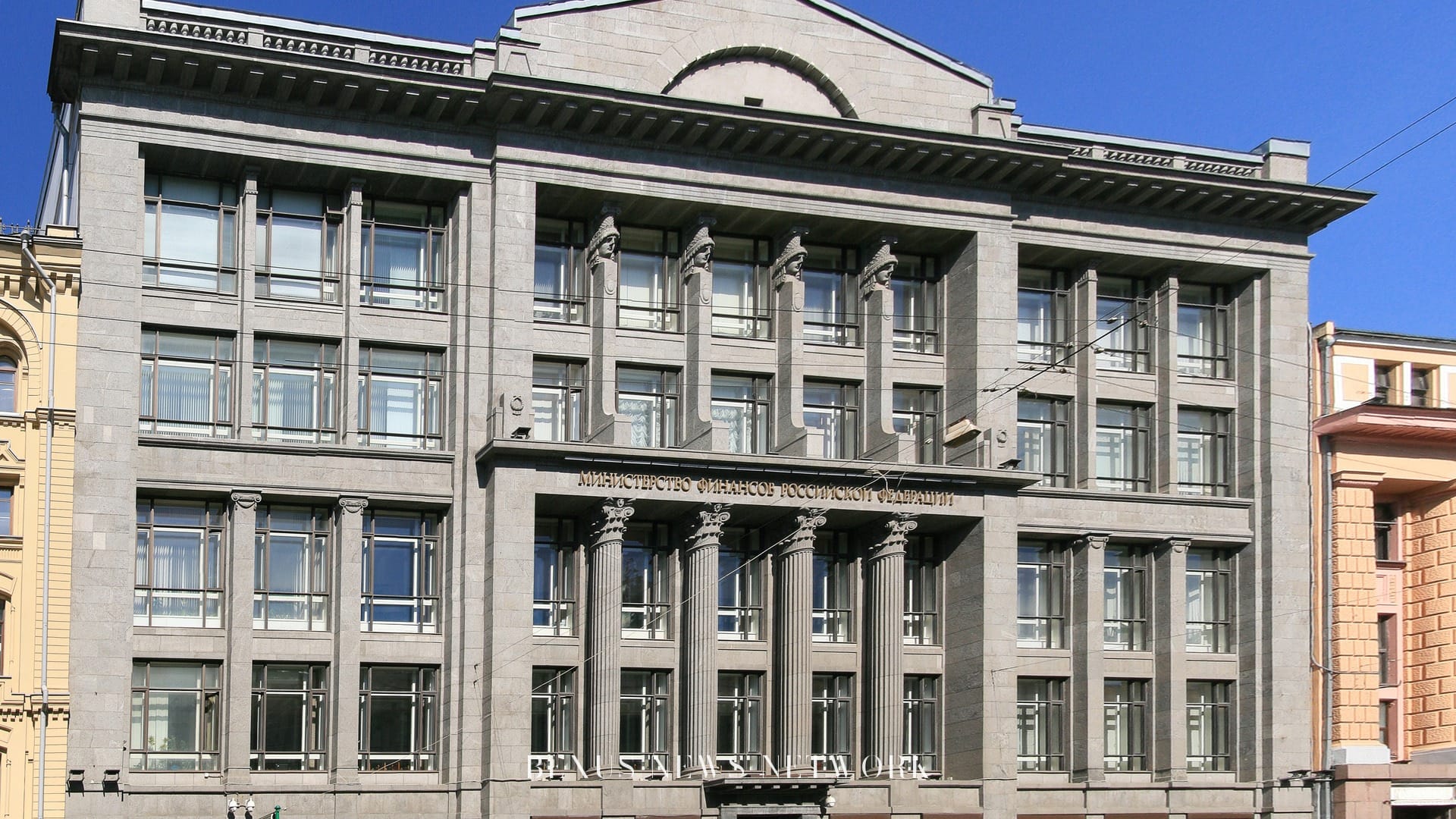
Moscow, Russia
The Ministry of Finance of Russia announced on its website on October 9 that it projects this year's federal budget deficit to reach 3.2% of gross domestic product (GDP). According to the ministry's preliminary estimates, the federal budget for January–September ended with a deficit of 5.186 trillion rubles (2.2% of GDP). The deficit for the same period last year stood at 3.471 trillion rubles (1.6%). In the same table, the ministry's annual deficit forecast for this year is listed at 7.345 trillion rubles. The deficit approved for this year's budget under Federal Law No. 426, signed on November 28, 2025, was 3.786 trillion rubles (1.6%). The Ministry of Finance stated that the execution of this year's federal budget reflects specific exceptions established by Federal Law No. 195 of June 26 (an act amending the Budget Code and several other laws).
The discrepancy is evident first on the revenue side. Federal budget revenues for January–September totaled 29.639 trillion rubles, an increase of 10.0% compared to the same period last year. Among these, oil and gas revenues stood at 5.471 trillion rubles, down 17.2%. The ministry cited a lower dollar exchange rate compared to last year as the reason. Non-oil and gas revenues, on the other hand, increased by 18.8% to 24.168 trillion rubles. Of this, value-added tax (a tax levied at production and import stages) rose by 27.4% to 13.467 trillion rubles, compared to 10.569 trillion rubles in the same period last year. Baseline revenues calculated against the benchmark oil price within oil and gas revenues amounted to 5.306 trillion rubles, 17.2% lower than the 6.412 trillion rubles recorded last year. Despite the decrease in oil and gas revenues, the ministry noted that actual revenues exceeded this baseline level. Oil and gas revenues for January–September dropped from 6.609 trillion rubles in the same period last year to 5.471 trillion rubles.
Expenditures expanded at a faster pace. Federal budget expenditures for January–September rose by 14.5% to 34.825 trillion rubles, up from 30.424 trillion rubles in the same period last year. As expenditures grew faster than revenues, the deficit exceeded 5 trillion rubles. The ministry cited "increased spending on key priorities" as the reason for the rise in expenditures. It stated that due to this increase in spending and the decline in baseline oil and gas revenues, a "certain deviation" from the government's structural balance target was "unavoidable." Structural balance refers to the fiscal balance adjusted for short-term cyclical and oil price fluctuations. The ministry stated that it expects the structural primary deficit, excluding interest payments, to stand at around 1.8% of GDP this year.
The legally approved spending for this year is 44.070 trillion rubles, while the ministry's new projection is 48.527 trillion rubles. Projected oil and gas revenues were lowered from the approved 8.919 trillion rubles to 7.584 trillion rubles, and baseline oil and gas revenues were reduced from 8.957 trillion rubles to 6.961 trillion rubles. Projected non-oil and gas revenues were raised from 31.365 trillion rubles to 33.598 trillion rubles, and total revenues were revised upward from 40.283 trillion rubles to 41.182 trillion rubles.
The Ministry of Finance also raised its value-added tax revenue forecast for this year from the approved 17.519 trillion rubles to 18.130 trillion rubles.
The ministry disclosed the methods it will use to cover the deficit. First, the spending ceiling can be raised within the margin of excess non-oil and gas revenue collection, and up to 3 trillion rubles can be drawn from "other sources" to cover the deficit. It stated that the widened structural deficit would be covered "primarily without additional borrowing in the federal government bonds (OFZ) market." The ministry explained that this measure is intended to ease pressure on financing conditions for non-governmental sectors, including businesses, and stabilize financial markets. Oil and gas revenues are also linked to the National Wealth Fund (NWF) (ФНБ, a government reserve fund accumulated when oil prices are favorable and drawn upon when revenues fall short). The ministry noted that oil and gas revenues "exceeded baseline levels" in January–September of this year, adding that the 'fiscal rule'—which authorizes the use of these fund reserves when revenues fall short—safeguards fiscal stability. The fiscal rule operates by establishing a benchmark oil price and either accumulating funds or withdrawing them when revenues deviate from that benchmark.
Plans from next year onward head in a different direction. The Ministry of Finance stated that under the fiscal rule, the draft federal budget for 2027–2029 is structured to lower the benchmark oil price to $50 per barrel starting in 2027 and gradually return to a structural balance by 2029. It added that this approach will reduce inflationary pressures from budget execution, support the sustainability and balance of the fiscal system over the medium term, and provide the macroeconomic and financial foundation to achieve the national development goals established by the president. In its medium-term forecast released on October 23, the Bank of Russia (Central Bank of Russia) stated that the draft budget envisions returning the structural primary balance to zero by 2029 and constructed its outlook on the premise that this budget will help curb inflation. However, it listed a larger fiscal deficit as a risk factor. In the same forecast, the central bank assumed the price of Russian crude oil used for tax calculations at an average of $72 per barrel this year, $55 next year, and $50 in 2028 and 2029. The Ministry of Finance noted that the January–September figures are preliminary, with finalized data to be confirmed later based on accounting reports from budget execution agencies, which will also encompass foreign transactions conducted outside single treasury accounts. It also stated that the revenue figures reflect payments received through the unified tax account (an account through which corporations and individuals pay taxes comprehensively) that were classified as federal budget revenues as of October 1.
Sources (KST)
- Ministry of Finance of Russia 「Предварительная оценка исполнения федерального бюджета за январь-сентябрь 2026 года」(2026-10-09) https://minfin.gov.ru/ru/press-center/?id_4=40677-predvaritelnaya_otsenka_ispolneniya_federalnogo_byudzheta_za_yanvar-sentyabr_2026_goda
- Bank of Russia (Central Bank of Russia) 「Среднесрочный прогноз Банка России」(2026-10-23) https://www.cbr.ru/Content/Document/File/198897/forecast_261023.pdf ; Governor's statement https://www.cbr.ru/press/event/?id=32929