Russia-China Trade Reaches $189 Billion in Eight Months; Russian Deputy Prime Minister Says "China Is the Main Trading Partner... Projected to Reach Around $270 Billion by Year-End"
Russia
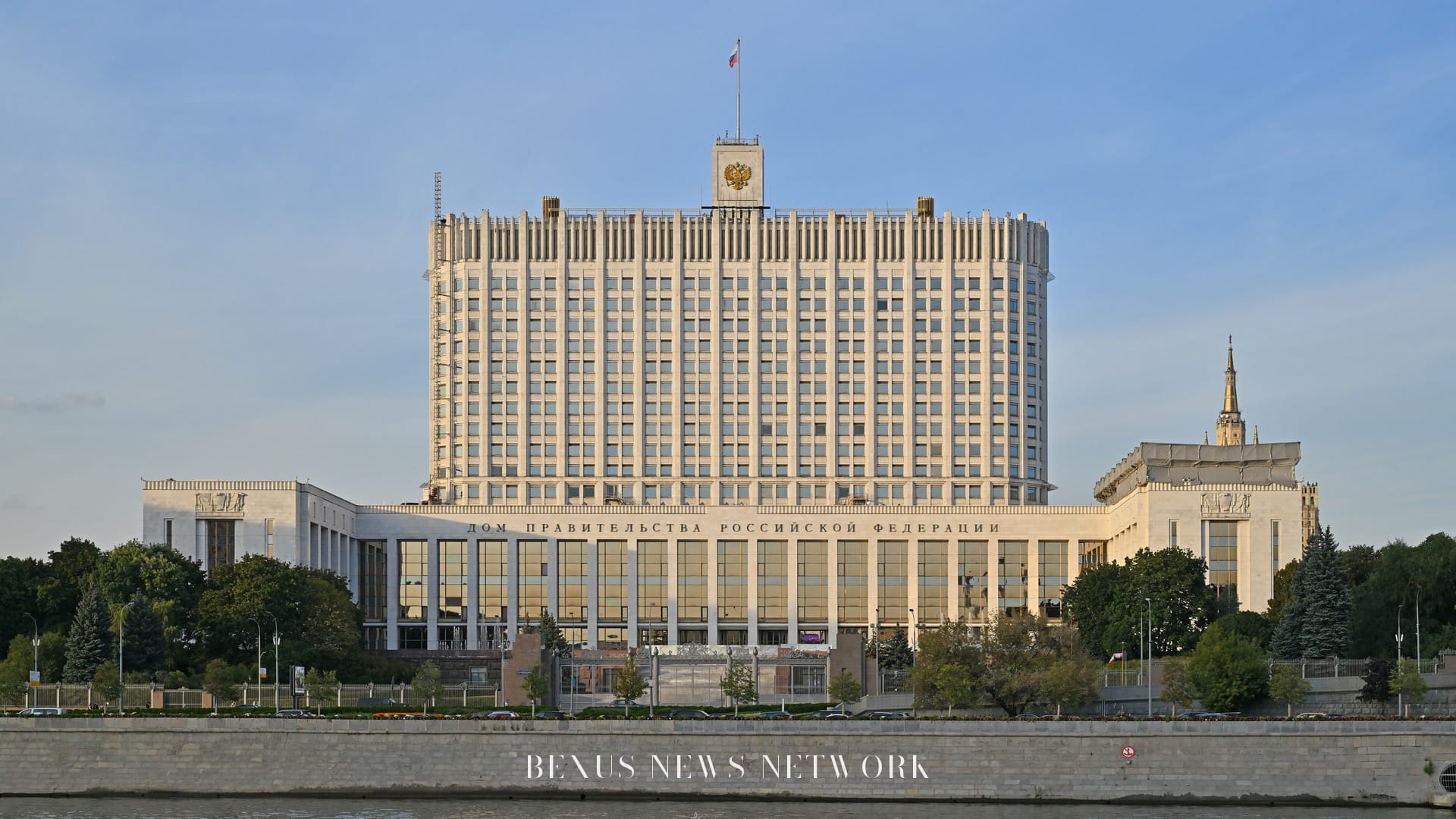
A Russian Deputy Prime Minister stated that China is Russia's "main trading partner." Russian Deputy Prime Minister Dmitry Chernyshenko held the 30th meeting of the preparatory committee for the regular meetings of Russian and Chinese heads of government (a consultative body coordinating agendas ahead of regular meetings between the two countries' prime ministers) with Chinese Vice Premier He Lifeng of the State Council (China's cabinet) at the Moscow Government Situation Center on October 19, 2026, and announced that bilateral trade volume in January–August this year increased by 25.8% to exceed $189 billion, according to data from Russia's customs authority, the Federal Customs Service. Deputy Prime Minister Chernyshenko said that by the end of the year, trade is projected to approach an all-time high of $270 billion to $275 billion. The Deputy Prime Minister stated that trade has grown 30-fold since 2001 and has exceeded $200 billion for three consecutive years. He also presented a goal to expand it to $300 billion by 2030.
Two days later, a prime ministers' meeting was held in St. Petersburg. Russian Prime Minister Mikhail Mishustin and Chinese Premier Li Qiang held the 31st regular meeting of Russian and Chinese heads of government here on October 21. The Russian Ministry of Foreign Affairs posted on its official X account that the two prime ministers held talks on that day.
🇷🇺🇨🇳 On Oct 21, PM Mikhail Mishustin & Chinese Premier Li Qiang held the 31st regular meeting of Russian & Chinese Heads of Government in St Petersburg.#RussiaChina are creating new sources of growth while consistently defending their shared interests.https://t.co/kOAj8nV67o pic.twitter.com/bqe4lSAVWc
— MFA Russia 🇷🇺 (@mfa_russia) 2026년 10월 21일
In his opening remarks, Prime Minister Mishustin stated that Russia firmly maintains its position as the top exporter of oil and natural gas to China. He said the "Power of Siberia" pipeline, which transports natural gas from Russia's Siberia to China, is operating stably, construction of the Far Eastern route is well underway, and the "Power of Baikal" gas pipeline project is under consideration. Prime Minister Mishustin said the project could become one of Eurasia's largest gas transmission pipelines. He also noted that bilateral settlements are now conducted primarily in rubles and yuan. He stated that more than 90 projects, ranging from metallurgy to agriculture, are handled by the bilateral investment committee (a consultative body dealing with bilateral investment projects), and trade in agricultural products in January–September this year grew by more than a third compared to the same period last year. He added that to increase freight traffic, it is necessary to modernize border checkpoints, introduce digital technologies to railways, establish new transport corridors, and expand flight routes.
The figures presented by Premier Li Qiang at the same meeting differed from those of the Russian side. Premier Li Qiang said, "During the first few months of this year, trade volume has already exceeded $180 billion, representing a 28.4% increase year-on-year." Both the amount and the growth rate differ from the "eight months, $189 billion, 25.8%" stated by the Russian Deputy Prime Minister. Premier Li Qiang said cooperation in the fields of energy, aviation, aerospace, logistics, and transportation is progressing well, and emphasized that both countries adhere to the principle of "non-alliance, non-confrontation, and non-targeting of third countries."
Premier Li Qiang said the two countries are responding to "external instability and uncertainty" through closer cooperation. Vice Premier He Lifeng also said at the preparatory committee meeting that the two countries have overcome "severe external challenges" since the last meeting. In a joint communique (a document jointly released summarizing agreed contents after the talks) on the day of the meeting, both countries stated that economic cooperation continues, "overcoming the impact of external adverse factors." Both countries defined unilateral coercive measures imposed by one country on another without UN Security Council resolutions as a violation of international law. They described the extraterritorial application of sanctions that apply domestic laws to foreign companies and individuals as "illegal" and called the practice of forcing compliance with unlawful restrictions by third countries "neocolonial in essence." They also noted that the confiscation, freezing, or use of sovereign assets held by foreign governments and central banks without the consent of the owner country constitutes a gross violation of the principle of sovereign equality of states. They also expressed concern that some countries and intergovernmental organizations are taking unilateral measures that hinder international shipping. Both countries agreed to cooperate and coordinate their positions during the preparatory process for the G20 (a consultative group of the world's 20 major economies) Summit to be held in Miami, United States, on December 14–15, 2026. This summit is hosted by the United States, which serves as this year's G20 chair. The chair country leads meetings of the consultative forum in that year.
The Russian Ministry of Foreign Affairs' X account also released remarks made by President Putin to Premier Li Qiang. According to the account, President Putin said Russia-China relations are "developing very successfully and dynamically."
💬 President #Putin to Premier of China Li Qiang:
— MFA Russia 🇷🇺 (@mfa_russia) 2026년 10월 21일
I would like to note that #RussiaChina relations are developing very successfully and dynamically.
🇷🇺🇨🇳 They are based on the principles of mutual respect, & consideration for each other’s interests.https://t.co/aFQbdgPcH8 pic.twitter.com/DzheGAOWlC
Political issues were also included in the joint communique. Russia reaffirmed the "One China" principle, expressed opposition to Taiwan independence in any form, and firmly supported the Chinese government's efforts toward "national reunification." In the joint communique, both countries stated that the 2001 Treaty of Good-Neighborliness and Friendly Cooperation Between Russia and China provides for the prohibition of the use of force, disallowance of third countries using territory to harm the other country, and the absence of mutual territorial claims. China expressed support for Russia's efforts to protect its sovereignty and territorial integrity and opposed external interference in Russia's internal affairs. Both countries also asserted that the primary factor destabilizing the situation in Eurasia is "external destructive interference." China stated its support for Russia's candidacy to chair the Asia-Pacific Economic Cooperation (APEC, an economic cooperation forum in the Asia-Pacific region) in 2035, and Russia agreed to support China's BRICS (a grouping of emerging economies including Russia and China) chairmanship activities in 2027.
The trade, energy, and finance sections contained an extensive list of future initiatives agreed upon by both countries. Both countries expressed support for the 11th Russia-China EXPO to be held in Russia in 2027, and welcomed the "Made in Russia" trade fairs held by Russia in China as well as the opening of a "Russian National Pavilion." Both countries agreed to maintain a high share of national currency settlements in trade, investment, and lending, and agreed to continue discussions on the issuance of yuan-denominated "Panda bonds" (bonds issued in yuan in the Chinese bond market by foreign companies) by Russian enterprises in China. The two sides agreed to ensure a stable supply of potash fertilizers to Chinese agriculture and expand the varieties and volume of forest product trade. They also agreed to continue consultations on restoring the status of seafood exporting companies and lifting restrictions on chicken production enterprises. Increasing cargo volumes along the Northern Sea Route (Arctic route), cooperation in Arctic shipbuilding, connecting traffic lanes at the Zabaikalsk–Manzhouli border crossing, and border freight transport using autonomous vehicles were also included in the joint communique. In the energy sector, both countries agreed to construct Units 7 and 8 of the Tianwan Nuclear Power Plant and Units 3 and 4 of the Xudapu Nuclear Power Plant based on the safety-first principle, and to negotiate the initial processes of producing nuclear fuel and the joint construction of new nuclear power plants as a "package." In the financial sector, they demanded the "depoliticization" of multilateral development banks funded by multiple countries, such as the World Bank, and agreed that cooperation with the Financial Action Task Force (FATF), the international organization combating money laundering and terrorist financing, should also proceed on a "depoliticized basis."
Deputy Prime Minister Chernyshenko proposed to the Chinese side the joint utilization of Russia's synchrotron facility "SKIF" (a research light source that examines material structures using high-energy light) and the construction of a joint Russia-China experimental station within China's equivalent facility, "HEPS." The joint communique included the establishment of regulations for an artificial intelligence (AI) cooperation expert committee, a federated learning pilot project to train AI models without exchanging data, compatibility between Russia's GLONASS satellite navigation system and China's BeiDou, and cooperation on the International Lunar Research Station. On investment, Prime Minister Mishustin noted that the revised investment protection agreement signed last year creates "the most favorable conditions" for business; this agreement was signed on May 8, 2025.
During this meeting, both countries signed 11 documents. These included the prime ministers' joint communique, protocols of the committees on investment, energy, the Far East, and humanitarian cooperation, and a roadmap for science, technology, and innovation cooperation for 2026–2030. Russia's state space corporation Roscosmos and China's space authority, the China National Space Administration, concluded a memorandum of understanding to place Russian scientific instruments aboard China's Tianwen-3 probe. The Russia-China visa-free regime was agreed to be extended until the end of 2027. Deputy Prime Minister Chernyshenko stated that tourist exchanges with China grew by 50% in the first half of this year, approaching 2 million visits. The next 32nd regular meeting was agreed to be held in 2027, with the date and venue to be determined through diplomatic channels. In a subsequent Russian government meeting, Prime Minister Mishustin stated that following the decisions of President Putin and President Xi Jinping, the Treaty of Good-Neighborliness and Friendly Cooperation Between Russia and China had been extended for another five years.
Sources (KST)
- http://government.ru/en/news/60231/ (Government of Russia, 30th Meeting of the Preparatory Committee for the Regular Meeting of Russian and Chinese Heads of Government, 2026-10-19)
- http://government.ru/news/60254/ · http://government.ru/en/news/60254/ (Government of Russia, Excerpts from Opening Remarks at the 31st Regular Meeting of Heads of Government, 2026-10-21)
- http://government.ru/news/60255/ (Government of Russia, Joint Communique of the 31st Regular Meeting of Russian and Chinese Heads of Government, 2026-10-21)
- http://government.ru/meetings/60262/stenograms/ (Government of Russia, Verbatim Record of the Government Meeting)
- https://x.com/mfa_russia/status/2112822086096044499 · https://x.com/mfa_russia/status/2112944053562073286 (Official X Account of the Ministry of Foreign Affairs of Russia)